
Related videos:
Once again, the Cuban government resorts to its repeated formula of "aid" after natural disasters: announcing discounts on construction materials and offering bank loans to those who have nothing left.
However, in practice, discounts do not solve the real problem: there are almost no materials available in the country.
Thousands of Cubans are still coping with the aftermath of hurricanes that occurred more than a decade ago, such as in the province of Santiago de Cuba, where many have yet to recover from Hurricane Sandy (2012), waiting for resources that never arrived.
For families who have lost their homes and live on barely enough income to eat, the idea of rebuilding feels like an impossible luxury.
The measure was published in the Official Gazette of the Republic of Cuba, Extraordinary Edition No. 65, via Agreement 10247 from the Council of Ministers, dated October 31, 2025.
The text, signed by Prime Minister Manuel Marrero Cruz, stipulates that the State Budget will finance fifty percent of the selling prices of construction materials for families whose homes suffered total or partial damage following Hurricane Melissa's passage through Guantánamo, Santiago de Cuba, Granma, Holguín, and Las Tunas.
The agreement also allows affected individuals with fewer resources to apply for bank loans, subsidies, or social assistance for the purchase of materials.
Furthermore, the State commits to covering the difference in the interest rate of loans granted for construction work, according to the same document.
However, beyond the official rhetoric, the scheme reproduces the same policy that has demonstrated its ineffectiveness for decades.
In the eastern provinces, the testimonies are similar: state sales outlets are empty, waiting lists are growing, and bureaucratic procedures hinder access to assistance.
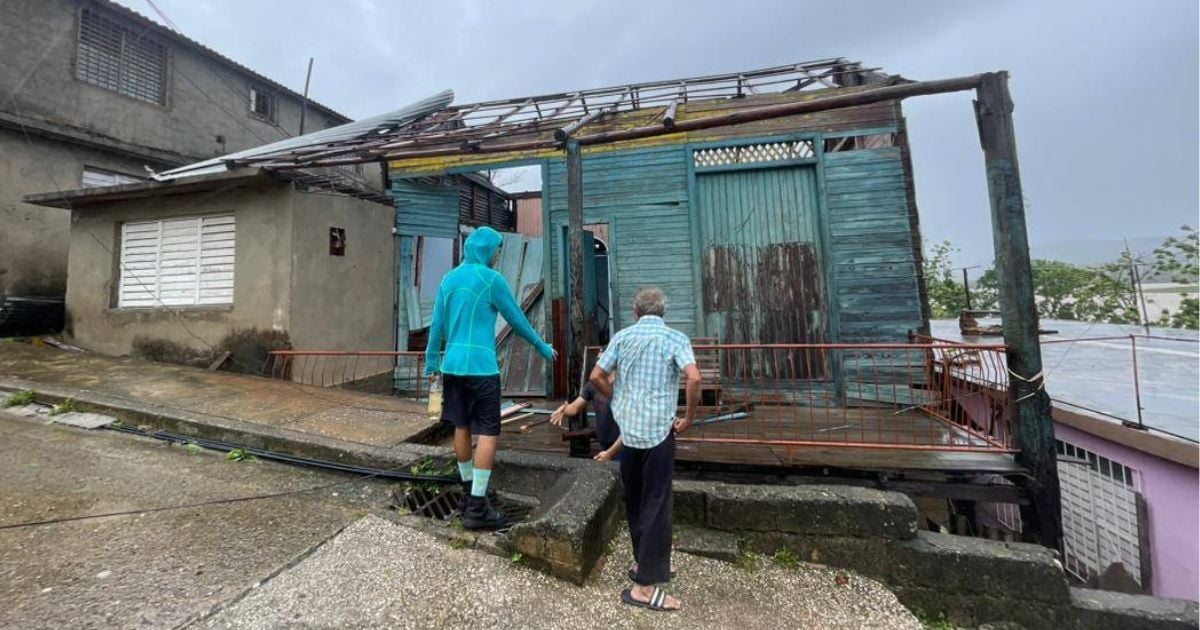
The hurricane Melissa made landfall in Cuba on October 29, 2025, with winds of up to 200 kilometers per hour and torrential rains that caused severe flooding and collapses in more than 16,000 homes, according to official data.
The catastrophe once again highlighted the precariousness of construction on the Island and the government's lack of preparedness to handle emergencies.
The government insists on presenting its decision as a demonstration of "economic and social protection," yet the reality contradicts this narrative.
The families most affected are precisely those with the least resources to pay even the remaining 50% of the cost of the materials.
And in a country where the average salary does not cover the basic necessities, bank loans are not a solution, but rather another burden.
While the regime boasts of its "socialist and solidarity character," the daily life of thousands affected continues to be marked by poverty, helplessness, and a lack of institutional transparency. In the hardest-hit municipalities, the prevailing sentiment is one of neglect and exhaustion.
Agreement 10247 also instructs the ministries of Finance and Prices and of Domestic Trade to establish control and distribution mechanisms, as well as to provide additional bonuses in services and products for those affected.
As in previous natural tragedies, the Cuban regime opts for partial measures that do not address the underlying causes: a broken economy, a paralyzed materials industry, and a population that, after each hurricane, has to start over from scratch without any real support.
Filed under: