
Related videos:
The Cuban regime acknowledged that the process of restoring electrical service in the eastern part of the country is “complicated”, due to the extensive damage caused by Hurricane Melissa to the distribution networks and high-voltage transmission lines.
According to the information published on the website of the Presidency of Cuba, the Minister of Energy and Mines, Vicente de la O Levy, acknowledged that the recovery is progressing slowly due to the level of destruction affecting the electrical systems in several provinces.
In his report to the National Defense Council, De la O Levy specified that in Las Tunas, more than 48,000 customers already have electric service; in Guantánamo, only 34% of the population has access to electricity; while in Granma, barely 17% of residents have electricity, thanks to isolated microsystems that operate temporarily.
The minister explained that the supply from the National Electroenergy System (SEN) to the province of Granma remains interrupted after the collapse of six high-tension towers between Cueto and Bayamo.
He assured that work is being done to recover those structures and that priority is being given to the use of fuel for emergency generators and vital centers.
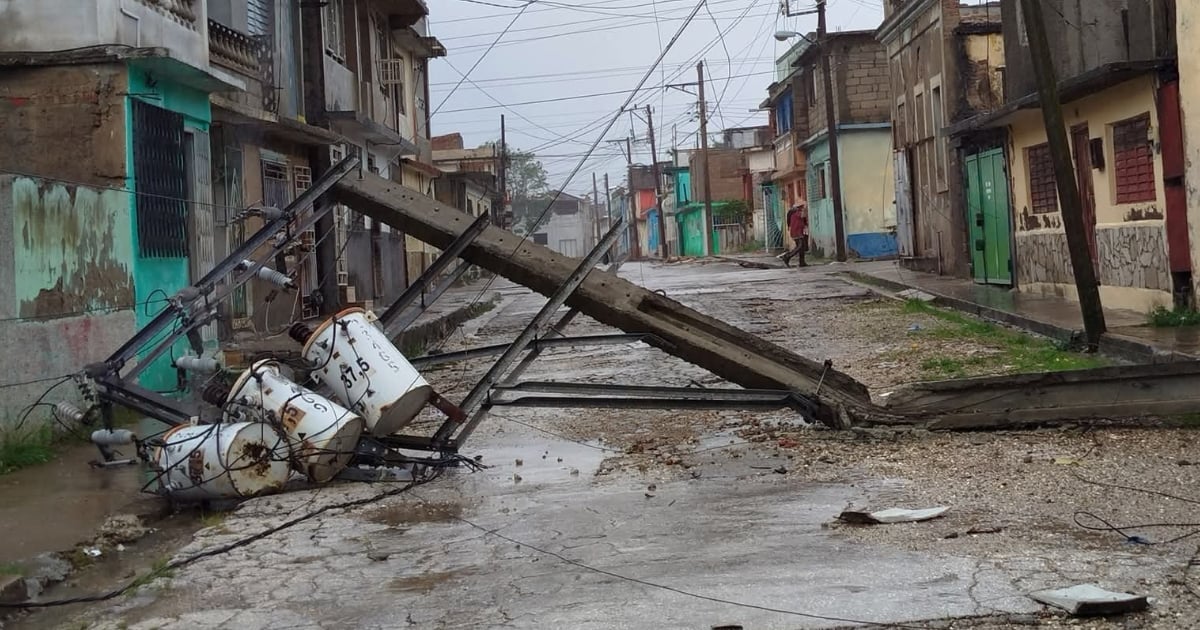
He also indicated that the situation in Santiago de Cuba is more critical, acknowledging that the restoration of service is "complicated by the extensive damage to the distribution networks," which hinders the creation of electrical circuits or "islands" that would allow for partial restoration of service.
De la O Levy mentioned that several mini and micro hydroelectric plants remain flooded, which has hindered their operation, and that so far 98 damaged transformers and numerous fallen or leaning poles have been reported, although he clarified that "most are not broken."
Despite this situation, the minister stated that “all thermal units from Camagüey to Artemisa are online,” although the population reports lengthy blackouts, and that the national supply is sustained by activating the plants that were not directly affected by the hurricane.
The official report also highlighted that fuel is secured to keep backup generators operational in hospitals, aqueducts, and evacuation centers.
However, the information from the Presidency itself confirms that most of eastern Cuba remains without electricity, with limited access to the areas most affected by flooding and landslides.
During the meeting of the National Defense Council, led by Miguel Díaz-Canel, the president urged to "work intensively" on the rehabilitation of basic services, the clearing of debris, and assistance to those affected, words that seem more aligned with propaganda than the reality faced by millions in the east.
He also insisted on "prioritizing the distribution of donations" to the provinces most affected by the hurricane, including Santiago de Cuba, Granma, Holguín, and Las Tunas.
Filed under: