
Related videos:
The Cuban Electric Union (UNE) reported on Monday a deficit of more than 1,000 megawatts (MW) during the peak nighttime hours, with widespread effects throughout the country and the east still virtually in darkness following the damage caused by Hurricane Melissa.
According to the official report from the National Electroenergetic System (SEN) dated November 3, 2025, the generation availability amounts to 1,639 MW compared to an estimated demand of 2,650 MW, resulting in a deficit of 1,011 MW and a projected impact of 1,081 MW during the night.
During the morning, the UNE reported an availability of only 1,349 MW against a demand of 2,025 MW, with 688 MW affected by capacity deficit. Among the main incidents are breakdowns in units 1 and 2 of the CTE Felton (Holguín) and in Unit 5 of the CTE Diez de Octubre, as well as scheduled maintenance in the plants of Santa Cruz and Cienfuegos.
The generational crisis is compounded by limitations due to a lack of fuel and lubricants, which keep over 500 MW of distributed generation out of service, as well as 488 MW of thermal capacity restricted due to technical issues.
In Havana, the Electric Company reported that the service was affected since 2:00 p.m. on Sunday, with a peak of 206 MW at 7:00 p.m., partially restored by 4:07 a.m. on Monday. However, a rolling blackout schedule remains in place from 10:00 a.m. until the early hours of Tuesday, November 4.
Cuban Oriente, still disconnected
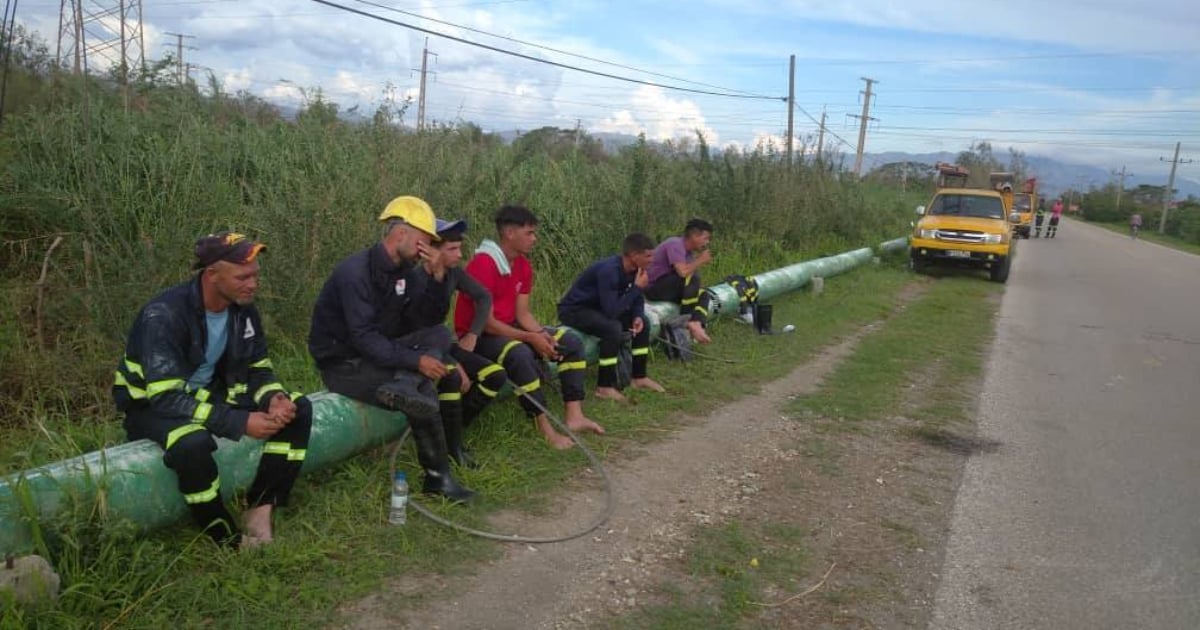
The actual national deficit exceeds 1,050 MW, including over 50 MW that remain offline due to a significant part of the eastern region of the country still lacking electricity. As acknowledged by the Minister of Energy and Mines, Vicente de la O Levy, the restoration of service in Santiago de Cuba, Granma, Guantánamo, and Las Tunas is "complex" due to the severe damage to distribution networks and high-voltage lines after Hurricane Melissa passed through.
In Granma, only 17% of the population has access to electricity; in Guantánamo, it is 34%; while Las Tunas is slowly progressing in reconnecting circuits. The supply to that region remains disrupted due to the collapse of six high-tension towers between Cueto and Bayamo, as detailed by the minister himself.
The UNE had already warned last week that the eastern region of Cuba could remain without electricity for at least 15 days, a forecast that—judging by the current situation—could be extended much longer.
Between promises and blackouts
Although the regime claims that "all the thermoelectric plants from Camagüey to Artemisa are operational," the population reports power outages of more than 10 hours daily in several provinces. In the east, the brigades are facing cable thefts, flooding in micro-hydroelectric plants, and material shortages, which have delayed recovery efforts.
Meanwhile, the National Defense Council, led by Miguel Díaz-Canel, requested to “work intensively” on the rehabilitation of services, although for millions of Cubans, the official words contrast sharply with the harsh reality of darkness, blackouts, and shortages that persists throughout the island.
Filed under: