
Related videos:
Santiago de Cuba continues to be the most lagging province in the recovery of telecommunications following Hurricane Melissa, with only 3% of fixed services and 18% of mobile radio bases restored.
The company explained in a news release that the most significant damage is concentrated in the municipalities of Guamá, Segundo Frente, and Tercer Frente, where the fiber optic infrastructure sustained severe cuts.
"In these three cases, communication is limited, so high priority is given to the recovery of the main routes," ETECSA stated.
Although satellite connection routes have been established to partially restore the service, these solutions are temporary and do not allow for smooth communication.
In practice, thousands of residents in Santiago are left without mobile signal, fixed telephony, or internet access, in a context already marked by power outages and a shortage of fuel.
In neighboring provinces such as Las Tunas, Granma, and Holguín, the company has reported significant progress: between 60% and 90% of services restored, while Santiago de Cuba remains virtually isolated.
The company's own statement acknowledges that the lack of electrical power is the main obstacle to the restoration of services. Without energy, the towers, cabinets, and plants cannot operate.
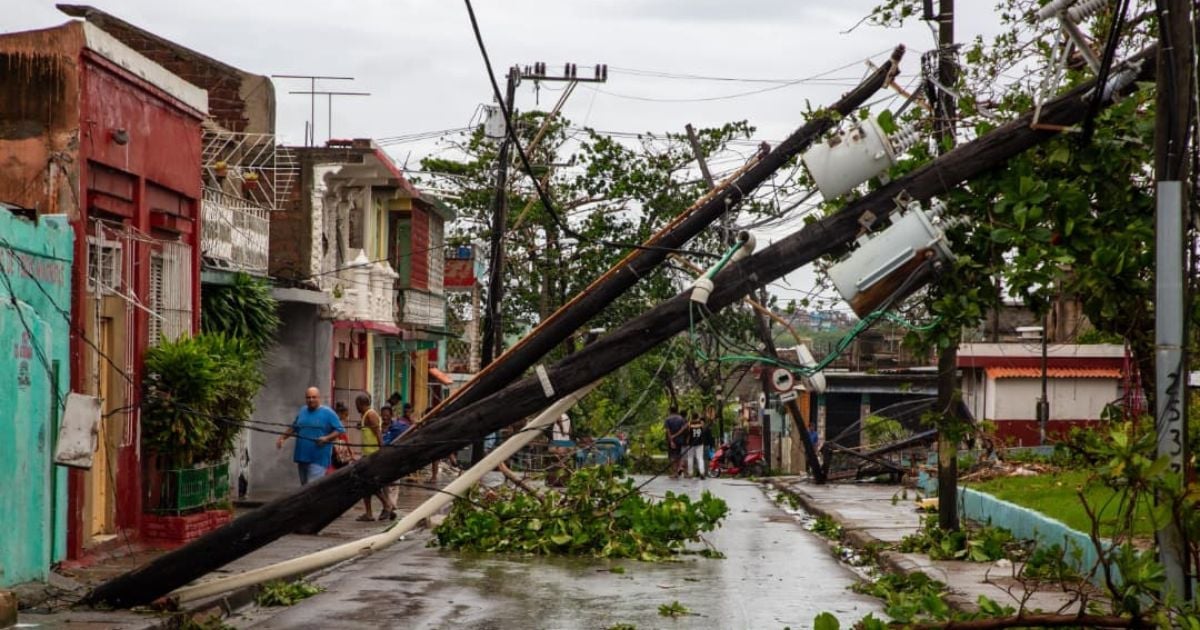
The material damages are also significant. ETECSA reported that in the eastern region, there are impacts on more than 60 fiber optic cables, 400 telephone cables, six communication towers, and over a thousand fallen poles.
In the case of Santiago de Cuba, some of the damaged sections traverse mountainous and hard-to-reach areas, which has complicated the repair efforts.
Local sources indicate that access to the mountainous municipalities is extremely limited. Destroyed roads, landslides, and rising rivers have delayed the entry of linemen and technicians.
In several locations, workers have had to clear paths with machetes or rudimentary tools to reach the repair sites.
In parallel, support teams have been mobilized from other provinces, but the shortage of transportation and fuel hinders an effective deployment.
The company stated that it continues to transfer equipment and resources "to contribute to the restoration of services as quickly as possible," although it did not specify a timeline for full normalization.
La situación de Santiago de Cuba contrasta con la imagen de “recuperación progresiva” que los medios oficiales han querido proyectar.
While other eastern provinces are already showing signs of progress, Santiago de Cuba remains enveloped in silence.
The impact of Melissa highlighted the fragility of the Cuban telecommunications network, which has suffered from years of lack of investment and technological dependence.
For the people of Santiago, the disconnection exacerbates a daily crisis marked by blackouts, shortages, and the deterioration of basic services.
"Without power and without signal, we know nothing. There are no news updates or communication with family members," commented a resident of the Sueño neighborhood during an intermittent call.
While ETECSA insists that "work is ongoing without rest," the population is awaiting concrete answers. The province still does not have an estimated date for the complete restoration of services, and the alternative connections are minimal and of low capacity.
In the midst of the emergency, Santiago de Cuba remains disconnected, without stable power, without internet, and with thousands of users offline.
The slowness of the restoration confirms that, beyond the impact of Melissa, the crisis of telecommunications in Cuba is structural and profound.
The initial reports of the impact on telecommunications following Hurricane Melissa indicated an impact on 80 percent of mobile phone service in the eastern region of Cuba.
Regarding fixed-line telephony, ETECSA reported that 40 percent remained interrupted. The entity that controls the telecommunications monopoly emphasized that, in Las Tunas, 25% of fixed lines are still out of service, while in Holguín the damage reaches 23%.
In Granma, the impact reaches 49%, with fiber optic cuts that leave municipalities such as Yara, Campechuela, Pilón, Niquero, Bartolomé Masó, and Media Luna disconnected.
45% of the lines remain down in Santiago de Cuba, as well as in Guantánamo, where the interruption of the two fiber optic routes has only allowed for partial restoration of communication through radio link.
Filed under: