
Related videos:
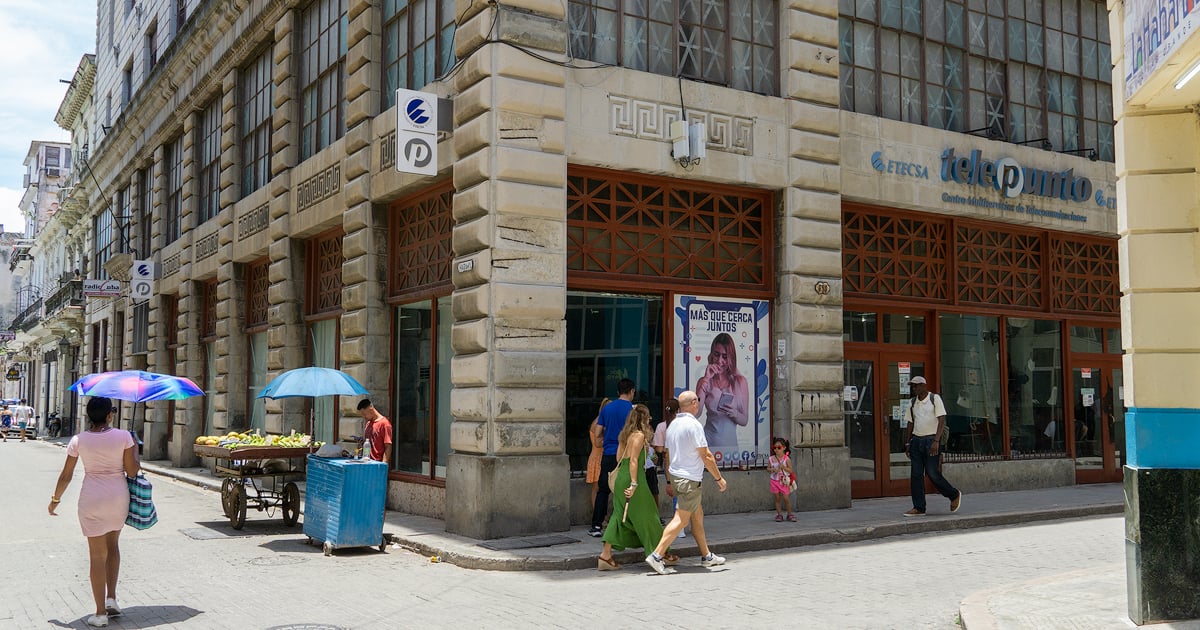
The Telecommunications Company of Cuba (ETECSA) surprised Cuban users this Thursday by providing a new explanation for the frequent disruptions in mobile service: a meteorological phenomenon called "atmospheric duct".
In a post published on its official Facebook page, the state company explained that this phenomenon is a layer of the atmosphere that acts as a "tunnel" for radio waves, allowing them to travel long distances with minimal signal loss. However, it can be harmful to modern networks, creating interference that degrades service and causes network management issues.
According to ETECSA, the atmospheric duct could cause interruptions in calls, reduced data speeds, network congestion, and coverage drops. The company added that it is a natural challenge "for wireless communication networks."
Wave of mockery and criticism on social media
The post sparked an avalanche of reactions on social media, with hundreds of users responding with irony, sarcasm, and mockery at what they see as a new excuse from the state-run company.
"Now when they say it's due to the blockade, we go out to the streets to demand that they remove the atmospheric duct," commented a user. Another wrote: "When there are no more culprits, obviously, nature has to pay the price. What's next, an alien interference?"
The comments, mostly negative, described the explanation as "science fiction," "disrespectful," and "mocking the people," while many recalled the high prices and low quality of the service. "That only happens in Cuba. I don't know what else they will invent to cover up that the service is crap," noted an internet user. Another one joked, "I live in an atmospheric duct, that's why I don't have Nauta Hogar."
Some users with technical knowledge even refuted ETECSA's version, arguing that the tropospheric duct does not produce the described effects, and that the true causes are the lack of maintenance, energy shortages, and technological obsolescence.
Background: excuses, restrictions, and censorship
The message from ETECSA appears just two days after the company cut off internet service to young Anna Sofía Benítez, who reported that she was disconnected after criticizing the regime on social media and refusing to hand over her phone “for inspection.”
It is not the first time that the state-owned company has become the center of controversy. In July, ETECSA denied the existence of a supposed scheduled maintenance on July 11, the anniversary of the 2021 protests, although numerous activists reported internet outages and blocks on that date.
In May, the state-owned company restricted access to mobile internet, increasing the cost of plans in Cuban pesos and forcing users to pay in dollars for the most basic packages. According to citizen reports, connecting in Cuba can cost up to four times the monthly minimum wage.
Additionally, at the beginning of October, employees of the company reported pressures to act as "ciberclarias", claiming that they lose 10% of their salary if they do not share official propaganda on social media.
ETECSA, target of citizen discontent
With its explanation about the "atmospheric duct," ETECSA seems to have reignited dissatisfaction among Cubans, who view the announcement as yet another demonstration of the disdain with which the state monopoly treats its customers.
"They have already found a substitute for the blockade to justify the poor service: the atmospheric duct," wrote one user. Another added, "It must be an imperialist duct funded by the CIA."
In a country where connection drops, exorbitant prices, and digital censorship are part of everyday life, many agree that the real issue lies not in the atmosphere, but in the structure of a company that continues to operate under political control and a lack of competition.
Filed under: