
Related videos:
The Cuban regime will receive 11 million dollars in humanitarian aid mobilized by the UN as part of an Action Plan submitted to address the emergency caused by Hurricane Melissa on the island.
The announcement was made by the Ministry of Foreign Trade and Foreign Investment (MINCEX), which reported on its social media that the resources are already being managed by the agencies of the United Nations system operating in Cuba, including PAHO, UNICEF, UNDP, WFP, and UNFPA.
According to the official announcement, the plan aims to mobilize a total of 74 million dollars in immediate assistance, intended for over one million affected individuals, particularly in the eastern provinces of Santiago de Cuba, Granma, Holguín, and Guantánamo.
The statement from MINCEX highlighted that the first additional resources, beyond those pre-positioned by international agencies, have already been received, and that new shipments of emergency supplies will arrive in the coming days.
According to the UN plan, the funds are aimed at ensuring food, medicine, drinking water, energy, and temporary shelter, in addition to supporting the rehabilitation of basic services in areas affected by flooding and loss of housing.
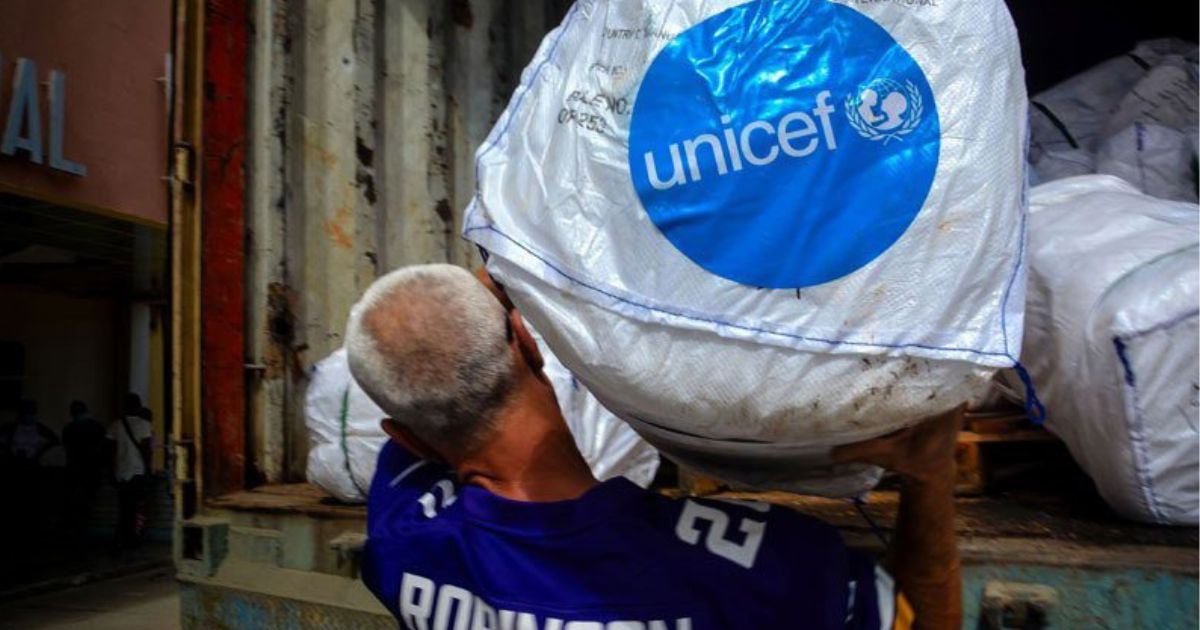
In recent weeks, the UN and its agencies have been leading the distribution of food in eastern Cuba, essential items and solar photovoltaic systems, as well as the installation of mobile warehouses to ensure the storage of supplies in Granma and Santiago de Cuba.
The Pan American Health Organization (PAHO) and the United Nations Population Fund (UNFPA) have also been involved in sending medications, while the World Food Programme (WFP) continues to distribute rice, peas, and oil in emergency designated protection centers.
Although the Cuban government tries to present these actions as part of a "national coordination," the reality shows that the UN and international cooperation have taken on most of the humanitarian response, due to the lack of resources and the inefficiency of the state apparatus.
With this new disbursement, the regime aims to compensate for the lack of internal financing and the logistical incapacity of the state system, amid a context of economic crisis, shortages, and deterioration of public infrastructure.
Meanwhile, international aid continues to arrive by air and sea to the country, managed directly by United Nations agencies, which act as the main support in the emergency that the Cuban government is unable to tackle on its own.
Filed under: