
Related videos:
Two weeks after the devastating passage of Hurricane Melissa through eastern Cuba, the province of Santiago de Cuba has barely managed to restore 34.01% of electric service, according to official data from the Ministry of Energy and Mines.
The information, published on the social network X, reflects the critical situation still faced by one of the areas hardest hit by the phenomenon, while other eastern provinces are progressing more rapidly in their recovery: Las Tunas (100%), Holguín (81.66%), Granma (78.24%), and Guantánamo (96.88%).
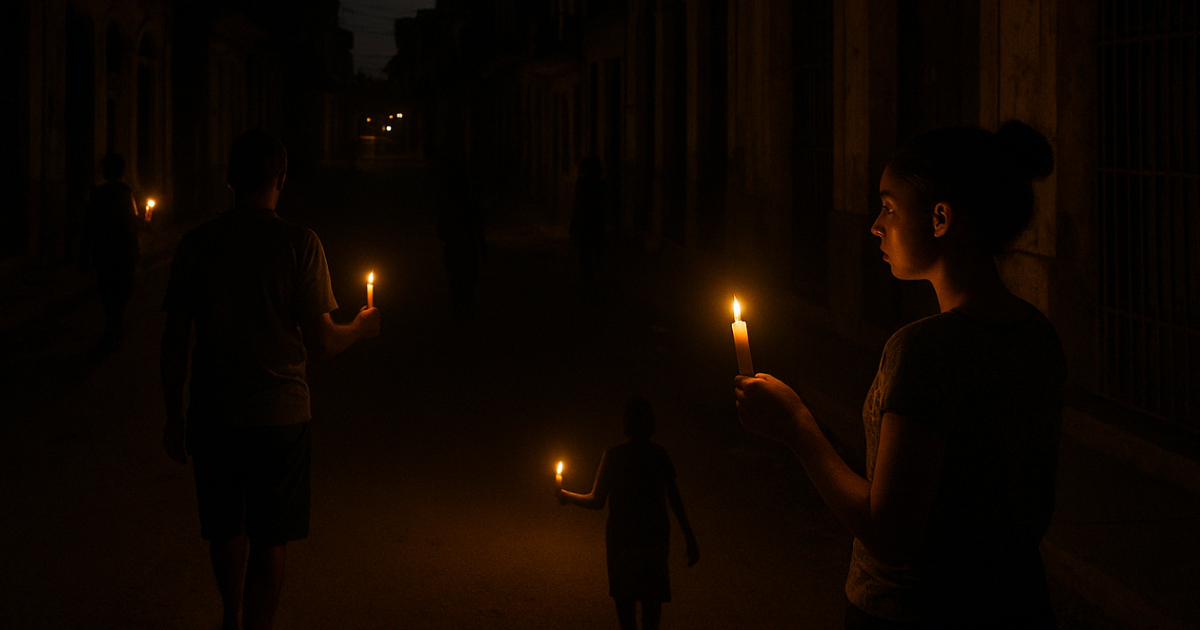
Despite the declared efforts by the authorities, thousands of families in Santiago continue to be without electricity, water, or refrigeration, in the midst of extreme temperatures and food scarcity.
National energy collapse
The daily report from the Unión Eléctrica (UNE) for November 11, 2025, confirms that the country continued to be affected throughout the 24 hours of Sunday and into Monday morning, with a peak impact of 1,542 megawatts (MW) at 7:00 PM.
Unión Eléctrica UNE
Additionally, 250 MW remain out of service in the provinces from Las Tunas to Guantánamo, due to the damage caused by Hurricane Melissa.
Meanwhile, the generation from the 26 photovoltaic solar parks from the West to Holguín produced 2,235 MWh, with a maximum capacity of only 384 MW, a figure insufficient to alleviate the national energy collapse.
A system in ruins
At 6:00 AM on Monday, the availability of the SEN was 1,470 MW, compared to a demand of 2,156 MW, resulting in a generation deficit of 704 MW.
The main thermoelectric plants in the country remain out of service partially or totally:
Antonio Maceo (Santiago de Cuba) – Units 5 and 6 out of service
Felton (Holguín) – Unit 2 out of service
Nuevitas (Camagüey) – Unit 5 out of service
Guiteras (Matanzas), Santa Cruz (Mayabeque), and Céspedes (Cienfuegos) under maintenance
Additionally, 81 distributed generation plants are shut down due to a lack of fuel, with 651 MW out of service, and another 106 MW unavailable due to a shortage of lubricants. In total, 757 MW are lost due to a lack of basic supplies.
Dismal forecast for peak hours
The UNE anticipates the addition of only 20 MW from the steam turbine at Energás Varadero, a figure that pales in comparison to the estimated demand of 2,950 MW.
As a result, the availability during peak hours will be 1,490 MW, which implies a deficit of 1,460 MW and a forecast of impacts of up to 1,530 MW nationwide.
Santiago, the most affected province
Although Hurricane Melissa struck eastern Cuba hard, Santiago de Cuba tops the list of the most affected areas by prolonged power outages, with entire neighborhoods lacking service for more than ten consecutive days.
Local authorities acknowledge the seriousness of the situation but do not provide specific timelines for complete restoration. On social media, citizens report a lack of equipment, slow repairs, and a lack of transparent official information.
The combination of structural failures, fuel shortages, and an obsolete electrical grid keeps the country mired in endemic blackouts, which have already become a part of the daily lives of millions of Cubans.
A crisis that shows no mercy
More than two weeks after Hurricane Melissa's passage, Cuba continues to face a widespread electrical crisis that the regime attempts to downplay with technical reports and promises of "gradual recovery."
But in Santiago de Cuba —historically one of the most resilient and combative cities in the country— darkness remains the norm, and with it comes the stark reflection of the collapse of the Cuban energy system.
Filed under: