
Related videos:
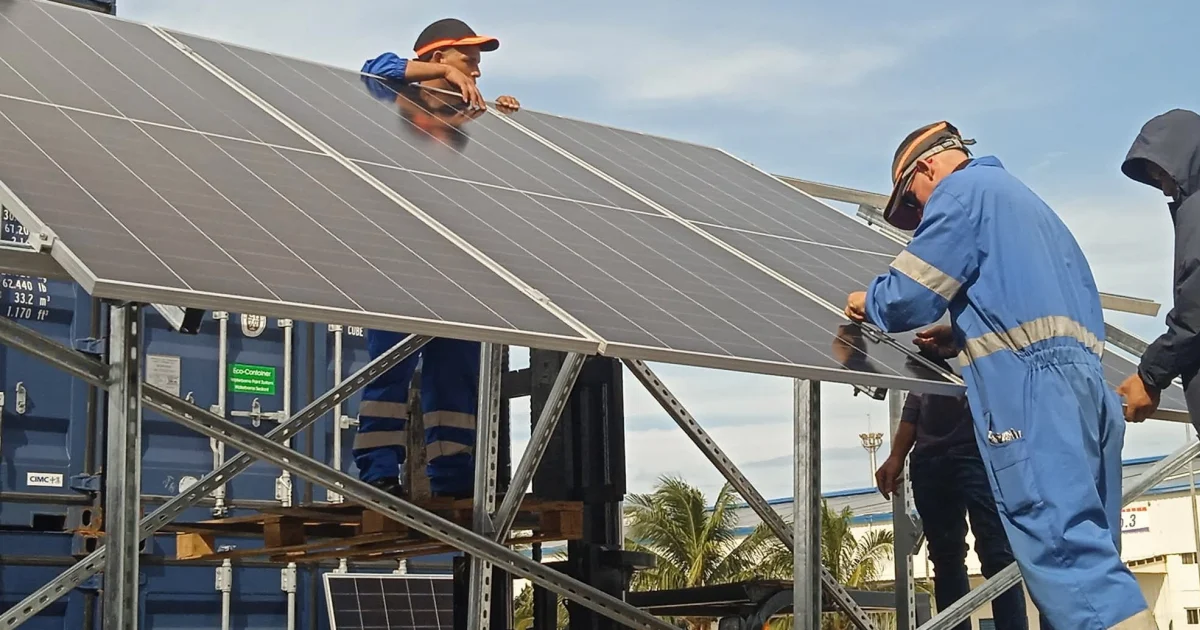
The Government of the People's Republic of China made a new donation to Cuba consisting of 5,000 photovoltaic energy kits, intended for the areas most affected by the hurricane Melissa in the eastern part of the country, where thousands of families remain without electricity or basic resources after the passage of the devastating cyclone.
The symbolic delivery of the third batch of the project took place in the logistics areas of the Mariel Special Development Zone, as reported by official journalist Bernardo Espinosa, who hailed the gesture as a sign of cooperation between the two governments.
The solar kits will be allocated, according to the official statement, to those affected by Melissa and to families living in isolated communities without connection to the National Electric System (SEN), which collapsed during the hurricane and still shows severe damage.
A gesture in response to the collapse of the electrical system
China's aid arrives at a time of deep energy and social crisis in Cuba.
Hurricane Melissa left a scene of destruction in the provinces of Holguín, Granma, Santiago de Cuba, and Guantánamo, where entire communities were ravaged by torrential rains and overflowing rivers.
Despite the official rhetoric about "progressive recovery," blackouts are constant in eastern Cuba, basic services have collapsed, and many families are sleeping under makeshift roofs after losing their homes.
The damage to the electrical sector is so extensive that, according to sources from the regime itself, full recovery will take months or even years.
In that context, photovoltaic kits serve as a minimal source of energy autonomy for families who, lacking means and resources, face devastation with the little support they receive from the State.
International aid fills the gap left by the state
The shipment of solar equipment adds to previous donations from the Chinese government, including the delivery of one thousand emergency family kits through the Chinese Red Cross at the end of October.
These packages included hygiene items, clothing, and basic utensils for the areas most affected by Melissa.
The Chinese ambassador in Havana, Hua Xin, assured that his country "will always stand with the Cuban people in difficult times," while the Cuban Ministry of Foreign Affairs publicly thanked him for the gesture.
However, there is growing distrust on social media and independent media regarding the fate of donations, due to past instances of mismanagement and state opacity in the distribution of international aid.
Many citizens fear that, as in previous instances, assistance will not actually reach those in greatest need, but will instead remain under bureaucratic control or even be resold.
The contrast with Cuban reality
While the government appreciates the gestures of solidarity from its allies, the country is experiencing one of the worst humanitarian and energy crises in its recent history.
The material losses are enormous: thousands of homes destroyed, crops ruined, impassable roads, and an electrical infrastructure that can barely support basic supply.
Despite receiving donations from China, Venezuela, and the UN, the Cuban state lacks the real capacity to respond effectively.
The population, impoverished by years of symbolic wages and lacking access to building materials or savings, faces reconstruction in complete helplessness.
In contrast, the international community and the Cuban exile have taken the lead: campaigns to collect food, medicine, and generators are multiplying from the United States, Mexico, and Spain, offering direct assistance that the regime neither channels nor matches.
Donations that reflect structural deficiencies
This is not the first time that China has assisted the Cuban regime in the energy sector. In September, Beijing donated eight generators installed at the Guanábana power station in Matanzas.
However, the lack of fuel to operate them and the precariousness of the electrical grid have limited their real impact.
Despite the official announcements regarding "strategic cooperation," experts in the sector acknowledge that the country is increasingly reliant on donations and emergency equipment, without addressing the structural issues that have devastated the electrical system.
While the Cuban government continues to rely on triumphalist rhetoric, reality shows that without international assistance, the country would literally be left in the dark.
The donation of solar kits by China reflects both external solidarity and the internal inability of a state that fails to guarantee basic services or provide a horizon of recovery for its citizens.
Filed under: