
Related videos:
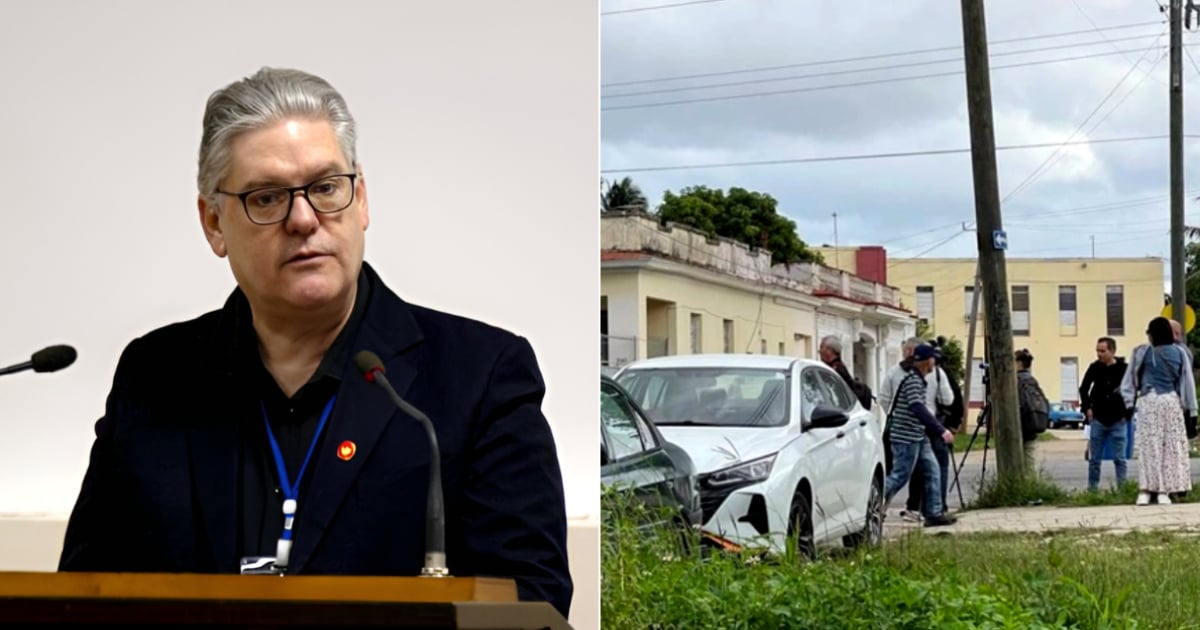
The trial against the former Minister of Economy and Planning of Cuba, Alejandro Gil Fernández, began this Tuesday, November 11, 2025, in a room at a military court located in the municipality of Marianao, under strict security measures and with complete secrecy.
According to the independent outlet CubaNet, the proceedings are taking place at the judicial headquarters located at 100 and 35, in Havana, where agents from the State Security —mostly dressed in civilian clothes— have closed off streets, blocked access points, and restricted pedestrian movement. Shops, cafes, and a nearby school have been closed since early morning.
The Cuban regime justified the holding of the closed-door trial for “national security reasons”, according to an official statement from the People's Supreme Court released on Monday. Only the parties and individuals authorized by the court may attend the hearing, while independent media and the general public are prohibited from entering.
Sources in the surrounding area report the presence of official vehicles, motorized escorts, and foreign press teams positioned at a distance, under constant surveillance. "The area is under complete control,” said a reporter on the scene, confirming the militarized nature of the operation.
Gil Fernández is facing accusations of espionage, embezzlement, bribery, tax evasion, money laundering, forgery of public documents, influence peddling, and actions detrimental to economic activity or contracting, among others.
The Cuban Prosecutor's Office is requesting a life sentence in the main case, and up to 30 years in prison in a second case involving more than 20 defendants.
The former minister was removed from his positions on February 2, 2024, amid one of the worst economic crises in the country, characterized by blackouts, shortages, and the failure of the "Tarea Ordenamiento" program, which he publicly defended. His political downfall has been one of the most spectacular within the regime's leadership in recent decades.
Analysts believe that the trial of Gil Fernández represents an unprecedented precedent in Cuba's recent history: it is the first time a former minister faces espionage charges in a military court.
The celebration of the process under complete secrecy reinforces doubts about judicial transparency on the island and the internal tensions within the power structure.
CiberCuba will continue to update this information as more details about the trial's progression become known.
Context and reactions to the trial against Alejandro Gil
The trial of Alejandro Gil Fernández has sparked a wave of reactions both inside and outside of Cuba, particularly due to the secretive nature of the proceedings, the severity of the accusations, and the downfall of one of the most prominent figures in the government of Miguel Díaz-Canel.
The family denounces "total manipulation."
Her daughter, Laura María Gil, reacted to the announcement of the trial, describing the accusations against her father as “total manipulation.” In an audio message shared on social media, she claimed that the family learned about the date of the trial through television, when the grandmother saw it on the midday news.
"We had no idea, we didn't know anything. We found out because my grandmother saw it on the one o'clock news," she recounted.
The young woman also reported restrictions on her communications, stating that her WhatsApp account was limited on the same day as the official announcement: “I have a poor connection and many messages I cannot respond to. I don’t know if it’s a coincidence or if someone intervened in my account.”
Despite the secrecy, Laura María assured that she will try to attend the trial alongside her brother, although she acknowledges it will be a closed process. “I will do my utmost to get in, even if it’s just me. Nothing can change my mind that he is not a spy,” she stated, insisting on her father's innocence.
At the beginning of November, the young woman had publicly requested that the process be broadcast live on Cuban television, appealing for transparency and the citizens' right to know the facts. “No matter what they say or what evidence they show, I am not interested... I am completely sure that this is total manipulation of everything,” she reiterated at that time.
The sister from Spain: "They want to silence uncomfortable truths."
From Spain, María Victoria Gil Fernández, sister of the former minister, asserted that Alejandro denies all the allegations and described the trial as an attempt by the regime to “silence uncomfortable truths” within the state apparatus.
In recent statements, he expressed regret that the family had not had direct access to the case file or information about the other accused, and emphasized that the process "should never have taken place behind closed doors."
René González calls for a public trial and exposes cracks within the regime
One of the most striking reactions came from former Cuban spy René González, a member of the well-known Wasp Network, who surprised many by publicly calling for an "open and transparent" trial for Alejandro Gil Fernández.
In a lengthy message posted on social media, González defended the principle of presumption of innocence and warned that "we are not in a position to ask people to believe on faith," in an apparent reference to the lack of public evidence and the secrecy surrounding the process.
His words, coming from a figure with a long history of loyalty to the system, introduce an uncomfortable element for the regime. Although the former agent was careful not to cross any lines—reminding that "we should not shoot at each other from the same trench"—his call for transparency lays bare the internal wear and the growing doubts about the credibility of the Cuban judicial system.
The gesture of the former spy adds to the outrage of Gil's family, who are demanding a public trial and denouncing irregularities in the investigation.
The contrast between both positions—the caution of González from within the system and the open denunciation by the families from outside—reinforces the perception of fracture and decomposition at the core of Cuban power.
A case that divides even within the ranks of the government
On social media, some former officials and supporters of the regime have expressed surprise at the speed with which the investigation unfolded, while others insist that the process is a "demonstration of zero tolerance for corruption."
However, critical voices suggest that the accusation of espionage—a seldom-used term in the upper echelons of Cuban bureaucracy—reveals internal fractures within the power structure rather than representing a genuine exercise of justice.
The downfall of the regime's "economic face"
An engineer by training and regarded for years as the technocratic face of the economic reforms of the Castro regime, Alejandro Gil was dismissed in February 2024 following the collapse of the "Ordenamiento Task" and the worsening of the financial and social crisis on the island.
Today, he faces a possible life sentence and has become a symbol of a system that harshly punishes even its own members when they cease to be politically useful.
Filed under: