
Related videos:
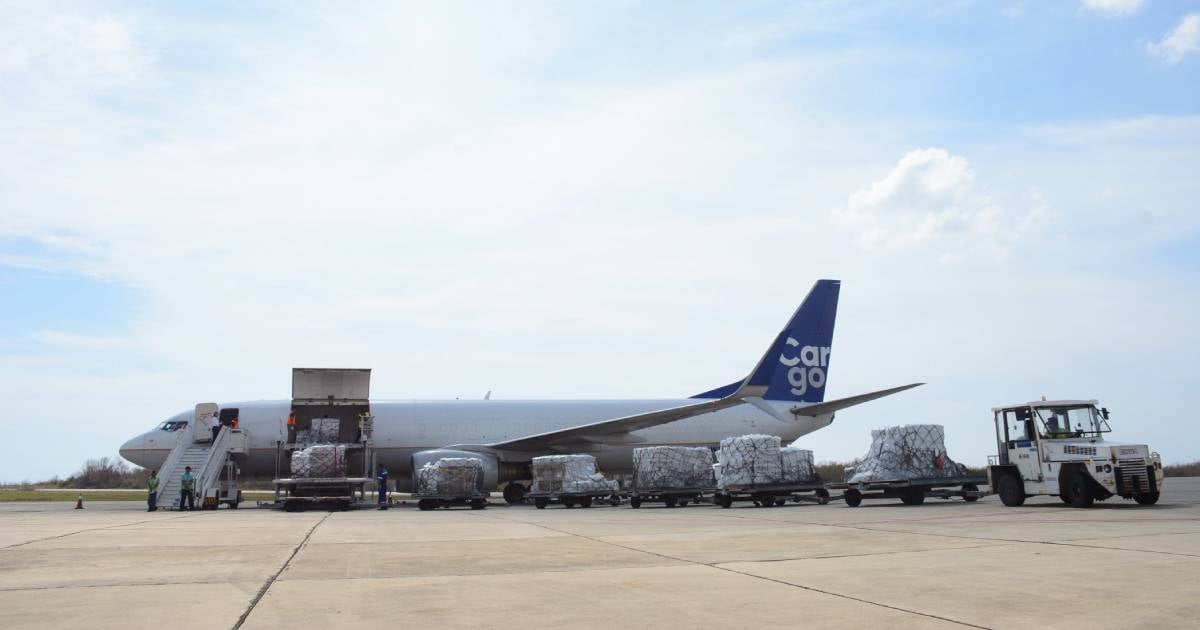
A plane from the United Nations Development Programme (UNDP) arrived this Tuesday at Santiago de Cuba International Airport with 4,375 tarps intended to temporarily cover homes damaged by Hurricane Melissa, one of the most devastating cyclones in the country's recent history.
The shipment is part of the UN action plan valued at 74.2 million dollars, aimed at assisting one million people in eastern Cuba affected by the hurricane, which made landfall on October 29 in the municipality of Guamá as a category 3 with sustained winds of up to 195 km/h.
According to information from the UNDP on their official account on X, the tarps will be distributed in the areas most affected by the storm, especially in Guamá municipality itself, where thousands of families are still without shelter.
The humanitarian cargo was procured with the support of the Central Emergency Response Fund (CERF) and the Office for the Coordination of Humanitarian Affairs (OCHA), in coordination with the Cuban Civil Defense and provincial authorities.
"These actions are part of the United Nations' immediate response in Cuba and are carried out in close collaboration with local authorities to assist the most vulnerable individuals," explained Fidel Rodríguez Fernández, communication analyst for UNDP.
The shipment marks a new phase in the UN's humanitarian operation, which has already mobilized food, medicine, generators, and solar systems through agencies such as the World Food Programme (WFP), UNICEF, and PAHO.
According to figures from the organization, more than 3.5 million people were affected by Hurricane Melissa, which destroyed over 90,000 homes, ravaged 100,000 hectares of crops, and damaged 600 medical centers and more than 2,000 schools.
In Santiago de Cuba, roofs continue to be one of the most pressing issues, with thousands of families sleeping under makeshift structures or in neighbors' homes, while the rains and lack of materials worsen their situation.
The UN resident coordinator in Cuba, Francisco Pichón, has reiterated that the country “cannot face the magnitude of the disaster alone” and called for international support to expedite the reconstruction.
While the Cuban government seeks to restore basic services and provide roofing tiles to affected families, international humanitarian aid is becoming the main support for thousands of households.
Filed under: