
Related videos:
The magnitude of the disaster left by Hurricane Melissa in Cuba has exceeded the government's ability to respond. The United Nations acknowledged this, stating to the agency EFE that Cuban authorities are “overwhelmed” by the needs of more than 3.5 million people affected amid devastation described as “enormous.”
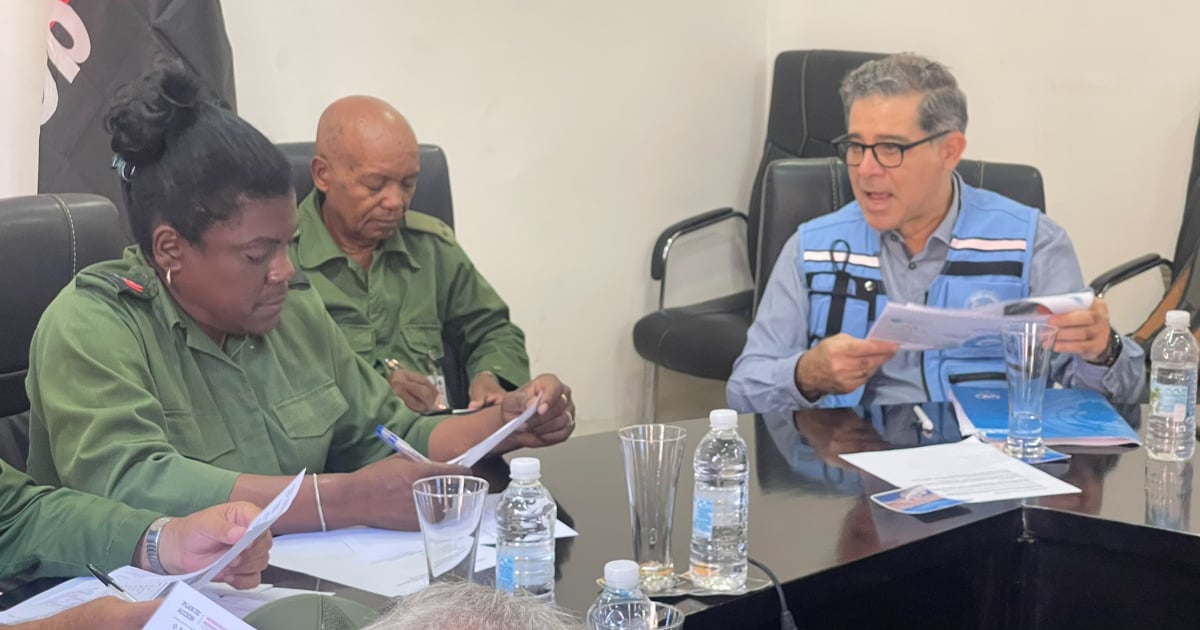
The UN resident coordinator in Cuba, Francisco Pichón, explained that the regime's initial estimates underestimated the extent of the disaster. More than 90,000 homes were affected or destroyed, and 100,000 hectares of crops were swept away.
In addition, there are 600 medical facilities and more than 2,000 educational centers that have been damaged, along with collapsed roads, bridges, power lines, and telecommunications towers.
"The national institutions are overwhelmed by the need to respond and create the conditions for an early recovery," affirmed Pichón.
Although the government managed to evacuate around 735,000 people and no fatalities have been reported, the magnitude of the disaster, combined with the economic and energy crisis facing the island, highlights the country's fragility in addressing emergencies of this scale.
Since Melissa struck eastern Cuba in late October as a Category 3 hurricane, with winds of up to 200 kilometers per hour, the UN has taken a central role in the humanitarian response.
The organization presented an Action Plan to assist one million "severely affected" individuals, with an initial fundraising of $74.2 million, of which at least $11 million have already been mobilized.
In recent days, agencies such as the World Food Programme (WFP), UNDP, UNICEF, and PAHO have distributed food, medicines, electric generators, and solar systems in provinces like Granma, Holguín, Santiago de Cuba, and Guantánamo.
In Bayamo, the UN warehouses serve as logistics centers from where rations of rice, peas, and oil are prepared for displaced families.
"The work extends into the night. Many have lost everything," reported an official from the WFP from Granma, as residents in El Cobre, in Santiago, describe the scene as "a war against poverty and neglect."
Pichón insisted that Cuba cannot face the reconstruction alone and called for international support to prevent the collapse of basic services. “The support of the international community is needed; we cannot leave Cuba alone at this moment,” he emphasized.
Filed under: