
Related videos:
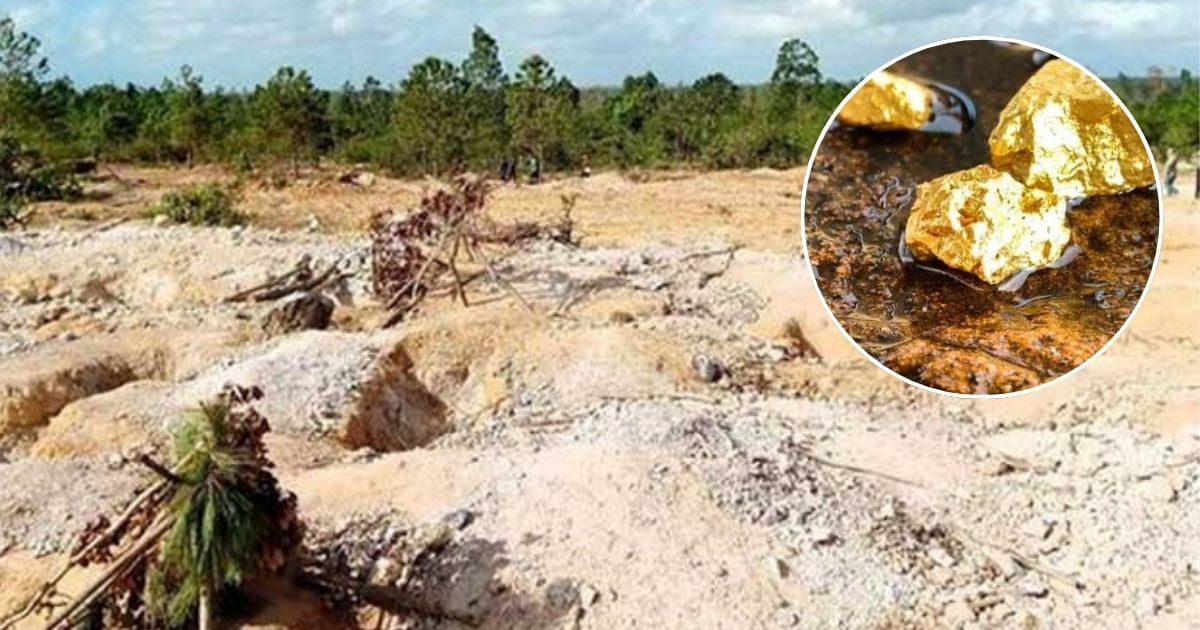
The Australian company Antilles Gold announced that it plans to start a new drilling program at the La Demajagua mine, located on the Isla de la Juventud, at the beginning of 2026. This project has been conducted in collaboration with the state-owned GeoMinera S.A. for several years and has generated expectations, uncertainties, and contrasts with the Cuban economic reality.
The plan includes 10,000 to 15,000 meters of additional drilling to refine the estimates for gold, silver, and antimony in the deposit, and will serve as the foundation for a Definitive Feasibility Study that will not be ready until 2027. By then, the company hopes to determine whether the project will finally proceed towards its commercial launch, something that has been postponed for over a decade amid promises of high returns, technical delays, and market shifts.
In a statement, the mining company explained that it will use two new drilling machines, operated by a division of the Chinese giant Xinhai Mining, a key partner in several extraction projects on the island. According to Antilles, this campaign will enhance the classification of resources and verify whether it is possible to increase the reserves of antimony, a mineral that is highly valued in the technology industry and whose international prices nearly triple those of the Chinese market.
Although Antilles Gold insists on the potential of the deposit, its projections depend on an operation that has yet to begin and on a company whose stock price remains at historic lows — as of the close on November 12, its shares were trading at just 0.009 Australian dollars — with little analyst coverage and unfavorable technical indicators, according to data from TipRanks.
The company, however, assures that the situation could be different by 2027, when it expects to use around 60 million dollars in "surplus cash" generated by another developing mine, Nueva Sabana, as capital to advance La Demajagua. The rest of the financing would depend on credits linked to the Chinese contractor and advances from future sales of gold concentrate.
The La Demajagua project has been presented for years as one of Cuba’s significant mining ventures. In 2021, Antilles Gold reported “stunning” concentrations of gold and silver in the initial drillings, with peaks of up to 109 grams of gold per ton and over 1,700 grams of silver. One year later, the company raised its expectations and spoke about the possibility of obtaining several types of concentrates, including one rich in antimony, a critical metal for semiconductors and batteries.
But despite the announcements, commercial exploitation has never begun. The optimistic rhetoric contrasts with doubts about the Cuban state's actual capacity to support a project of this scale in the midst of energy collapse, a financial crisis, and lack of infrastructure.
Antilles Gold insists that the international scenario is now more favorable due to the rising prices of gold, silver, and antimony. However, Cubans have heard similar promises before. Demajagua, the heir to the historic Delita mine, still has not become the source of prosperity that has been announced in headlines for over a decade.
Filed under: