
Related videos:
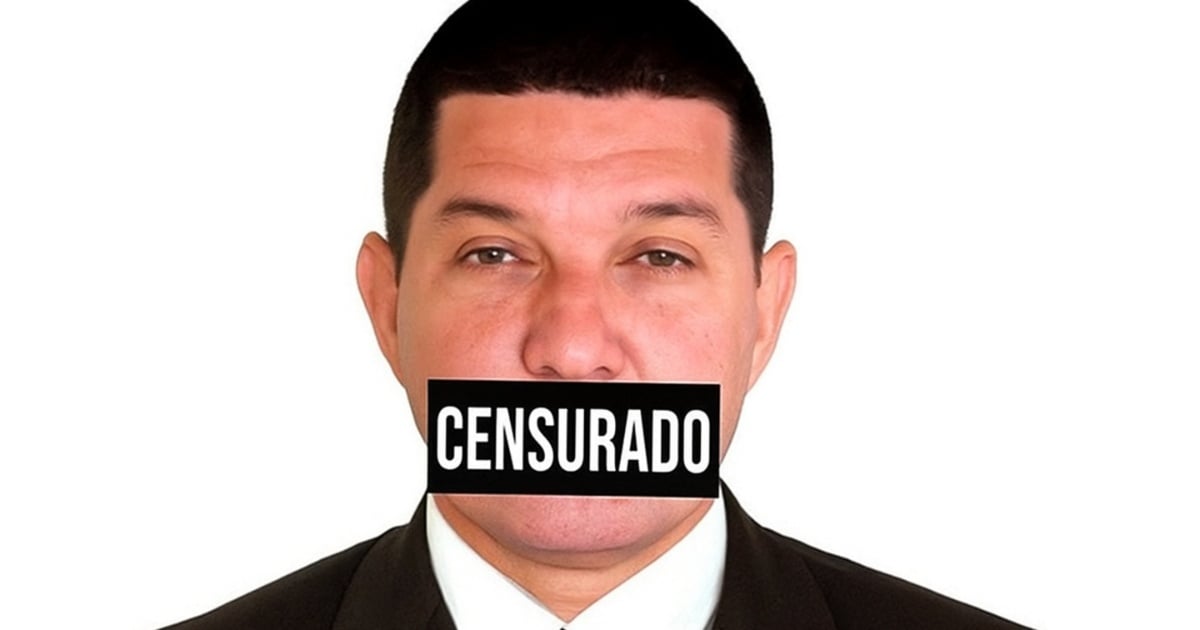
The Cuban William Sosa, a resident of the province of Las Tunas, was detained after posting critical opinions about the reality of the country on social media, according to his son, Miguel Sosa, who claims that the only “crime” his father committed was “thinking and writing.”
On social media, the internet user’s son revealed that the State Security accuses his father of "disobedience" for not having "heeded" the prior warnings regarding his dissenting posts.
The family claims that this is an arbitrary detention motivated by their political opinions, in a context of increasing censorship and repression against citizens who use the internet to challenge the regime's management.
Miguel explained that his father was officially summoned and then detained this Wednesday, and he requested public support to bring attention to the case.
“His 'crime' was to think and to write,” he wrote, describing him as a respectful man, committed to analyzing national issues and a defender of coherence and honesty in public debate. "His only 'offense' was to do exactly what you have supported and respected for so long: to publish his economic and social analyses here."
In a broader text, Miguel characterizes the detention as illegal and “without legal basis,” emphasizing that in Cuba there is a Constitution that recognizes freedom of thought and expression, but in practice “human rights seem to be nothing more than empty words.”
It points out that authorities issue “subjective warnings” without legal backing and detain individuals for exercising their right to report corruption and suggest solutions, instead of addressing crimes such as violence, femicides, theft, or extortion, which —it is claimed— go unpunished due to lack of investigation.
In the comments on the post, the son states that the crime of "disobedience," outlined in articles 186 and 189 of the Cuban Penal Code, provides for penalties of six months to two years in prison or fines of up to five hundred units.
The family also released an official citation as proof that they had been previously summoned by the authorities before the arrest was carried out.
Miguel emphasized the emotional impact of the situation: "There is a home that needs it, that is waiting for it, and that from this moment is suffering a terrible anguish because of this situation."
In his complaint, he describes his father as an uncomfortable voice for those in power, but not violent: “The only thing he has done is defend coherence, denounce corruption and propose solutions… he never attacked anyone nor stepped outside the established limits; he simply spoke from intelligence and reasoning.”
In his opinion, the arrest is yet another example of political persecution and the "unrestrained attack by institutions to silence citizens."
The case of William Sosa is situated within an environment where social media in Cuba has become a risky space for those expressing critical opinions about the country's economic, political, or social situation. The complaint recalls, for instance, the case of a citizen detained in Santa Clara after posting messages against power outages, which were interpreted by the authorities as a threat to the “established order.”
That episode, like the current one, highlighted the use of repressive mechanisms in response to peaceful demonstrations in the digital realm.
The text also refers to the use of "gag laws" and new regulations that expand the tools for penalizing users for their online opinions, even when it comes to personal experiences or citizen complaints.
Under this legal umbrella fines, seizures, and threats have been imposed aimed at instilling fear and limiting public debate.
In the case of Las Tunas, Sosa's son claims that while thousands of common crimes go unanswered, efforts are being made to silence criticism in order to project an image of a perfect state that it is not.
Miguel demands "FREEDOM FOR WILLIAN SOSA" and recalls: "Behind this account that inspires so many, there is a family that only asks for justice and for him to return home."
Filed under: