
Related videos:
The regime of Daniel Ortega and Rosario Murillo continues to transform the desperation of thousands of Cubans into an unending source of income that keeps filling their coffers, even as international pressure mounts and the United States tightens its policy against Managua.
While Washington warns that the Sandinista government uses migration as a political weapon, the Managua-Honduras-Mexico route remains active and profitable, with Cubans as its backbone.
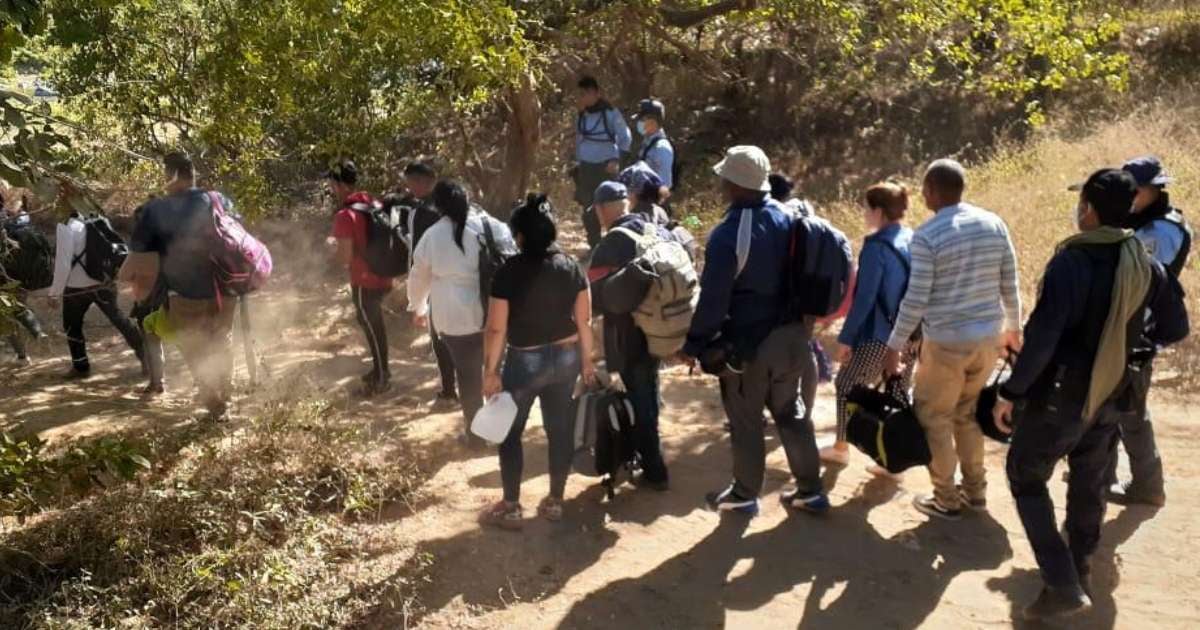
The latest data revealed by the independent newspaper La Prensa shows that between January and July 2025, over 21,000 migrants heading to the United States entered Honduras from Nicaragua. Of these, 83% were Cuban.
The figure confirms a sustained trend; despite the restrictions from the U.S. and Mexico, Cubans continue to bet on the Nicaraguan route as the only way out amid the crisis and the repression of the island's regime.
For Nicaragua, the migratory flow has become an industry. Between 2021 and 2024, Ortega eliminated visa requirements for citizens from Cuba, Haiti, and several African and Asian nations.
The decision opened the doors to a million-dollar business based on charter flights, inflated fares, and mandatory payments. Migrants paid between 2,000 and 5,000 dollars per ticket to enter a republic that did not want them as visitors, but as merchandise merely passing through.
Between January and October 2023, the General Directorate of Migration of Nicaragua collected nearly 66 million dollars from these movements.
The complete figures are overwhelming, with more than 400,000 Cubans using the Managua-Honduras-Mexico route between 2021 and 2024, a human avalanche that sustained the Nicaraguan economy amidst international isolation.
The business did not stop even when the United States imposed sanctions on airlines and operators facilitating trafficking. In 2024, the route continued to generate profits, with Managua becoming a springboard for those looking to reach the southern border.
While Nicaragua profited, it was also experiencing its own exodus. More than 600,000 Nicaraguans have left the country since 2018 to escape repression and economic collapse.
The dictatorship found in that double tragedy—the flight of its own and the arrival of foreigners passing through—a way to sustain itself with remittances totaling over 4 billion dollars in 2023 and migration payments that support the Sandinista elite.
This economic framework occurs amidst the confrontation with the United States, which accuses Ortega of facilitating human trafficking. The Trump administration announced this year visa restrictions against more than 250 high-ranking Nicaraguan officials, labeling the regime as “a threat to security” and accusing it of turning irregular migration into a political tool.
Washington claims that Managua allows, and even promotes, the entry of Cubans, Haitians, Venezuelans, and citizens from other countries to send them en masse to the southern border, putting pressure on the U.S. immigration system. This accusation has been repeated for months and is now supported by tougher diplomatic measures.
Honduras, which is the first to feel the impact of the migratory flow, reported a 90% drop in irregular entries in 2025 compared to the previous year due to stricter controls in Mexico and the U.S.
However, Cubans continue to represent a significant volume with 16,790 as of November. The reason is clear: if Nicaragua maintains its visa-free policy for citizens of the island, this privilege has become a lifeline for some and a business opportunity for others.
The route continues, driven by the needs of Cubans and by the Ortega-Murillo regime's desire to continue enriching itself at the expense of the regional migratory tragedy. And although international pressure is mounting, Managua seems determined to keep open one of the most lucrative and dangerous pathways to reach Mexico and the United States.
Filed under: