
Related videos:
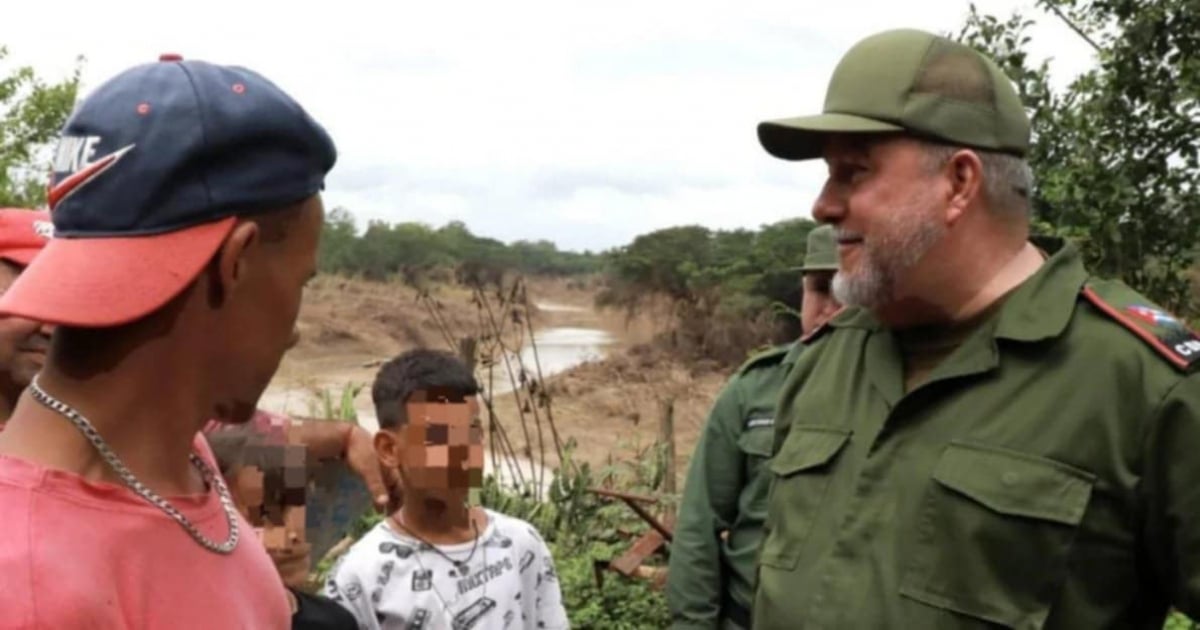
In the midst of the widespread destruction left by the hurricane Melissa in eastern Cuba, during a visit to the municipality of Cauto Cristo in Granma, Prime Minister Manuel Marrero proposed an official solution that outraged many: "to sell a little bit of root vegetables" to the victims.
In front of neighbors who are still trying to salvage what is left of their homes, Marrero assured that international donations are arriving in the country.
However, he had to admit that Melissa only worsened a previous and ongoing crisis. "We were already in a bad situation, we already had enough problems, dengue, diseases (...) problems that had piled up."
Regarding the food shortage, instead of a solid supply plan, the leader suggested that the tubers that "are arriving" be sold to the affected individuals or that a "caldosa" be made.
"There are many people who lost their crops, the little animals they had. We need to look for alternative solutions, make the stew, and see how we can bring the root vegetables that are arriving here to the community and sell a little bit of them," she said.
Marrero stated that the government will provide financial aid to the most critical cases, although he did not clarify whether this money will be a state contribution or a loan that families will have to repay in the future.
"If there is any family that is currently going through a very tough time and needs financial assistance, we will also provide financial support," he emphasized.
Mattresses, one of the most urgent resources for those who lost everything, became a central topic. Marrero asked the neighbors if they had received any, in an attempt to show solidarity.
However, the scene revealed more political calculation than empathy, especially following the recent scandal caused days earlier by Díaz-Canel, who responded indifferently to a woman who pleaded for help to get her bed back: "I don't have one to give you right now either".
The episode, which went viral, amplified public discontent and forced the leaders to try to repair their image.
In Cauto Cristo, the local census recorded 103 camero mattresses and 56 personal mattresses damaged, but as of last Wednesday, only 50 camero mattresses and 26 personal mattresses had arrived, distributed among those who were able to return to what little remained of their homes. For the rest, the authorities did not provide a delivery date.
In the municipality of Granma, over 200 homes were damaged, along with 70 kilometers of roads and losses of livestock and crops, yet the distribution of essential goods is progressing at a frustratingly slow pace.
More than two weeks after the cyclone passed, dozens of families in Granma, Holguín, and Santiago de Cuba are still without beds, without roofs, without food, and without answers.
The government's promises of "permanent support" stand in stark contrast to reality: flooded communities continue to rely more on spontaneous solidarity among neighbors than on any state action.
In multiple areas, it is the community itself that has organized to distribute food, assist the elderly, and recover belongings, while the authorities merely ask for patience and talk about "alternatives."
The official discourse claims that "no one will be left helpless," but scenes on the ground tell a different story. The country is failing to provide the most basic necessities amidst an emergency that demands speed, resources, and transparency.
Amid media gestures, ambiguous statements, and proposals that border on the absurd, such as selling food in a devastated and hungry territory, the Government once again demonstrates that it is not up to the suffering of its people.
Meanwhile, the victims of Melissa continue to ask for more than just words. They are hoping for real actions in a country where each new storm not only destroys homes but also erodes faith in institutions that, once again, arrive late and do little.
Filed under: