
Related videos:
The passage of Hurricane Melissa left the province of Guantánamo with nearly full water reserves, but with a fragile supply system that has been unable to restore service to thousands of residents affected by power outages and high turbidity in the rivers.
The meteor event created a paradoxical situation in the territory, as although the reservoirs are over 95% full, more than 180,000 residents are experiencing issues due to pump failures, power interruptions, and water quality problems, according to Lexis Suárez Ramírez, provincial director of Aqueduct and Sewer.
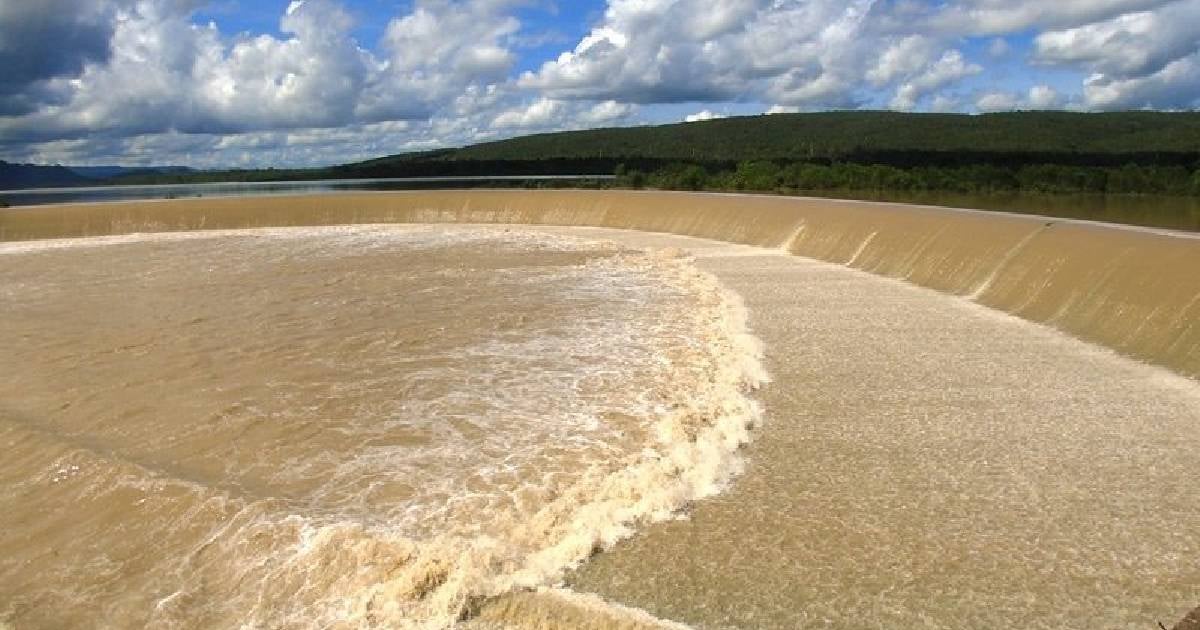
According to the official, the impact of Melissa was "beneficial" for the reservoirs in the 10 municipalities. For instance, La Yaya reached its maximum capacity of 160 million cubic meters, and the Faustino Pérez dam reached 98%.
However, the municipalities of El Salvador, Niceto Pérez, and Manuel Tames were the most affected in terms of water supply, as they relied almost entirely on pumping systems that were brought to a standstill due to power outages, noted the official newspaper Venceremos.
Out of the 176 supply systems in the territory, 88 operate by gravity and 88 by electric pumping.
Among these, 15 stations remain non-operational, which leaves more than 15,000 residents without direct service.
More than 101 communities receive water exclusively through tankers, with cycles of between 15 and 20 days, while the electrical system is being restored.
The high turbidity of the rivers prevents the pumping of water that does not meet quality standards, although authorities assure that they have sufficient reserves of chlorine gas and hypochlorite to ensure safe drinking water once the service is restored.
The southern part of the city of Guantánamo, with around 60,000 inhabitants, experiences the greatest delays.
The Guanta pumping station has encountered electrical failures and obstructions due to vegetation drag.
Although it was restored on Tuesday, the recurring outages have extended the distribution cycles, forcing the use of tankers to supplement a service that the authorities acknowledge is insufficient, the media outlet reported
According to Suárez, 151 supply systems have already been restored, while technological difficulties persist in Maisí, Yateritas, and Manuel Tames.
He assured that the system should return to normal in the coming days, once the 15 stations still awaiting electrical power are incorporated.
The intense rains that battered the city of Baracoa in Guantánamo during the early hours of this Saturday, caused another rise in the Miel River that submerged several low-lying areas of the town and rekindled residents' fears of another disaster like those that have occurred in previous years.
In August, it emerged that the population of the municipality of Sancti Spíritus was receiving cloudy water, with a foul smell and the presence of insects, a situation that the authorities acknowledged and attributed to the drought and issues with the water supply sources.
The Water Supply and Sewerage Company of Santiago de Cuba alerted at the beginning of March that drinking water was arriving at homes with "high levels of turbidity", due to maintenance on the valve of a supply network that serves 12 circuits, affecting more than 50,000 people.
Additionally, healthcare personnel reported that they were monitoring the water quality from the supply source of Bello, one of the main suppliers of water to the city of Matanzas, following the alert about fecal contamination presumably related to the dumping of cachaza at the Boris Luis Santa Coloma sugar mill in Madruga, located in the neighboring province of Mayabeque.
Filed under: