
Related videos:
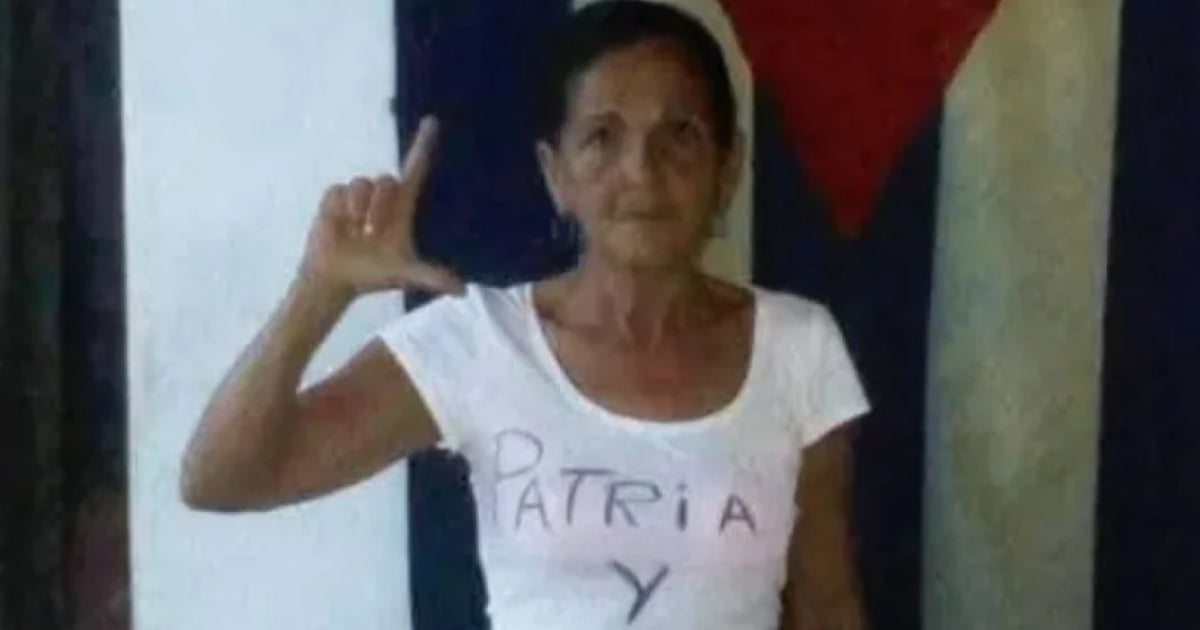
The grandson of Olaida del Castillo, a member of the opposing movement Damas de Blanco, passed away in Havana due to one of the mosquito-borne viruses that have infected a large part of the population in Cuba.
The little one passed away on Saturday evening at the hospital where he had been admitted for several days in critical condition, fighting for his life.
The news was confirmed on Facebook by Laura María Labrada Pollán, daughter of the late leader of the organization, Laura Pollán.
"Send her and her family's our deepest condolences from her brothers at the CID," said Laura María, who did not specify which virus caused the child's death.
Dozens of people expressed their sorrow and outrage over the tragic event, which is not an isolated loss but rather a frequent occurrence amid the country’s healthcare crisis.
The death of the child exposes the healthcare collapse that Cuba is experiencing and the helplessness of thousands of families, forced to confront an epidemic that the government itself has reluctantly admitted, after months of downplaying its severity.
A personal tragedy that depicts widespread abandonment
The death occurs in a context where the main cities of the country are engulfed in evident unsanitary conditions: overflowing garbage dumps, streets plagued by stagnant water, and a complete lack of ability from local governments to ensure minimal hygiene conditions.
They are suitable environments for the proliferation of mosquitoes, whose increase has caused a surge in cases of dengue, chikungunya, and other arboviruses.
Health authorities, far from assuming direct responsibilities, continue to blame the population for not keeping yards and hallways clean.
Meanwhile, the neighborhoods continue to be buried in waste, the sewage systems are collapsed, and fumigation is sporadic or non-existent due to a lack of fuel, equipment, and personnel.
Families are suffering the worst: hospitals with overcrowded wards, a lack of beds, shortages of test reagents, an absence of basic medications, and services that operate only partially, with insufficient staff.
The government acknowledges the crisis, but does not offer real solutions
Last week, officials from the Ministry of Public Health appeared on the Round Table program to explain the "deteriorating epidemiological situation."
The national director of Epidemiology, Dr. Francisco Durán acknowledged that the situation remains "acute" and that at least 14 provinces are facing active circulation of dengue and chikungunya.
He also admitted that more than 30% of Cubans have already been infected with chikungunya.
Despite the magnitude of the problem, Durán worked hard to project an image of control and improvements, even when official figures show dozens of municipalities with active transmission, tens of thousands of infections, and widespread fever outbreaks throughout the country.
The statements, filled with technical jargon and calls for "community participation," overwhelmingly contrast with the visible reality: hospitals in ruins, lacking supplies, specialists, and the capacity to cope with a sustained increase in patients.
While the epidemiologist speaks of a "tendency toward decrease," the neighborhoods are experiencing the opposite: more mosquitoes, more fever, more severe cases... and more deaths.
An epidemic fueled by official indolence
The crisis is worsening because the vector control program has practically disappeared. The fumigation, when it occurs, only covers isolated areas, and its impact is minimal in the face of the massive accumulation of garbage, the lack of drainage in homes, and widespread urban neglect.
Durán himself acknowledged structural flaws in waste collection, but the Government continues to shift the responsibility onto the population and avoids admitting that the collapse of municipal services is a direct consequence of state disorganization, lack of investment, and years of poor decisions.
In addition, there is a shortage of medications: antihistamines, analgesics, serums, antibiotics, diagnostic kits, and even multivitamins are products that hardly ever appear in pharmacies or hospitals.
Families have to improvise home remedies while health professionals try to do their jobs without instruments, with insufficient staff, and at times, without stable electricity in healthcare facilities.
A death that symbolizes a sick country
The death of Olaida del Castillo's grandson is a devastating blow to her family, but it also reflects a country where everyday life has become a constant risk.
Where a child can lose their life not due to the aggressiveness of the virus, but because their parents and grandparents cannot find a healthcare system capable of providing a real chance of survival.
While the government insists on displaying optimistic graphics and statements on television, reality prevails: more people are falling ill, more families are suffering irreparable losses, and more neighborhoods are trapped amid garbage, mosquitoes, and neglect.
The death of this child is not an inevitable accident. It is a direct consequence of a country caught in a prolonged health crisis, compounded by the lack of state action, ineffective institutions, and a system that has long ceased to protect its people.
Today, another Cuban family is mourning, and the entire country is once again asking how many more children, elderly, and sick individuals will have to die before the Government takes the responsibility it owes and acts with the urgency that the epidemic—and human life—demands.
Filed under: