
Related videos:
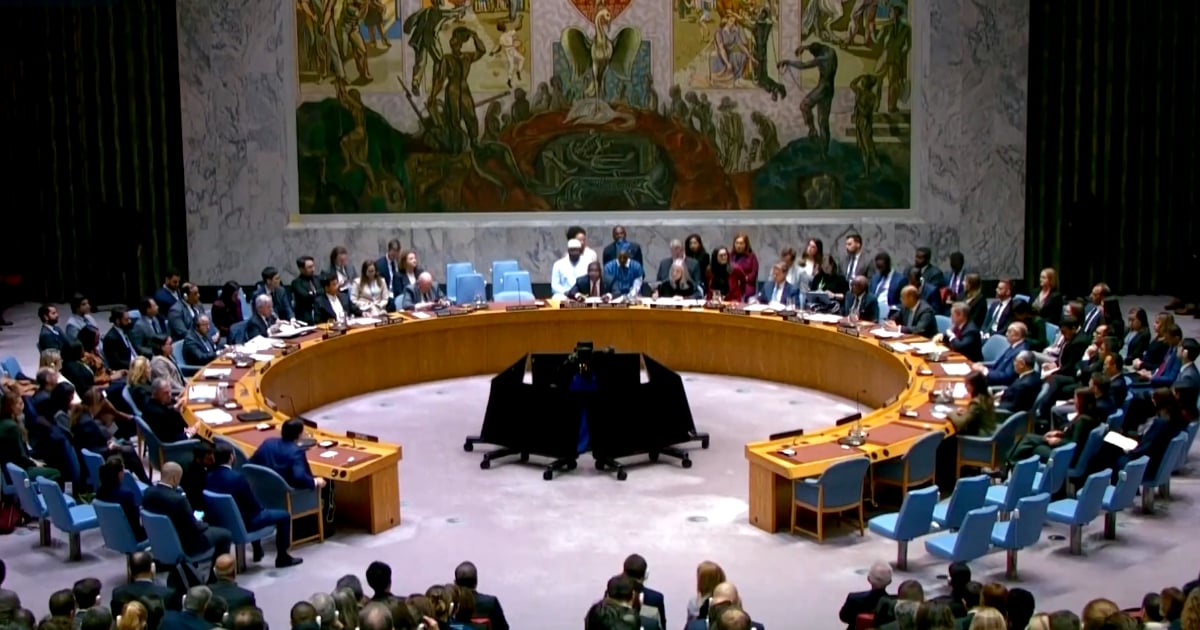
The United Nations Security Council (UNSC) approved a resolution on November 17, 2025, supporting the Donald Trump plan for the Gaza Strip, with 13 votes in favor, 0 against, and abstentions from Russia and China.
The resolution —which, according to journalistic sources, would be Resolution 2803 of the UN Security Council— approves the creation of a transitional body called the "Peace Board" to temporarily govern Gaza and the deployment of an "International Stabilization Force" (ISF), made up of international contingents tasked with disarming armed groups in the area and facilitating reconstruction.
The project is based on the president's "20-point plan," which had already been included as an annex to the draft resolution.
The text outlines an initial mandate of two years for this transitional government, before the Palestinian National Authority (ANP) — once it fulfills a reform program — takes full control of the Gaza Strip.
Reactions
The majority vote of the UNSC marks a significant endorsement for the U.S. initiative, but it also generates strong criticism.
The ANP appreciated the acknowledgment of a "credible path towards Palestinian self-determination and the eventual establishment of a state," although it warned that the fine print of the plan lacks specific timelines and real guarantees.
For its part, Hamas rejected the resolution, describing it as an international imposition on Gaza. Israel also expressed its dissatisfaction, considering the demands on the Islamist movement insufficient and the conditions imposed on the Israeli government excessive.
Moreover, Trump's initiative —and now that of the UNSC— suggests a supposed 'political transition' in Gaza that, in practice, could only mean a transfer of control: from Hamas's authoritarian dominance to a Palestinian Authority with questionable legitimacy, under international oversight.
Finally, the abstention of Russia and China not only reveals their reservations about the text, but it also underscores the growing international polarization over Gaza, where major blocs assert their geopolitical power.
Filed under: