
Related videos:
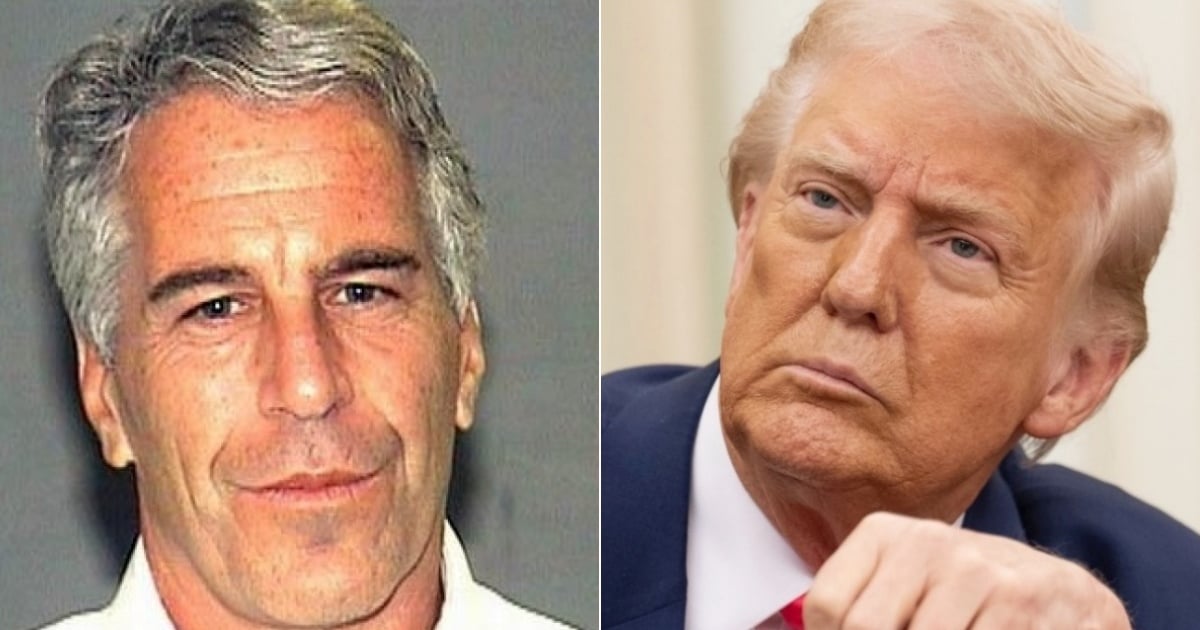
In a decision made out of the public eye and without an official ceremony, President Donald Trump privately signed the "Epstein Files Transparency Act," which requires his administration to release thousands of documents regarding the financier and pedophile Jeffrey Epstein.
The measure, approved almost unanimously in Congress, was subsequently announced by the president himself through his Truth Social network, but so far the Department of Justice has not provided a specific date for its implementation.
A change of stance under pressure
The announcement was made by Trump himself through his network Truth Social, in an extensive message where he insisted on the narrative that Epstein has historically been linked to Democratic leaders.
"Epstein was a lifelong Democrat, donated thousands of dollars to Democratic politicians, and had close ties to many well-known Democratic figures," the president wrote.
Among the names mentioned by Trump are former President "Bill Clinton (who flew on his plane 26 times)," former Treasury Secretary "Larry Summers (who recently resigned from several boards, including Harvard's)," and Democratic Minority Leader "Hakeem Jeffries, who asked Epstein to donate to his campaign after Epstein was accused."
In that same post, Trump claimed credit for the swift approval of the bill in Congress:
“ As everyone knows, I asked the Speaker of the House, Mike Johnson, and the Senate Majority Leader, John Thune, to approve this bill... Thanks to this request, the vote was almost unanimous.” He added: “I just signed the bill to release the Epstein files!”
The White House shared on X a screenshot of the extensive message from the president.
A late but crucial signature
What for months seemed like a project blocked by the White House—where it even pressured senators to halt its approval—suddenly gained momentum when the allegations and pressures became unsustainable.
The House of Representatives approved the bill with 427 votes in favor and just one against, while the Senate did so unanimously.
Republican representative Marjorie Taylor Greene, a frequent ally of Trump, emphasized that “the victims have fought the most terrible battle that no woman should have to fight… That is what we did in fighting against the most powerful people in the world, including the president of the United States.”
This turn was not coincidental.
Days earlier, over 20,000 emails from Epstein's estate which directly linked him to Trump were leaked, claiming that the then businessman spent “hours” with one of the financier's victims.
This revelation sparked a media and political storm, and analysts viewed it as the catalyst that compelled the leader to change his stance.
The Department of Justice has not set a date yet
Despite the enactment of the law, the Department of Justice (DOJ), led by Attorney General Pam Bondi, has not provided a clear timeline.
Bondi stated that the files will be made public within 30 days, "in accordance with the law and promoting maximum transparency."
However, he warned that some documents could remain confidential if their publication affects ongoing investigations or the protection of victims.
Bondi also noted that "more than 33,000 documents have already been submitted to Congress," and confirmed that there is "new information" that has reopened several lines of investigation, but he refrained from giving details as it pertains to active cases in the Southern District of New York.
What can be known?
The law requires the disclosure of all unclassified files and communications related to Epstein, including investigations into his death in prison in 2019.
However, it allows for the retention of documents that may compromise active federal investigations, identify victims, or include images of child sexual abuse.
The DOJ must present a report to Congress within 15 days of the publication of the material, which adds pressure to meet the deadlines.
Still, the chances of a full and immediate disclosure remain uncertain.
Divided reactions: Justice or political maneuver?
Since his return to the White House in January, Trump has attempted to position himself as an advocate for transparency and for Epstein's victims, although his previous actions have raised doubts.
For months, he referred to the law as a "farce" and promoted conspiracy theories that distanced him from the financier, despite their long-standing friendship.
"The Democrats have used the 'Epstein' issue, which affects them much more than the Republican Party, to try to distract attention from our incredible victories," Trump wrote on his social media.
And he warned: "This last deception will backfire on the democrats, like all the others!"
However, part of his political base was not satisfied. One of the survivors, Jena-Lisa Jones, a former supporter of the president, sent him a direct message: “I beg you, Donald Trump, please stop politicizing this.”
A drop in presidential approval
The scandal is already having political consequences for Trump.
According to a survey by Reuters/Ipsos conducted from November 14 to 17, his approval rating fell to 38%, while 59% of respondents expressed disapproval of his administration, linked to the perception of cover-up in the Epstein case.
Even among Republican voters, support has declined: it went from 87% to 82%. A parallel poll from Fox News showed similar figures, with a disapproval rating of 58%.
Trump's signing of the law, while it represents a victory for victims and transparency advocates, does not guarantee complete or immediate disclosure.
There are still legitimate doubts about which documents will come to light, which will remain hidden, and, above all, what political, judicial, and personal consequences this new phase of the Epstein case will have.
While American society awaits the full truth to be revealed, the president faces one of the most challenging dilemmas of his current term. The crucial question remains: When—and how much—will it actually be made public?
Filed under: