
Related videos:
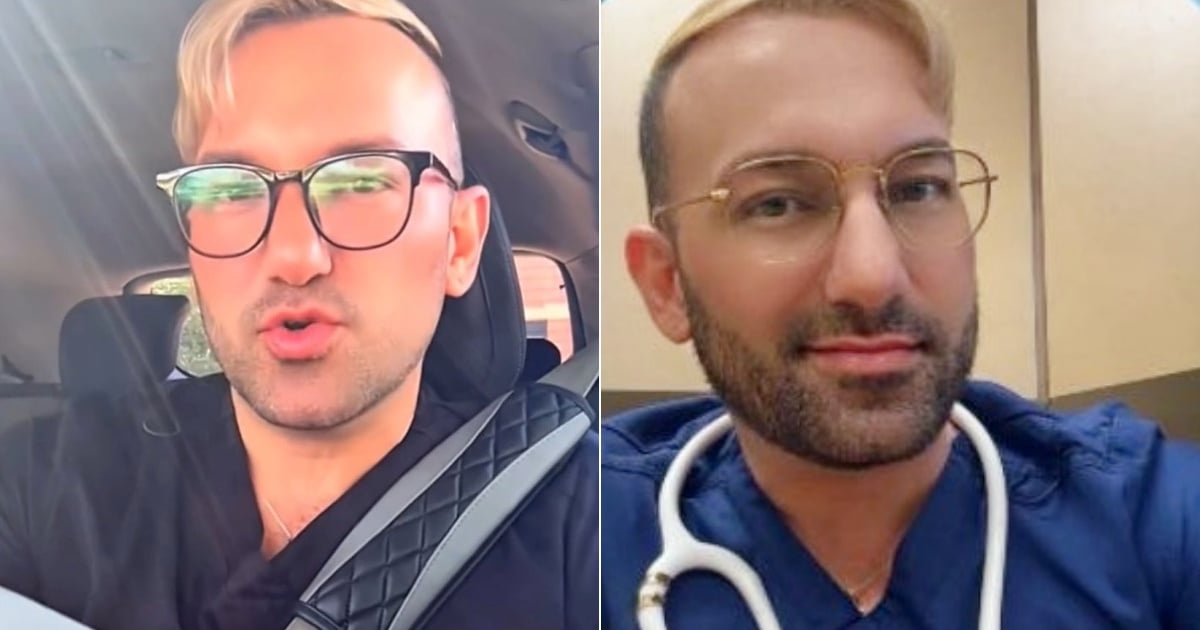
José Enrique Batista Méndez, a Cuban doctor with I-220A immigration status, has been detained in Texas since June 26 after being arrested in San Antonio by U.S. immigration authorities.
This week, doctor lost his final asylum hearing, and his future hangs by a thread.
From the detention center in Conroe, Texas—the third facility he has been in and, according to him, the one with the best living and medical conditions—Batista Méndez gave emotional statements to journalist Javier Díaz from Univision, expressing the pain and uncertainty that have accompanied him after five months of incarceration.
“At this moment, I truly feel a bit depressed because yesterday I had my final hearing, and it is already known that my asylum case was denied by the immigration judge”, he admitted.
Batista's frustration is twofold: he worked intensively with his lawyer and presented a case that he believed was strong, based on his experience of persecution in Cuba for holding an ideology different from that of the regime.
The judge himself acknowledged the truthfulness of his testimony, but he was unable to grant asylum due to restrictions within the current legal framework.
"His response was that yes, he believed in my statement, that he believed everything I was telling him, that he felt very sorry for what I went through in Cuba and the things I had to endure for having an ideology different from my country's government, but that the government did not allow him a migratory relief," he said, referring to the arguments used by the judge to deny his asylum request.
The weight of a label: I-220A
Batista's situation is not isolated. It is part of a larger issue that affects thousands of Cuban migrants with I-220A, a supervised release document without parole issued by ICE.
This category, far from providing protection, has ultimately become a legal trap for those who bear it.
Without automatic access to the Cuban Adjustment Act, without parole, and without guarantees against deportation, many like him have ended up detained without having committed any crime. The case of José Enrique, a trained doctor with ties in the U.S. to organizations like Solidaridad sin Fronteras, illustrates how even those with a calling for service are targets of imminent deportations.
"I only ask that our voice be heard, like that of so many people who are detained. But well, in my case, as a Cuban healthcare professional who managed to escape the Cuban dictatorship, I can only hope that someone takes an interest," she stated.
"I'm afraid of what might happen to me in Cuba."
Uncertainty defines every day for Batista. For five months, he did not know what the outcome of his case would be, and now, with a court ruling against him, his fear is palpable
"I'm really in a state of uncertainty. I was uncertain about my case for five months until yesterday... I'm still uncertain. I'm truly afraid of going back to Cuba. I'm scared of what could happen to me in Cuba."
Despite the discouragement, he holds onto the hope that he will not be deported to the island, where—according to reports from his mother in Cuba—he would never be able to practice as a doctor due to his political history.
His case, like so many others, demonstrates the chasm between U.S. immigration law and the political reality in Cuba.
A call to the migrant community: "Do things right"
Beyond his own tragedy, Batista aimed to send a preventive message to other Cuban migrants who, like him, are experiencing complex processes with ICE.
"I really wouldn't advise anyone to miss their appointment with ICE, I wouldn't advise anyone to skip their court date, because you have to do things properly."
It is also recommended to seek qualified legal advice and to have good immigration lawyers, as in a judicial system that often overlooks the Cuban reality— as legal experts have pointed out—every resource and every step matters.
The mother, the emotional refuge
From a distance, his mother has become his emotional anchor. She was the one who alerted journalist Javier Díaz to her son's situation upon learning of the unfavorable verdict. Her testimony, filled with anguish, reflects the desperation of thousands of Cuban families separated by exodus and immigration restrictions.
"Really, my mom has been my strength throughout the time I’ve been here. I left Cuba out of fear of being arrested, of being jailed, and yet, in the place where I came to seek refuge, what I feared would happen in Cuba actually took place."
He dedicates his daily thoughts to her, grateful for the distant companionship, along with the support of friends and family who have continued to encourage him.
"I send my mom all the positive energy every day, along with my gratitude for always being there for me, along with my friends, family, and the closest people to me who have been supporting me."
The reflection of a disconnected immigration policy
The story of José Enrique Batista Méndez is another warning sign regarding the rigidity of the U.S. immigration system. The testimony of his judge, who acknowledged the truth of the account yet denied asylum, reveals a system caught between bureaucracy and legal insensitivity.
Lawyers have noted that many judges in immigration courts are not familiar with the Cuban situation, and that decisions are based more on deportation statistics than on the humanitarian assessment of each case.
In a context where thousands of Cubans continue to arrive at the border in search of a better future, the case of this doctor serves as a reflection of a collective drama that urgently calls for reforms and understanding.
Filed under: