
Related videos:
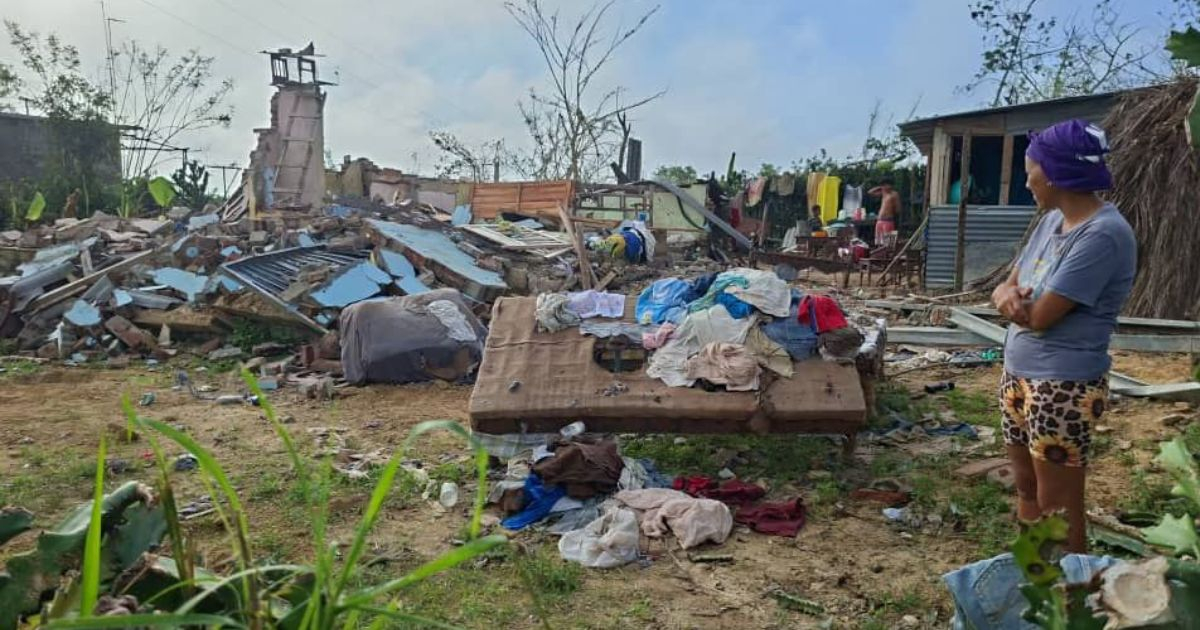
As the date when Hurricane Melissa made landfall on the eastern coast of Cuba as a powerful cyclone moves further away on the calendar, stories emerge that challenge the Cuban regime.
In this instance, the independent platform Food Monitor Program (FMP) highlighted the precarious situation of rural families, in contrast to the official narrative that claims control and recovery.
In a series of posts on X, FMP reported the lack of food reserves and the absence of effective assistance in communities such as San Antonio del Sur, in Guantánamo, where the destruction from the storm and government neglect continue to persist.
"The hurricane changed our lives, yes... but the hardest part came afterwards," recounts a farming family.
"Here, the idea of saving or planning no longer exists. We buy what we're going to cook that day and nothing more. Before, it was possible to prepare something in advance. Now, everything is about today: eating today, solving today, inventing today."
The testimonies collected by the organization reflect the collapse of the family production system: lack of water, high prices of inputs, and scarce food supplies.
"Without a steady water supply, the family farm no longer produces. The hoses in the stores cost what we don't earn even in two years," says another farmer.
The food situation is critical: “The milk goes sour, the meat spoils, the vegetables wilt. We wake up early, and everyone has their tasks, but everything revolves around the day's food. It's not living; it's surviving. No one should raise children like this.”
A year after Hurricane Oscar—when the government promised reconstruction and assistance—FMP recalls that those promises remain unfulfilled.
In rural areas, families survive without stable connections to water or electricity, without food to store, and without institutional support.
"Cuban rural families suffer from state silence, lacking accountability and transparency, and without a real policy for rural reparations," the organization emphasized.
FMP's publications contradict the regime's version, which insists on presenting a picture of recovery and solidarity in the official media.
On the ground, the reality is different: hunger, neglect, and a countryside struggling to survive with the little it has.
After the passage of Hurricane Melissa, eastern Cuba is facing a combination of natural disaster, institutional neglect, and desperate survival practices.
Although the government tries to project an image of control, Díaz-Canel has urged the population to monitor the distribution of donations, indirectly acknowledging the irregularities that already affect humanitarian aid in devastated areas.
In the midst of this crisis, citizens have publicly denounced the lack of assistance. A young Cuban shared her desperate situation on social media after losing everything, pleading for help for her family in the east of the country.
His case, covered in an article that gives a face to abandonment, reveals the true extent of the suffering of rural communities without shelter or basic food supplies.
Some of the measures implemented by the government have sparked even more outrage. In Santiago de Cuba, authorities sold expired cans of fish as part of the “support” for those affected, generating criticism for the lack of protection for the most vulnerable individuals. This distribution of spoiled food contrasts sharply with the official discourse of solidarity and care.
Desperation has reached extreme levels. In several areas of the country, the hunting of birds and cats for human consumption has been documented, an alarming sign of food collapse.
These practices, inconceivable under other circumstances, reflect the reality of thousands of families who have been left at the mercy of scarcity, inflation, and the complete absence of effective public policies.
Filed under: