
Related videos:
The Cuban Catholic Church once again found itself at the center of national solidarity following the passage of Hurricane Melissa, which left thousands of Cuban families at the mercy of their own fate.
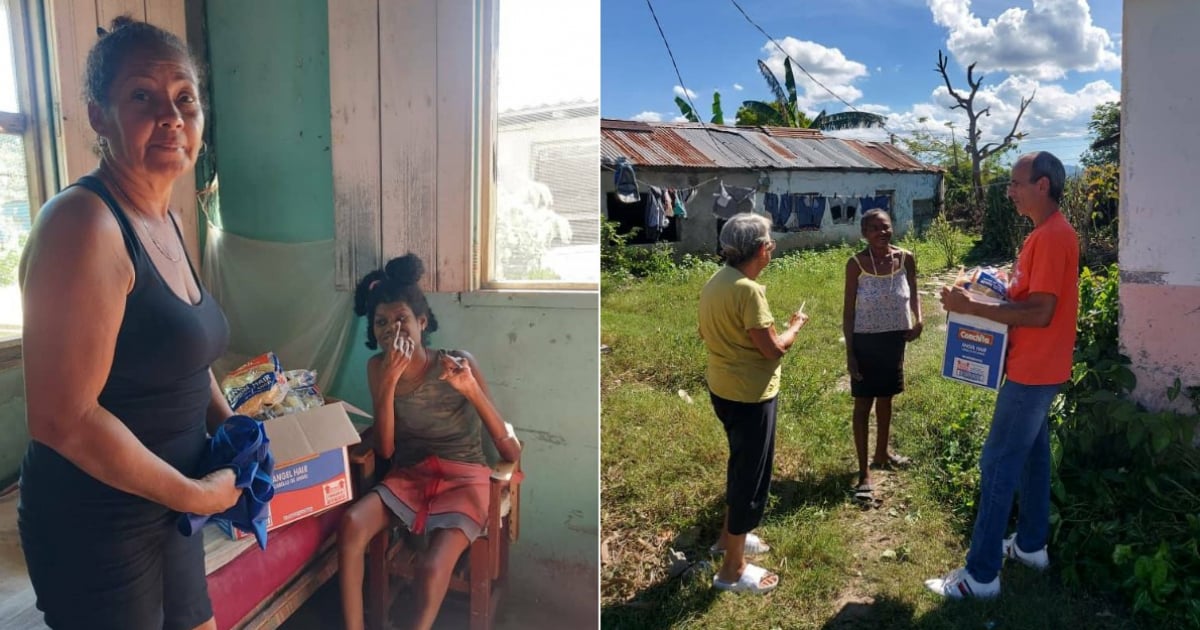
Through Cáritas, the Claretian Missionaries in the municipality of Songo-La Maya, Santiago de Cuba, coordinated the distribution of food in communities that continue to face enormous losses and limited assistance from the State.
Among the hardest hit areas is the town of Baltony, in Purísima Concepción.
There, the rising waters of the river collapsed the bridge that connected the area, leaving it cut off for days.
The only alternative was to rehabilitate an old, narrow, low-height metal bridge, a structure that highlights the precariousness of the infrastructure in the area.
Only after that improvised solution were the missionaries able to access the area to deliver the aid that "is coming in through Caritas," as they explained on their social media.
In another message, the religious leaders confirmed that the distribution of food modules continues and that "more people are benefiting every day" thanks to donations sent from the United States.
They noted that in La Maya, the delivery of these baskets has been received with gratitude, as they come amid "the already difficult living conditions, exacerbated by the devastating impact of Hurricane Melissa."
"They are days of joint effort in the Cuban Catholic Church, days to get closer to suffering realities and offer charity that comes from various places to those who face the greatest vulnerabilities, after experiencing another tense episode of survival," Cáritas said on Facebook.
The passage of Hurricane Melissa had a devastating effect in Songo La Maya, where it destroyed hundreds of homes, schools, roads, bridges, public service centers, and agriculture.
The missionaries' descriptions reflect a recurring scenario following each climatic event in Cuba: destroyed homes, families unable to recover their belongings, and a population lacking savings and salaries that would allow them to replace what has been lost.
While the authorities take their time to provide concrete answers, it is social media, religious institutions, and the solidarity among citizens that step in to try to alleviate the emergency.
In contrast to the official announcements of future aid, concrete assistance has once again come from independent initiatives, donations sent from abroad, and community efforts organized outside of state structures.
In the face of delayed promises, the Catholic Church has mobilized discreetly yet effectively, addressing the immediate needs of those who continue to live amid mud, destruction, and uncertainty following Melissa's passage.
The tragedy once again demonstrates that, while the country faces floods, losses, and accumulated material hardship, the population largely depends on civil and religious solidarity to regain even the most basic necessities: food, access, and hope.
Filed under: