
Related videos:
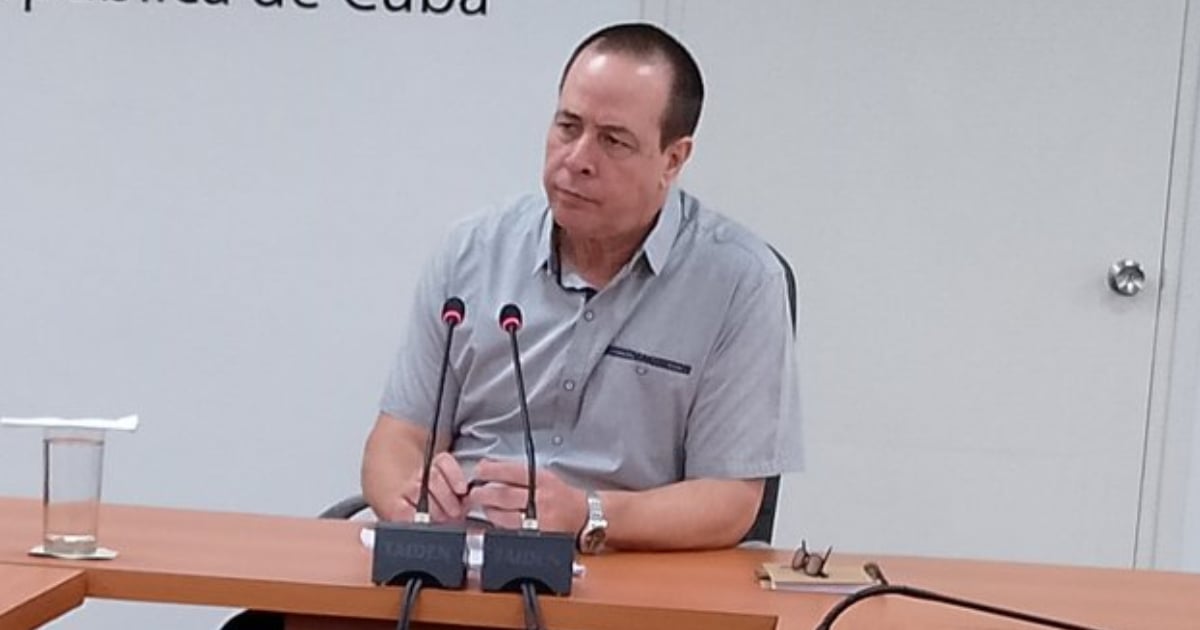
The Minister of Health of the Cuban regime José Ángel Portal Miranda said on Thursday that he requested to maintain the quality of services and the commitment of staff amid the health crisis that has caused the healthcare system in Cuba to collapse.
The minister acknowledged the "national epidemiological situation" and stated that it is necessary to "emphasize clinical-epidemiological surveillance in light of the circulation of several viruses" and "the progression of severe and critical patients in different centers," according to the report from the Cuban News Agency (ACN).
In a meeting at his ministry headquarters, Portal Miranda, who has been criticized for his low profile in recent weeks, warned that medical care in any circumstance depends on the organization and problem-solving capacity of hospitals and polyclinics, as well as the response of emergency services in the affected areas.
He also added that the vitality of essential services is crucial for the health recovery in the areas affected by Hurricane Melissa.
According to the report, the official stressed the importance of "not interrupting services to the public" and assessed "the functioning of institutions that provide assistance through alternatives."
Health emergency
This Friday, authorities acknowledged that the country is facing an epidemic of chikungunya, with a widespread dispersion of the virus throughout the national territory.
The announcement was made by Dr. Francisco Durán García, national director of Epidemiology, during his appearance on the television program Buenos Días, where he provided a detailed report on the complex epidemiological situation the country is facing.
According to the official data presented, 31,513 people have been diagnosed with suspected chikungunya, a disease transmitted by the mosquito Aedes aegypti, the same vector as dengue.
The virus is currently circulating in 14 provinces, 99 municipalities, and 164 health areas, which, according to Durán, "constitutes a sustained epidemic behavior."
The official also reported that on the last day, there were 753 new suspected cases of chikungunya and 847 positive cases of dengue, highlighting the simultaneous occurrence of both diseases in the country.
"We are in an epidemic of chikungunya," the specialist confirmed, explaining that this term is used when there is "an increase in the number of cases of a disease in a specific geographic area that is sustained over time."
In contrast, he specified that dengue exhibits an endemic pattern, with a continuous but stable presence.
Durán reported that 5,713 patients remain hospitalized due to suspected chikungunya, with 5,607 of them at home and the rest in hospital institutions.
In addition, 95 people are in intensive care units, 77 in serious condition, and 18 in critical condition. Among the serious patients, 63 are under 18 years old, and among the critical patients, 16 are children.
The director of Epidemiology warned that the infestation rate of the mosquito Aedes aegypti remains high, at 0.73, a figure he described as “high transmission risk.”
Filed under: