
Related videos:
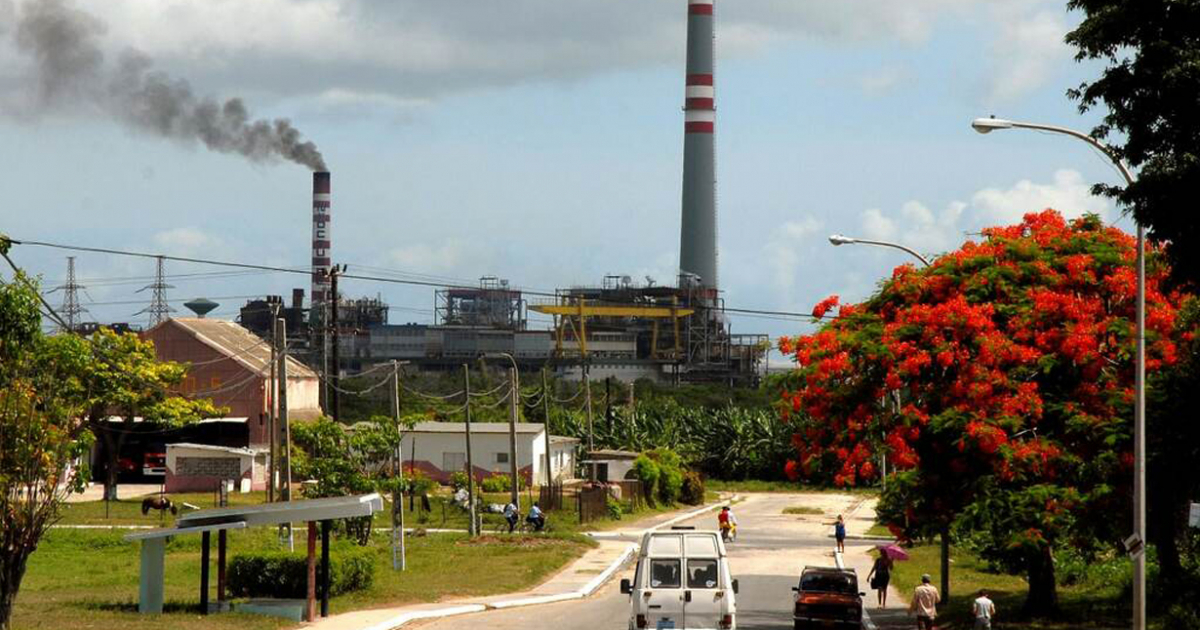
Unit 1 of the Lidio Ramón Pérez thermoelectric plant (Felton) rejoined the National Electric System (SEN) on Saturday afternoon, but moments before, at 15:17, machines 3 and 5 of the Antonio Maceo CTE (Renté) in Santiago de Cuba were taken offline.
This latest incident, according to the Electric Union (UNE), occurred due to a boiler leak, which keeps the already precarious generation situation in the country at its limit.
The Felton plant had gone offline earlier, once again highlighting the government's inability to ensure a minimally stable energy infrastructure.
The Electric Union (UNE) reported on its Facebook profile that at 9:00 am, Unit 1 went offline due to "high temperature in the bearing," a malfunction affecting a key component of the generation system.
Although the official report was brief, it was the users themselves who described the severity of the issue.
One of them explained that thes bearings support the turbine shaft and allow it to rotate at high speed, so a malfunction requires disassembly, adjustment, cleaning, and maintenance of those components.
Another was more direct in pointing out that this type of repair "takes at least 20 days," thus anticipating a long period of instability.
While Felton was coming in and out of service, the SEN continued to operate under significant operational tension.
The UNE forecasted for this Saturday a deficit of 1,685 megawatts (MW) during peak hours, following a day of ongoing disruptions and a generation capacity unable to meet national demand.
This marks the fifth consecutive day in which the projected deficit exceeds 1,600 MW, indicating the structural crisis of the electrical system and the persistence of prolonged blackouts across the country.
On Friday, the SEN also operated at its limit, with disruptions occurring throughout the 24 hours.
According to the UNE report, the deficit reached 1,707 MW at 6:10 PM, confirming a situation where demand greatly exceeds the available capacity, with no signs of immediate recovery in sight.
The figures released on November 22 show a system that is unable to meet even the minimum demand of the country. At 6:00 AM, availability was only 1,605 MW, compared to a demand of 2,320 MW, which left 732 MW out of service due to capacity deficit, not including reserves for potential new failures.
In light of this situation, many users on social media directly attribute the blame to decades of improvisation and propaganda rather than to serious state planning.
One of them summarized the general sentiment by stating that Cuba is “far, far from having a stable national electric power system, neither now nor in 10 years, nor in 50 years.”
Others criticized the official insistence on presenting photovoltaic energy as a miraculous solution, warning that, according to consulted specialists, if the government continues to rely on it as the only option, the situation could even worsen.
In this context, the fact that Felton 1 manages to synchronize again at the same time that the Antonio Maceo loses two of its units due to boiler failure makes it clear that the balance of the SEN remains extremely fragile.
Every entry and exit from a large thermal power plant results in new cycles of blackouts in a country where the population has already accepted the delays in repairs and the announcements from UNE as part of a recurring script of an electricity crisis with no short-term solution.
Filed under: