
Related videos:
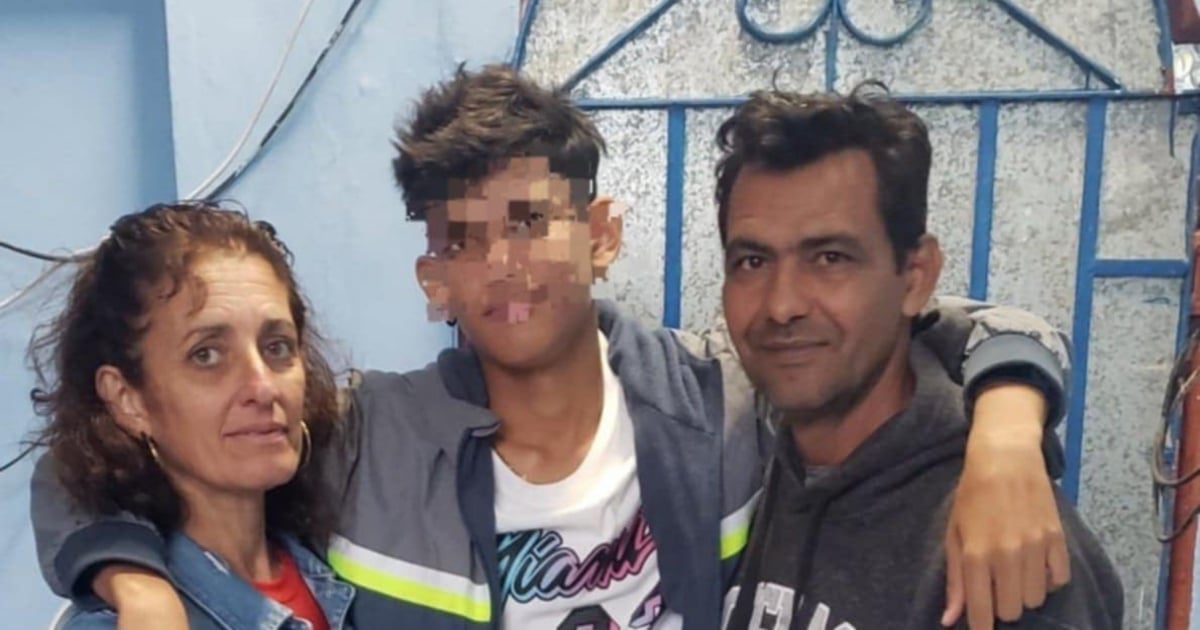
The July 11th protester Samuel Pupo Martínez had to leave Cuba and is currently in Costa Rica, where he has sought protection after enduring months of relentless harassment even after being released from prison.
After serving his sentence for his involvement in the protests, Pupo, 51, is now trying to rebuild his life away from the control of the Castro regime and prepare the way for reunification with his family, who remain on the Island.
Prison was not the end of the punishment
Although officially released, the regime did not allow him to live freely.
After being released from prison, Pupo, a resident of Cárdenas, was subjected to surveillance, intimidating summons, constant threats, and pressure to silence him; common tools used to force into exile those who refuse to submit to power.
According to what he told the portal Click-Cuba, his freedom was merely nominal, conditioned on his silence. The harassment intensified in recent months, making it impossible for him to remain in the country without risking being locked up again… or worse.
A forced departure and an unusual stop in Nicaragua
His escape route began with an unexpected stop: Nicaragua, a country closely allied with Havana and that rarely permits the entry of Cuban dissidents.
Being admitted there became an exception that allowed him not to be sent back to Cuba and to continue his journey to Costa Rica, where he is currently trying to regularize his immigration status.
From Costa Rican soil, Pupo aims to adapt and establish himself in order to bring his family along.
Costa Rica, known for sheltering political refugees, offers you something you never had in Cuba: the possibility of living without fear of the State Security.
A pattern of sustained repression: first imprisonment, then exile
The case of Pupo illustrates a common mechanism: the government imprisons the dissident, monitors them upon release, and ultimately drives them to leave the country through systematic harassment.
Exile functions as a tool of control: it silences critical voices without the need to imprison them again, thereby avoiding the political cost of new arrests.
Repression behind bars becomes a lifelong sentence, even outside of prison.
Who is Samuel Pupo Martínez?
Samuel Pupo, holding a degree in Mathematics and Computer Science, was arrested on July 11, 2021. That day, during the protests, he climbed onto an overturned car and shouted, "Down with communism! Homeland and Life!" just meters away from the local Party headquarters.
For his actions, the Prosecutor's Office accused him of "leading the protests," and a court sentenced him to three years in prison for contempt and public disorder.
At the time of his arrest, he was working as a self-employed individual. His lack of a criminal record did not spare him from punishment.
He was incarcerated in the maximum-security prison of Agüica, despite suffering from serious health issues.
His son Hugh Dieter Pupo Santana -now 16 years old- sent him heartfelt letters. In them, he expressed his anguish, prayed to God for his release, and lamented spending Father's Day away from him.
His wife, Yuneisy Santana González, a graduate in Humanistic Sciences with over twenty years of teaching experience, has been demanding Pupo’s parole all this time.
For claiming that right, State Security also harassed her, threatening to imprison her and take away her child.
Another exile for demanding freedom
Today, Samuel Pupo begins a new life far from his home country, compelled to flee for standing firm in his right to express himself.
His case demonstrates that in Cuba, serving a sentence is not enough to be free: repression continues outside of the cells, in the streets, at home, and at every step of those who dare to demand a different country.
His release is not the end of his struggle, but the beginning of another, now in freedom and far from the state that imprisoned, monitored, and ultimately expelled him.
Filed under: