
Related videos:
The Real Estate Company of Domestic Trade in Havana announced on its website the beginning of a bidding process for state-owned premises, a mechanism that the government presents as a way to "ensure transparency and participation" in trade management.
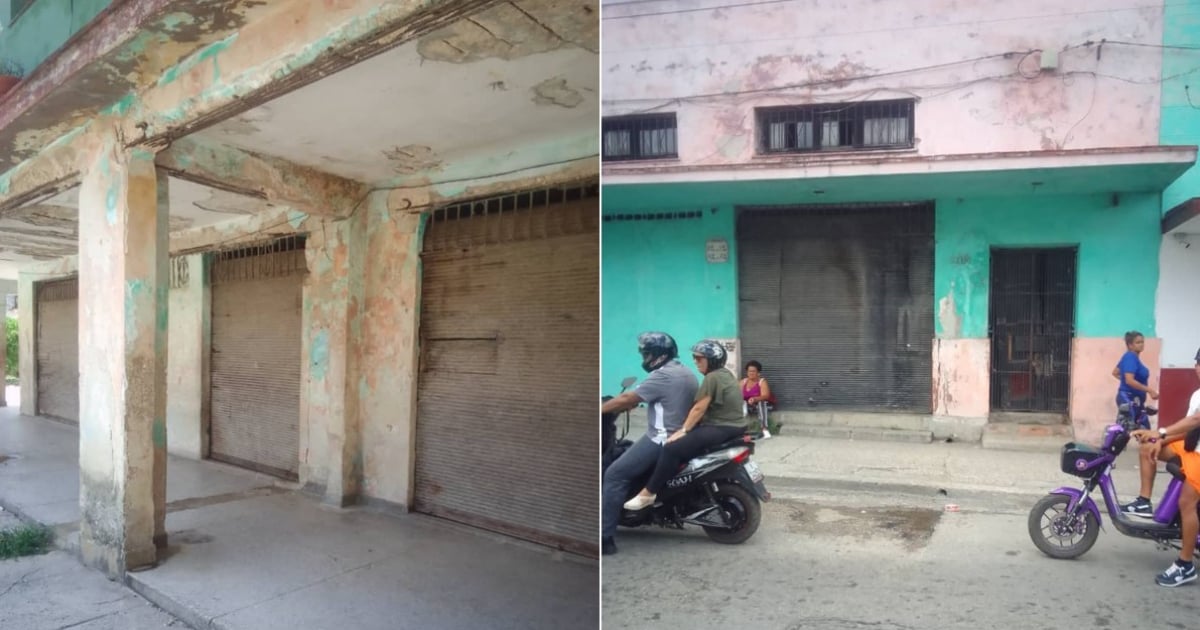
However, the measure comes in a context where the authorities themselves have acknowledged that the State is unable to sustain and revitalize its vast network of establishments, which are now deteriorated, inactive, or incapable of providing basic services.
The process will be open for only ten business days, until November 28, and requires bidders to submit complete and sealed proposals at the headquarters located in the Plaza de la Revolución municipality, or at territorial offices in Marianao, La Lisa, and Cotorro.
Applicants must submit personal information, a budget, the name of the project, and a proposal for work in the event of renovations or investments that involve transformations of the property.
The guidelines, known as participation documents, can only be consulted in person at those offices, which reflects the bureaucracy that characterizes state processes and, rather than facilitating participation, ultimately discourages it.
Behind the administrative language, the call for bids includes a long list of establishments that the State can no longer operate.
Among them are small units like the tiny Los Veteranos in Marianao, which is just over five square meters, and larger ones, such as the Siboney café in Cotorro, which boasts over 215 square meters.
Establishments that were once dedicated to basic public life activities—such as butcher shops, cafés, self-service stores, and taverns—are also included, all of which have now been transferred to a survival market where the state administration seeks to relinquish responsibilities without confronting the failures of decades of mismanagement.
Silent and forced privatization
The current bidding is not an isolated event; rather, it is part of a trend in which the Cuban State, rather than clarifying its economic collapse, is transferring the operation of public venues to private hands through temporary contracts, without stable guarantees, in a market that barely promises to recoup the investment.
In June of this year, the Heritage Management Company S.A., linked to the Office of the Historian of Havana, offered spaces on the Malecón as a "unique opportunity" for entrepreneurs.
The call was met with widespread skepticism, amid accusations of improvisation, urban neglect, and suspicions that private entities were being used as a free maintenance force while the state shirks its responsibilities.
That discontent did not arise randomly.
Since the Office of the Historian lost its economic autonomy and came under the control of GAESA - a military conglomerate that holds between 40% and 70% of the economy related to foreign currency, with no capacity for public auditing - the model of urban development that contributed to the rehabilitation of the Historic Center has disappeared.
With fewer resources allocated to conservation and infrastructure, the city is deteriorating, while private ventures are called upon to sustain it under unfavorable conditions and with little legal certainty.
The State acknowledges what it cannot do
The tenders have traversed various state institutions: from EGREM in Santiago de Cuba to gastronomic spaces at Antonio Maceo International Airport.
Additionally, there are 300 state-run gastronomy establishments that were announced for bidding in 2022.
At that moment, the Minister of Domestic Trade, Betsy Díaz Velázquez, publicly acknowledged what is now confirmed with each new announcement: the state cannot manage its own commerce, and the entities that operate with greater autonomy or concessions perform better.
While the government presents it as a "necessary change," the reality is harsher: the deterioration of public services has forced the state to cede responsibilities it can no longer handle, leaving it to the private sector to sustain what it itself has destroyed.
Instead of a comprehensive policy for urban and commercial development, what emerges is a fragmented, improvised privatization with limited guarantees, where economic survival becomes the responsibility of the citizens.
The new bidding process in Havana fits into that scenario of urgency and resignation disguised as opportunity.
For those looking to manage the establishments, the question will not only be how much to invest, but also how much risk they are willing to take on in an economy where the state has reserved the right to fail, and the citizen has the obligation to fix what no longer works.
Filed under: