
Related videos:
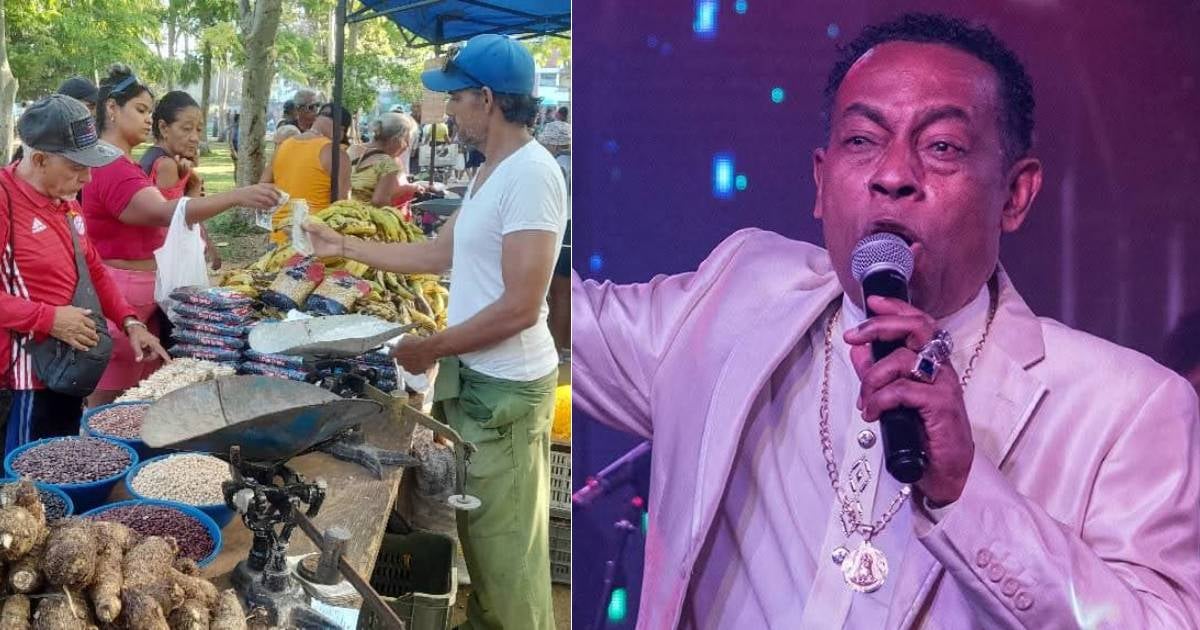
The Cuban musician Cándido Fabré has raised his voice again, sending a passionate message on Facebook in which he denounced the abuses of private sellers and the deep deterioration of purchasing power in Cuba.
"Private sellers take advantage of the pain and need of the people... they raise prices every minute, they do not accept transfers, the magnetic cards are useless, poor retirees and workers without a penny in cash," wrote the artist, notably indignant.
In his message, Fabré also lamented the lack of human values and harshly criticized private transporters: “Let's not even talk about transportation; the boteros are criminals, just like the leased buses. Deliver us, Lord, from such nonsense.”
The post reflects an increasingly common complaint in Cuba regarding the relentless rise in prices, the predominance of cash over electronic payments, and the sense of helplessness felt by millions of Cubans amid an economic crisis that seems never-ending.
A town exhausted by rising prices
The musician's words do not arise in a vacuum. In recent months, the cost of living in Cuba has reached levels that many consider unsustainable. According to data from the National Office of Statistics and Information (ONEI), the price of a pound of onions in August 2025 exceeded 1,000 pesos in cities like Camagüey and Santa Clara, while in other regions it barely fell below 300 pesos. The disparity and lack of control have made inflation a daily enemy.
This reality is further illustrated by the testimonies of Cubans who face the daily struggle for survival. A Havana mother, Alianis Leyva González, recently shared that she spends 400 pesos on bread for her child's snacks over the course of a week, a figure that stands in stark contrast to the average salary in the country, which hovers around 2,100 pesos per month. Her story went viral because it captures what many feel: eating, dressing, or commuting in Cuba has become a luxury.
Fabré's appeal: between faith and rage
Fabré's message blends denunciation with spiritual release. "There is food available, but how can one access it without money and without human values," the artist wrote, appealing to collective consciousness and faith as a refuge.
Its tone, both pained and combative, reflects the frustration of a population facing cash shortages, a collapse in transportation, and institutional indifference.
While private businesses set unattainable prices and many refuse to accept payments by transfer, retirees and workers survive amid long lines, power outages, and an increasingly dollarized economy.
Fabré, as a public figure close to the Cuban regime, has voiced the feelings of thousands: the sense that the people have been abandoned to their fate.
Filed under: