
Related videos:
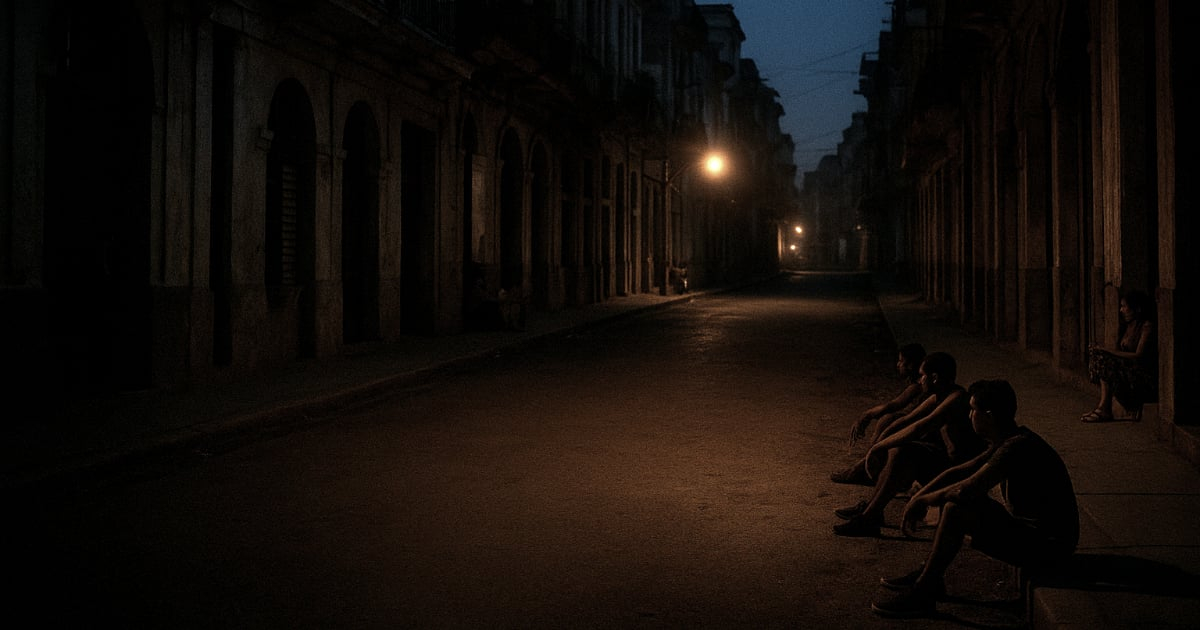
The Electric Union (UNE) announced this Monday that the National Electric System (SEN) will remain in a critical situation, with blackouts across the country for 24 hours, due to a generation deficit exceeding 1,600 megawatts (MW).
According to the official report, on Sunday the peak impact reached 1,700 MW at 7:00 PM, a time of high demand when thousands of Cubans were left without electricity.
For this Monday, November 24, the availability of the SEN at 6:00 a.m. was only 1,510 MW compared to a demand of 2,400 MW, indicating a deficit of 900 MW since the early hours of the day. During peak consumption hours, the UNE anticipates impacts of up to 950 MW, while for the nighttime peak, the deficit could reach 1,625 MW.
The state company acknowledged that units 2 of the Felton Thermal Power Plant (CTE) and 6 of Renté remain out of service due to breakdowns, and that three others—the 2 of Santa Cruz, the 4 of Cienfuegos, and the 6 of Mariel—are under scheduled maintenance. The limitations in thermal generation amount to 584 MW.
This crisis is compounded by a lack of fuel, which has kept 97 distributed generation plants out of service, resulting in 802 MW less capacity, along with 66 MW unavailable due to a lack of lubricant, for a total of 868 MW offline.
Although the UNE highlighted the contribution of the 32 new photovoltaic solar parks, which generated 2,970 MWh with a maximum capacity of 533 MW, this figure is insufficient to alleviate the structural deficit of the system.
The organization expects to partially regain capacity overnight with the entry of unit 1 from Energás Varadero (30 MW), unit 3 from Energás Jaruco (30 MW), and the completion of the combined cycle at Energás Jaruco (25 MW).
However, even with those additions, the total generation would only reach 1,595 MW compared to an expected demand of 3,150 MW.
The energy crisis, which the regime attributes to breakdowns and a lack of fuel, continues to hit the Cuban population hard, which has been enduring prolonged blackouts, water shortages, and the decline of basic services for years, amid a severe economic and social crisis.
Filed under: