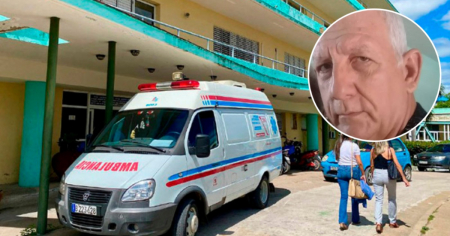
In Santiago de Cuba, independent journalist Yadira Serrano, a reporter for CubaNet and mother of a three-year-old boy, publicly denounced the deterioration of the Cuban healthcare system and the lack of response from the regime following the deaths of at least two minors due to unidentified viruses in the eastern province.
Serrano stated in a video shared on social media: “I am afraid for my son… here children are dying from these viruses.”
The reporter reported the death of a one-year-and-two-month-old girl at the Northern Children's Hospital in Santiago de Cuba, after initially being treated for symptoms of vomiting, diarrhea, and fever.
I had the opportunity to interview a relative, and according to that testimony, the medical staff diagnosed “moderate dehydration” and administered 30% dextrose solution before sending her home. Hours later, the minor was readmitted in critical condition and passed away.
"The parents reported the death, but as always, it will amount to nothing. Among the healthcare professionals, they cover for each other, falsify analyses, and results," the journalist said, visibly outraged.
"There are no reagents, no serum, no medications."
Serrano described an alarming situation in the hospitals and medical offices of the eastern region. Doctors can barely provide diagnoses due to the lack of basic supplies and laboratory reagents, leading to thousands of cases being recorded only as "suspicion of virus".
The journalist listed the main shortages faced by patients in Santiago de Cuba:
- There are no reagents for clinical analysis
- Neither saline solution nor rehydration solution
- They do not have ventilators
- Basic medications such as paracetamol and ibuprofen are missing
- Vitamins and nutritional supplements for children are not found in pharmacies
- They lack regular fumigation protocols and epidemiological control in the province.
What doctors do, according to Serrano:
- They diagnose solely through visual observation.
- They write in the reports "suspected virus" without confirmatory analyses of the type of virus.
- They observe the patients for 48 to 72 hours without treatment.
- They avoid registering medical negligence to "save responsibility."
In this context, the journalist asks: “So why do people go to the hospital? To waste time? There’s nothing. They are waiting for us all to die.”
Infant deaths and malnutrition: “The body of the Cuban can no longer withstand a virus.”
Serrano reported that the lack of proper nutrition and malnutrition worsen viral conditions among Cuban children. "Cubans are so deteriorated, so malnourished, that they can't even withstand a virus. In the rest of the world, chikungunya rarely kills, but here it is causing more harm than COVID-19."
He also assured that the lack of protection extends to all levels. " There is no way to protect children. Not even by buying on the black market, because you don't know where the vitamins or medications come from. A bottle of vitamin C costs 3,000 pesos and a suspension of paracetamol is 2,500."
Desperate call to international organizations
The journalist requested an “urgent humanitarian intervention” from the WHO and PAHO, stating that the Cuban healthcare system “has completely collapsed.”
“The Cuban government lacks the capacity to combat a virus. Children are dying, and they will continue to die because they are malnourished and without access to medical care. This cannot go on.”
Finally, Serrano sent a message to Cuban parents. “Defend your children. Ask, question, demand. Don’t assume that they are safe in a hospital, because we have already seen that this is not the case.”
Last week, the Ministry of Public Health acknowledged that Cuba is in the midst of a chikungunya epidemic. However, Dr. C. Osvaldo Castro Peraza, a specialist at the Pedro Kourí Institute of Tropical Medicine (IPK), stated that the crisis “will pass” and one day will be “a story to tell.”
The statement caused discontent among those experiencing the health emergency without medications, lacking clear information and resources to cope with it, amidst constant blackouts and an acute water shortage, an essential resource for hydrating the sick and maintaining hygiene in homes and for individuals.
Dr. Francisco Durán, the director of Epidemiology, reported that the country has confirmed more than 31,000 suspected cases of chikungunya, and last week there were 95 patients in intensive care, of which 63 were under 18 years old and 34 children were in serious condition.
Citizens contradict the official reports and claim that they go to hospitals but are not tested for the virus that affects them; therefore, the infection figures may be much more alarming than what MINSAP is reporting.
The testimonies of mothers like Yadira Serrano reflect the growing desperation in the face of a collapsed healthcare system lacking resources.
Filed under: