
Related videos:
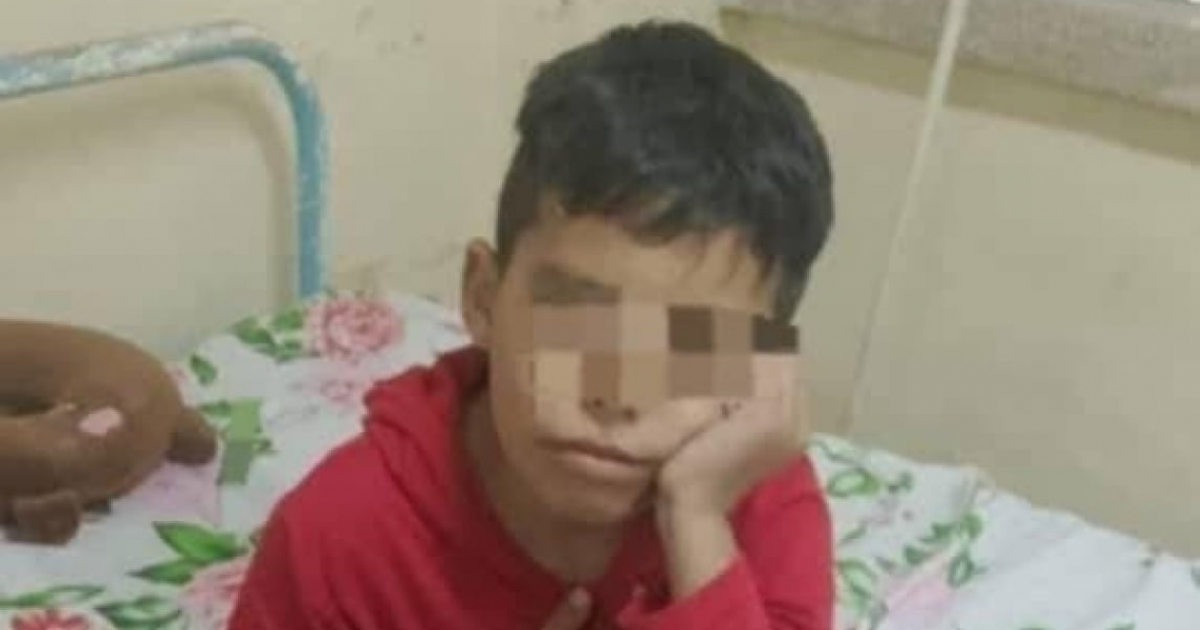
Desperation erupted once again on social media with the urgent plea from activist Idelisa Diasniurka Salcedo Verdecia, who made public the case of a Cuban child in dire need of A+ blood donors to stabilize his condition.
According to a post on Facebook, the minor suffers from hemolytic anemia and has an extremely swollen spleen, a combination that led him to the Morón Hospital two days ago with zero platelets.
He is currently reported as being in serious condition, while the family is racing against time to obtain the blood that the healthcare system cannot guarantee.
The mother of the little boy, whose phone number was shared (50841393), and the grandmother (55478157), are asking for help from anyone who can donate.
"Please, help and share," concluded the brief message that, like so many others in recent months, replaces the role that institutions should fulfill.
A cry for help that adds to many others
This case does not occur in a vacuum.
About 10 days ago, actress and singer Iyaima Martínez Navarro also relied on citizen solidarity to be operated on at the Hermanos Ameijeiras hospital, where she required B+ blood, accepting donations of O+ and B-.
Her colleague Mariela López Galano had to spread the request on social media, including phone numbers to coordinate assistance, because without donors, the intervention could not take place.
Days earlier, in Bayamo, another woman publicly expressed her anguish: she was seeking B- and O- blood donors to save her 53-year-old mother.
She did it urgently and with a desperate offer: she was even willing to pay, because the hospital had no reserves. Every minute mattered, and the only door left open was the help of strangers.
Both cases starkly illustrated how many Cuban families depend solely on social media to try to save the life of a loved one, in a country where health institutions can no longer provide basic responses.
What is officially stated does not match what people experience
In contrast to this reality, around that time health authorities in Granma stated that the blood bank in Bayamo had "all the conditions" to operate normally in the face of Hurricane Melissa's approach.
The provincial health director publicly stated that the staff and resources were secured.
However, the cases that emerged immediately afterwards, such as that of Marilin, demonstrated that the situation in the hospitals was nothing like that narrative.
The need to turn to social networks to seek blood demonstrates that, in practice, families still face a situation where essentials are lacking and the institutional response is inadequate.
An emergency chain that no longer surprises anyone
Blood requests have become a reflection of the system's deterioration: families searching for platelets for small children, adult patients who must record messages from a bed to ask for help, hospitals unable to guarantee essential supplies.
In Holguín, the family of a two-year-old girl with leukemia had to request two daily donations of platelets online.
In Ciego de Ávila, a 38-year-old man with the same diagnosis publicly pleaded for blood from the very hospital where he should have been treated.
Each of these cases confirms the severity of the health situation: a shortage of reagents, lack of basic supplies, laboratories without resources, blood banks unable to meet the demand.
And in the midst of that void, families bear the burden of obtaining what, in any functional system, would be guaranteed.
When networks become the only resource
Diasniurka's request regarding the child from Morón once again underscores a painful truth: in Cuba, survival relies more on the solidarity of the people than on the capabilities of the healthcare system.
It is the citizens who circulate requests, donate, coordinate, share, and informally support what should be an obligation of the State.
While family members wait for A+ donors to step forward in time to stabilize the child, his case adds to a country where every medical emergency seems to be resolved only if it goes viral.
Another indication of how the right to health, far from being guaranteed, has turned into a daily battle against scarcity, precariousness, and an increasingly unsustainable official silence.
Filed under: