
Related videos:
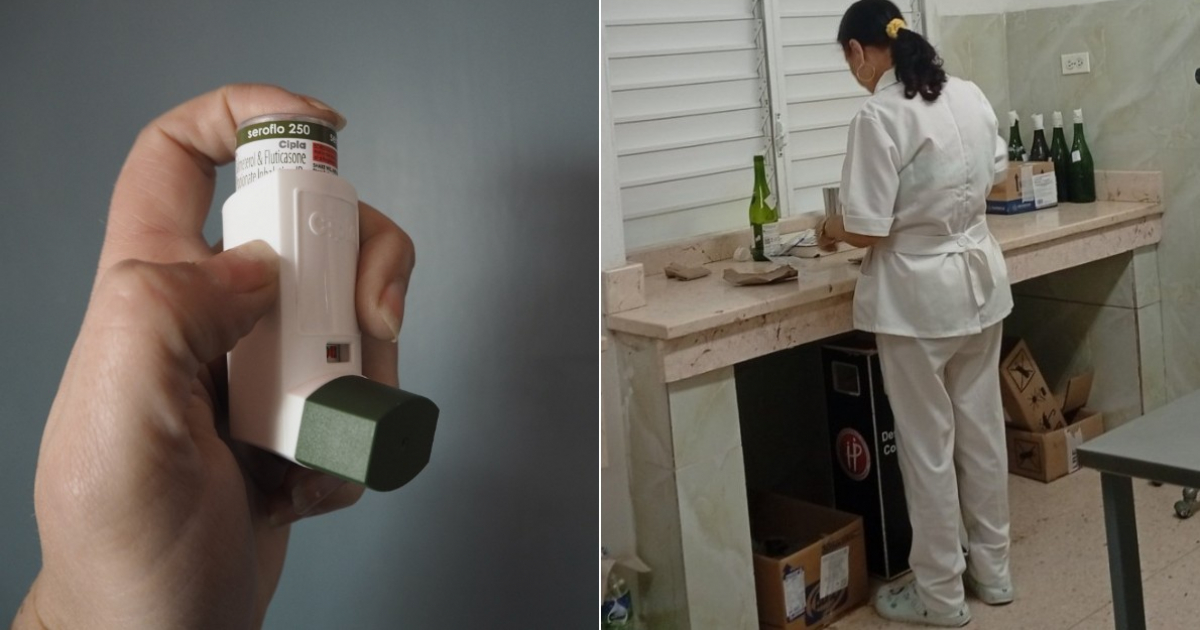
A publication from the Health Department of Matanzas sparked a wave of outrage among doctors, journalists, and citizens by attempting to downplay the shortage of aerosol nebulizers in emergency services, a basic resource for treating respiratory crises such as asthma.
The official message shared on , titled "The Science Behind Your Breathing: Aerosol Nozzles in Emergencies", states that the nozzle "is a useful tool", but its absence "does not pose a life-threatening risk" nor does it prevent the patient from receiving the appropriate treatment.
According to the post, the medical staff is prepared to administer the medication "through various routes and with different devices," which are also "effective" for treating respiratory conditions and ensure that the medication works.
The text, far from calming the situation, opened a floodgate of criticism from healthcare professionals who question the veracity of those claims and denounce the critical state of the provincial and national healthcare system.
Doctors refute the health organization: "In which protocol does it say that aerosol is not first line?"
A doctor was one of the first to speak out, leaving a strong comment:
"Who wrote this? Someone who clearly is not a doctor! Which updated protocol states that aerosol is not a first-line treatment for asthma crises? Have them send it to me so I can study it."
The professional reported the almost total lack of supplies in the emergency rooms: from basic medications to proper lighting to be able to inject a patient without making mistakes.
He added that staff must report to their shifts bringing their own supplies to prevent a patient from dying due to widespread shortages.
The doctor criticized the "lack of humanity" and the attempt to present a non-existent normalcy. "This publication is embarrassing," she emphasized.
Another doctor from the Milanés area also criticized the institutional message.
"Milanés doesn't have a sphygmomanometer in the emergency rooms; that's not necessary either, right? I'm sure that this absurdity wasn't written by a doctor who works shifts and faces the public," she affirmed.
A respiratory crisis amid a surge in infections
The shortage occurs precisely during a time of year that is particularly difficult for patients with respiratory illnesses.
The official journalist Yuni Moliner revealed that the shortage is widespread.
"Milanés has no inhalers, the Pediatric hospital has five, and Playa only has six. This weather is terrible for people with respiratory illnesses," he detailed.
Far from being an isolated phenomenon, these deficiencies reflect a collapsed healthcare system: deteriorating hospitals, a lack of essential supplies, and incomplete medical staff.
All of this occurs while the government itself recently acknowledged the seriousness of the increase in respiratory illnesses and the scale of infections within the population, with more than 100 people admitted to intensive care, the majority being children and adolescents.
"Creative resistance does not apply here."
Indignation multiplied. Citizens also demanded accountability.
"Explain how to use an aerosol without a nebulizer," said a resident of Matanzas, knowing that there is no alternative that can replace a nebulizer or a mouthpiece.
"Don't try to hide the sun with a finger; by saying such outrageous things instead of facing reality, we are in a dire situation. This is due to doctors who are willing to say on national TV that everything is resolved and that they have all the resources, when they don't even believe it themselves," he criticized.
Another internet user recalled that without these tools, the staff cannot ensure that the medication reaches the respiratory tract.
"The health administration, directors, and deputy directors must seek oxygen nozzles or masks," said a user, adding that without these implements, the staff cannot ensure that the medication reaches the airways. "Creative resistance does not apply in these cases."
A population tired of empty explanations
The comments on the post became increasingly harsh.
"What they should be looking for right now and on a large scale is the shame they've lost," "I want to see a video where they are spraying aerosol without a nozzle on a patient," "The science behind the stupidity of this type of publications," or "This is madness, and dangerous madness," were some of the criticisms.
A user summarized the general sentiment.
"The emergency rooms operate 24 hours with two medical staff, and the pediatric respiratory unit has five. Please stop posting things that are disgusting. The healthcare system in Cuba is failing."
A publication that highlights the severe deterioration of the healthcare system
The institutional attempt to downplay the lack of mouthpieces— a basic and widely used supply— ended up once again exposing the real precariousness faced by professionals and patients.
Amid a rise in respiratory illnesses on the Island, the population feels abandoned, lacking medications, essential equipment, and the minimum infrastructure to provide dignified care.
The reaction of the doctors reflects the accumulated weariness after years of improvisation, official silence, and a progressive decline that now even impacts the ability to respond to common emergencies.
As the health crisis continues to deepen, outrage is growing: it is no longer just about scarcity, but about the gap between reality and the official narrative that seeks to deny it.
Filed under: