
Related videos:
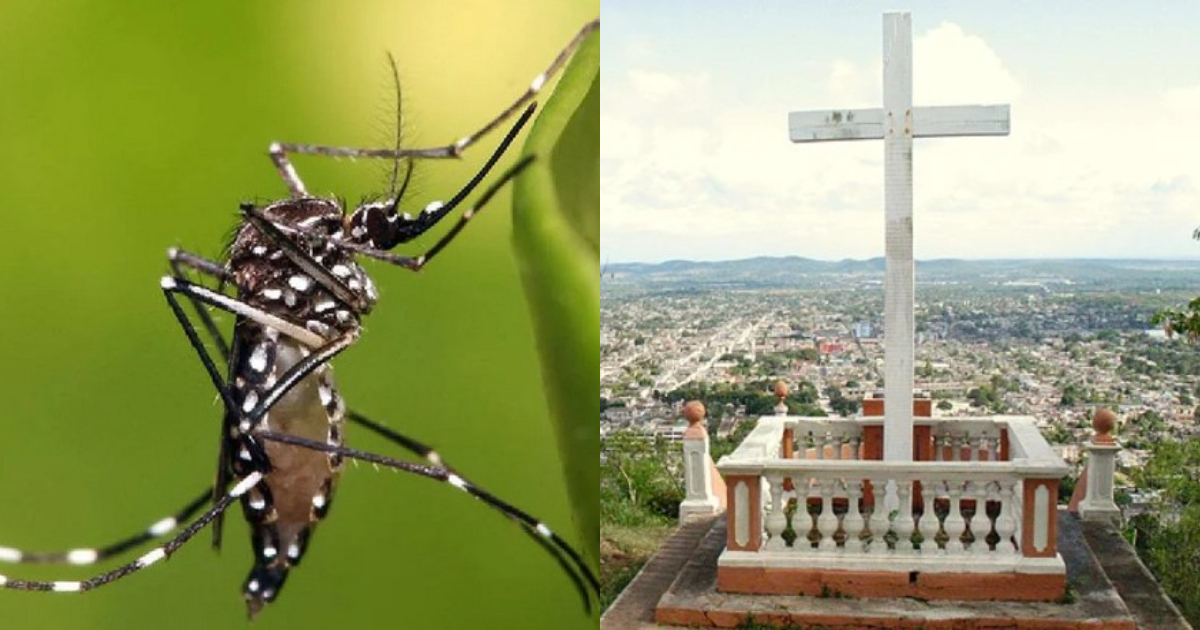
Health authorities in Holguín acknowledged that there was a failure in the prevention against the mosquito Aedes aegypti, the transmitter of dengue and chikungunya, while the province faces a complex epidemiological situation with three municipalities in epidemic phase.
"Prevention in general has failed, the prevention of focal points has failed, because in vector-borne diseases, we must work against the vector. If there is no mosquito focus, there is no transmission," stated Dr. Geanela Cruz Ávila, director of the Provincial Center for Hygiene, Epidemiology, and Microbiology of Holguín, in comments to the official newspaper ¡Ahora!
The recognition comes amid a critical epidemiological situation that has thousands of residents in Holguín suffering from the characteristic pain of chikungunya and dengue.
According to the specialist, starting from week 39, at the end of October, the province began to show an increase in patients with nonspecific febrile syndrome and the circulation of dengue type four and chikungunya virus was confirmed.
The municipalities of Cacocum, Urbano Noris, and Cueto have been declared in a state of epidemic, among the most affected by Hurricane Melissa.
The provincial capital, although not located in the endemic area, is being treated as if it were in an epidemic due to the high number of reported cases.
The official described the struggle that people from Holguín face with these illnesses.
“How did you wake up today?” is the most common question among neighbors in recent months,” the official report stated.
Their way of walking, positioning their arms, and carrying objects has changed, and even a noticeable swelling in their feet and other parts of the body reveals their overall condition.
Patients experience severe muscle and headache pain, high and persistent fevers, rashes, nausea, fatigue, and other symptoms that begin between four to eight days after the bite of an infected female mosquito.
Chikungunya, whose African name means "bent with pain," has three phases: acute, post-acute, and chronic. Many people go through one of these stages in a province overwhelmed by the disease.
Cruz Ávila acknowledged that there is an underreporting of cases of nonspecific febrile illnesses and of people in recovery, primarily from the chikungunya virus, which is why they initiated a door-to-door survey.
The activity is designed to involve not only the basic health team of each community but also teachers, healthcare personnel from polyclinics in the stomatology area, rehabilitation staff, and students from medical programs.
Health authorities assured that services will not be closed and that activities will take place on a flexible schedule, reorganizing the available resources.
The provincial director admitted that “every day we are reviewing the staffing level, that is, the medical and nursing staff in primary care, as many have fallen ill or have sick children.”
The aim of the research is to identify the patients in the community and assess their stage, as the treatment for someone in the acute phase of the disease is not the same as that for someone in the subacute phase or in recovery.
All areas of healthcare should organize multidisciplinary consultations to address the possible sequelae or complications that patients who have suffered from chikungunya may experience, incorporating internal medicine, rheumatology, immunology, orthopedics, natural and traditional medicine, physiotherapy, and rehabilitation.
The authorities began household adulticide treatment in all municipalities. In the city of Holguín, they implemented the encirclement technique, dividing the city center into quadrants to cover one hundred percent of the homes over consecutive days.
In addition to adulticidal treatment and surveillance, they are entering homes to eliminate breeding sites and conducting outdoor fumigation with the TF-160 cart early in the morning and at dusk.
However, Cruz Ávila warned that these measures are not enough unless a destructive focal assessment is conducted in the homes and the family complies with the family self-assessment.
"We can kill the mosquito that is flying around, but if we do not destroy it in its larval stage, the egg, the pupa—meaning the aquatic stage of the mosquito—if we do not eliminate that, they continue to be born, continue to hatch, and more mosquitoes appear that are capable of transmitting the disease," he explained.
The official attributed the crisis to the fact that “there were things that clearly were not done.”
He acknowledged that the team of surveillance and anti-vector workers is underperforming, although he assured that they were still reaching homes within the planned scope for the cycle.
“But the prevention of focality failed, and vector-borne diseases must be addressed in a consistent and conscious manner to prevent the proliferation of the vector,” she admitted. The situation became even more complicated with the passing of Hurricane Melissa.
The measures will remain in place until attention for nonspecific febrile syndrome suspected of dengue and chikungunya returns to normal endemic levels, and the focus indices decrease to safe levels, below 0.05.
Cruz Ávila warned that the current situation "is a warning, a red light for everyone, not to neglect any of the measures that help keep the mosquito at bay."
The playwright Freddy Núñez Estenoz, founder and general director of the Teatro del Viento company, is one of the many critical voices from the citizenry who has argued that the arbovirus epidemic affecting Cuba “is more about neglect than blockade,” clearly alluding to the official narrative of the regime, which blames the U.S. embargo for the health crisis.
In August, residents of the Máximo Gómez settlement in the Perico municipality, Matanzas province, reported that over 70% of the population was suffering from fever, vomiting, and severe weakness, without access to medication or medical care.
However, for several weeks, the government downplayed the alerts and attacked activists and independent media, accusing them of lying and distorting the truth.
Similarly, the Cuban government, through official media such as Radio 26 from Matanzas, attempted to discredit the reports from journalist Yirmara Torres, who broke the silence regarding the health crisis and stated that “there are no deaths, but there are,” in direct reference to the official concealment of deaths associated with the epidemic.
Additionally, the Ministry of Public Health denied for a considerable time the existence of deaths related to the outbreak.
Filed under: