
Related videos:
If anything was revealed by the devastating passage of Hurricane Melissa through eastern Cuba, it was the regime's lack of preparedness to confront the ensuing humanitarian crisis.
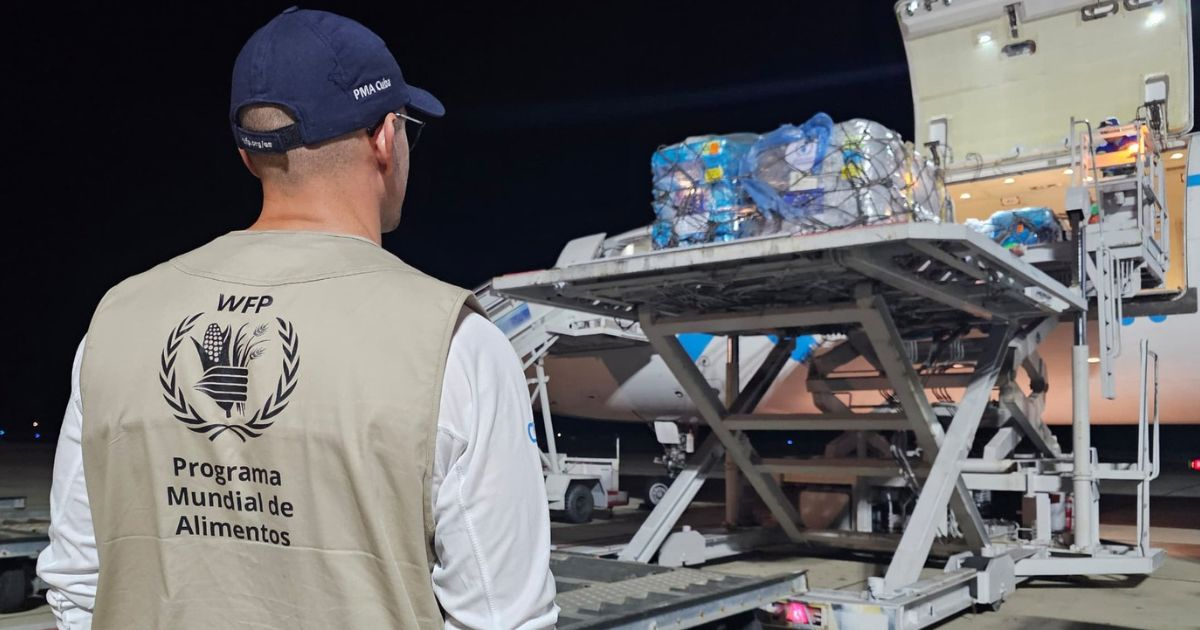
Today, it is the World Food Programme (WFP) that comes to the rescue, sending assistance to more than 900,000 affected individuals, a significant percentage of the Cuban population.
According to the official newspaper Granma, the WFP will distribute nutritional modules and essential items in affected communities in the provinces of Guantánamo, Santiago de Cuba, Granma, and Holguín, where the hurricane caused significant damage to agricultural production.
The representative of the organization, Rolando Verdes Sánchez, explained that the assistance aims to ensure food and nutritional security for the residents of eastern Cuba, with an initial plan of six months that could be extended to a year in the hardest-hit areas.
The shipments include rice, beans, and oil, as well as basic materials for recovery.
In the initial stage, more than 2,900 tons of food will be mobilized, utilizing all available emergency reserves.
In the province of Holguín, assistance will be focused on the municipality of Urbano Noris, while in ten other directly affected areas, priority will be given to the most vulnerable groups: children under five, the elderly, and pregnant women.
The official also highlighted the provision of non-food assistance, such as mobile warehouses, lighting towers, and tents designated for distribution points, with the aim of maintaining operations 24 hours a day.
Among the cited examples is the installation of a lighting tower at the wholesale warehouse in Urbano Noris, which allowed for the resumption of dispatch operations, as well as the placement of two mobile warehouses in Frank País and Banes, replacing damaged buildings.
The PMA reminded that its action plan in response to Hurricane Melissa consists of two phases: a preventive phase, involving the early relocation of resources to high-risk areas, and a reactive phase, which ensures the continuity of assistance with already positioned supplies.
The devastation caused by Hurricane Melissa in eastern Cuba once again highlighted the regime's inability to address large-scale emergencies.
Although the authorities insist that "recovery is progressing," it has been international aid that has sustained the food supply for the population and the initial steps of reconstruction in provinces such as Guantánamo, Santiago de Cuba, Granma, and Holguín.
Days earlier, the UN allocated 7.4 million dollars to address urgent needs for food, health, water, and sanitation in the most affected areas. This assistance focused on vulnerable municipalities where service collapse was total following the cyclone's passage.
The situation in Granma has been particularly critical. According to reports, it was the UN that completely took over the humanitarian response in some areas, due to the government's inaction, which failed to even organize a basic plan to assist those affected.
This is compounded by the fact that the regime will turn to 11 million dollars in UN emergency funds to try to sustain the fragile distribution system in the eastern provinces.
Far from being a national strategy, recovery has almost entirely depended on international aid, in a country where the state apparatus has been unable to secure even the most basic necessities: food, shelter, and drinking water.
Filed under: