The Cuban leader Miguel Díaz-Canel assured this Tuesday that Cuba will emerge from the epidemic with “intelligence.”
The statements emerged during a meeting of the National Defense Council with experts and scientists in the health field, the state media reported.
"To focus on combating Arboviruses with intelligence and effectiveness," the ruler urged.
During the meeting, it was reported that there were 7,713 new cases this week, of which 7,576 were suspected of having the disease, and 137 were confirmed, according to Carilda Peña, Deputy Minister of Health.
By the end of last week, there were a total of 32,627 cases of chikungunya reported in Cuba, according to official figures.
For his part, Dr. Raúl Guinovart Díaz, Dean of the Faculty of Mathematics and Computer Science at the University of Havana, stated that the upward trend will continue over the next few weeks.
"Right now, we are experiencing a peak of the epidemic and an increase in arboviral diseases, which requires a strengthening of vector control measures in every possible setting," he stated.
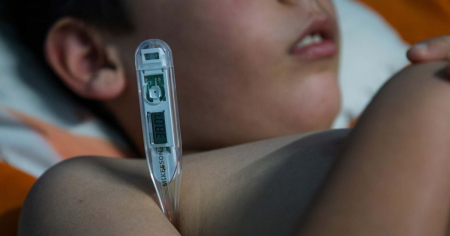
Similarly, Tania Roig, head of the national Neonatology group, warned about the seriousness of the disease in children under 3 years old: the mortality rate can be as high as 10%, leaving 20% with sequelae, particularly neurological ones.
More than 100 people in intensive care due to chikungunya and dengue in Cuba, the majority are children
Cuba is facing a serious health crisis due to chikungunya and dengue, with more than 100 people in intensive care, the majority of whom are children. The lack of resources and vector control worsens the situation as infections continue to rise.
More than a hundred people are in intensive care in Cuba due to complications arising from chikungunya and dengue, with the majority of serious patients being children under the age of 18.
Dr. Carilda Peña García, Deputy Minister of Public Health, acknowledged this Tuesday in the magazine Buenos Días that health authorities do not yet have accurate data on the number of people affected by arboviral diseases on the island. "We hope to have more precise figures by the end of this week," she stated.
On Monday, 3,421 individuals were reported with unspecified febrile syndrome, and 90% of them (3,088) remain hospitalized, the majority in their homes.
In total, 105 patients remain in intensive care, of which 84 are in critical condition and 70 of them are under 18 years old.
Dr. Peña referred to these cases as young children or infants, without specifying their ages. She emphasized the high vulnerability of the youngest to viruses transmitted by the Aedes aegypti mosquito.
Dengue infections continue to rise. There has been a notable increase in Pinar del Río, where 105 new cases have been diagnosed. In the other provinces, sick individuals are also reported, although with no precise figures.
Regarding chikungunya, the MINSAP reported that to date, there have been a total of 34,824 cases in Cuba, of which 33,796 are suspected and 1,028 have been confirmed through PCR tests.
On Monday, 934 new infections were recorded, but only 78 were confirmed by the laboratory.
The transmission of chikungunya is present in 14 provinces and 100 municipalities in Cuba. Although Matanzas was the province where the epidemic began, authorities assure that there is currently "a better situation" there.
The deputy minister acknowledged that the fumigation plan and focal control were not achieved, primarily due to a lack of workforce in provinces such as Havana and Camagüey. "If we do not eliminate the mosquito, it will be very difficult to control the epidemic," she warned.
The health crisis is worsening in a context of medical resource shortages, failures in sanitation programs, and a growing spread of the vector mosquito in several provinces, which keeps Cuba under an active epidemic of chikungunya and dengue.
Filed under: