
Related videos:
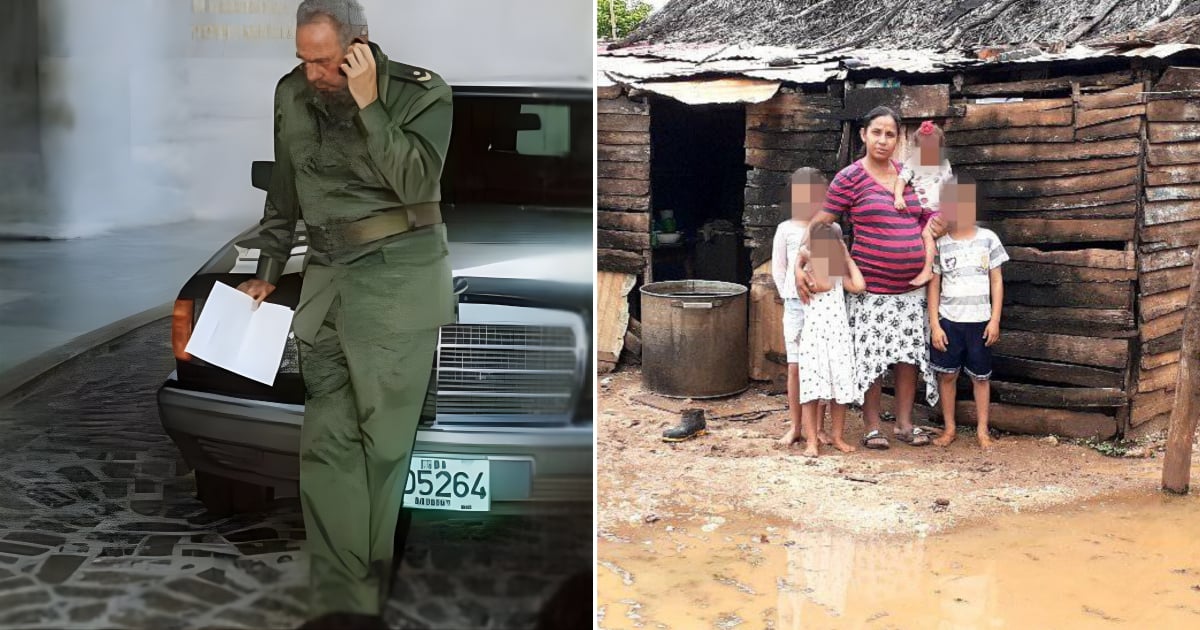
On each anniversary of Fidel Castro's death, the regime insists on promoting the image of a "leader of the people" and an "architect of equality." However, when one looks at real Cuba —the one with endless blackouts, the one where salaries barely cover the cost of a liter of oil, the one where Cubans flee by any means— it becomes clear that Fidel's true legacy was something else: to systematically destroy the Cuban middle class until it was reduced to rubble.
A revolution that promised equality… and created mass poverty
Cuba entered the 1950s with a vibrant middle class, small and medium owners, professionals with their own businesses, prosperous farmers, entrepreneurs, journalists, artists, and merchants who kept the economy moving. Fidel promised social justice but implemented the most effective recipe to annihilate an open society: eliminating individuals' economic autonomy.
Nationalizations, confiscations, prohibitions, total control over employment, persecution of those who “lived too well.” Every step was aimed at the same goal: to make the citizen dependent on the State. And those who depend on the State do not decide, do not protest, do not compete, and do not prosper.
The new rich of Castroism: the military and party elite
While the people were becoming impoverished, another phenomenon was solidifying: an economic elite directly linked to the military leadership, now primarily represented by GAESA, the conglomerate managed by the Castro family through the army. This minority —less than 1%— controls hotels, foreign currency, imports, exports, commercial zones, and strategic resources.
The socialist rhetoric was the perfect excuse to create an oligarchy of powerful individuals without competition, transparency, or citizen oversight.
The result: a country with two classes
After decades of policies that stifled private initiative, the landscape is clear:
- A mass of 99% living in poverty or precariousness, trapped between symbolic wages and a survival existence.
- A 1% elite, composed of generals, relatives of the Castros, and privileged officials, with access to food, energy, travel, foreign currency, and luxuries that the average Cuban can hardly imagine.
That has always been the design: absolute power over an impoverished people.
The Cuban people, the permanent victim
Far from the official narrative, the reality is that the Cuban has been a victim of a model that did not allow for prosperity, that punished economic independence, and that transformed poverty into a tool of political control.
Today, while the regime's elite continue to amass privileges, millions of Cubans are suffering from hunger, blackouts, and shortages. This tragedy is not caused by the embargo, but by the incompetence and corruption of those who have governed Cuba for over 60 years.
A legacy that must be dismantled
The legacy of Fidel Castro is not equality, but the deliberate destruction of the Cuban middle class. And that legacy remains alive in the hands of Raúl Castro, GAESA, and the puppets they place in power to maintain the facade, such as Miguel Díaz-Canel.
As long as that model remains in place, Cuba will continue to be a country designed for nearly everyone to be poor… while a select few live like kings.
Filed under:
Opinion article: Las declaraciones y opiniones expresadas en este artículo son de exclusiva responsabilidad de su autor y no representan necesariamente el punto de vista de CiberCuba.