
Related videos:
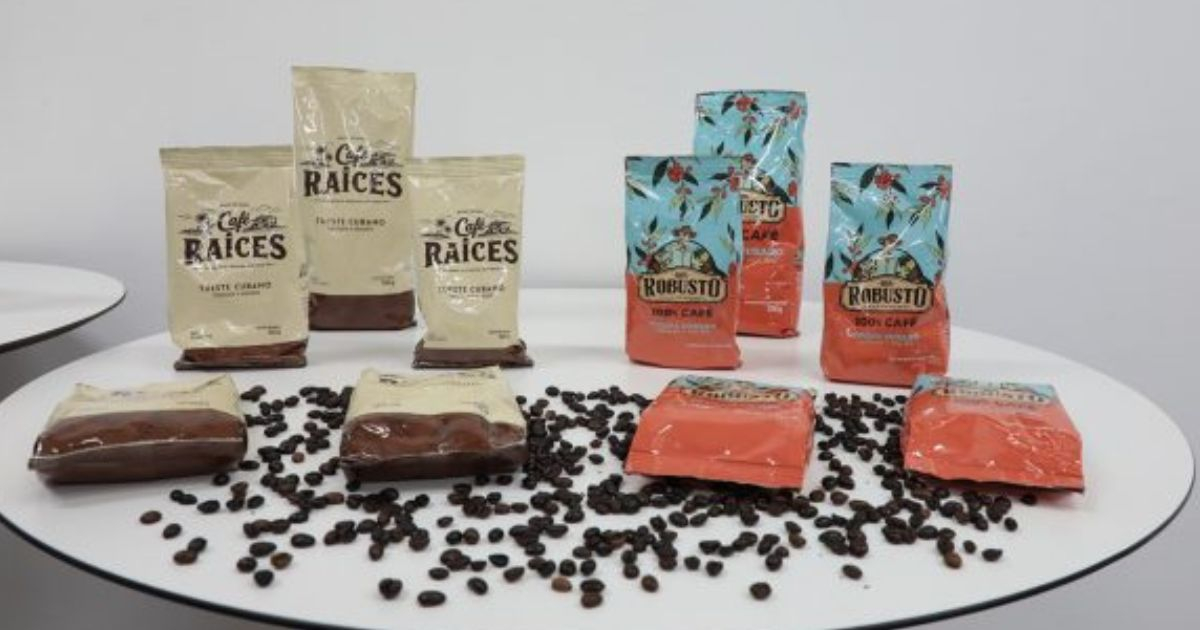
The cynicism of the regime always reaches incredible levels: the Cuban-Swiss joint venture Nescor S.A., located in the Mariel Special Development Zone, presented two new coffee brands at the Havana International Fair (FIHAV 2025): Don Robusto and Raíces.
The launch was covered by the official media outlet Cubadebate, which described it as an "industrial achievement" and part of the company's development during its eighth anniversary.
Don Robusto, according to the company's description, is a coffee made from 100% robusta beans, featuring an intense flavor and dark profile, designed for consumers "who value authentic strength above all."
Meanwhile, Raíces seeks to evoke the “Cuban coffee heritage,” combining robusta beans with caramelized notes and a medium body.
Both products were offered in packaging ranging from 125 grams to 1 kilogram, targeting both retail and export markets, as expected.
The presentation, however, generated more annoyance than enthusiasm among Cubans.
On social media, numerous users reported the contrast between the showcases of Mariel and the empty warehouses.
“Cubans do not drink that coffee. But that is the least of our concerns. What truly matters: people are dying!” wrote Irina Diéguez Toledo in the post from Cubadebate on Facebook.
Others, like Elizabeth González Aznar, expressed their outrage: “Look how the lack of shame has reached its maximum limit. What can those products mean to the people if we have no access to them? They rub in our faces what we cannot have.”
In recent years, coffee —a traditional symbol of Cuban culture— has become a luxury item.
The scarcity of domestic grain, low production levels, and the regime's priority on exporting or selling in foreign currency have made it so that most Cubans cannot access the product in the state market.
The mixed coffee that used to be available through the ration book has disappeared from the stores, and in the informal market, a package can reach 2,000 Cuban pesos or more, an unmanageable price for the vast majority of salaries on the island.
"That's great, but where is the coffee for the people?" questioned Alex Velázquez, while Mercedes Ramos lamented, "When are they going to make a good coffee for the people? They always come out with brands meant for those who live abroad or for those who have dollars."
The new brands from Nescor, a company created in partnership between Nestlé and Corporación Alimentaria S.A. (Coralsa), join the product portfolio that includes snacks, seasonings, and instant beverages.
The discourse of industrial modernization contrasts with the reality of a country where families have had to replace coffee with improvised brews made from roasted peas and other seeds.
The irony did not go unnoticed by Papita Sánchez, who wrote: “Good morning, those coffees are meant for export. And what about the Cuban one, the one for the worker? Where is it? It's a shame they put that out when the people have to pay thousands of pesos for a simple package.”
Other comments, such as that of Juan Omar Duharte, pointed to the root of the problem: “They demand that we export more, and in the end, they change the corporate purpose of the companies to sell to the people only in a currency that is not paid to them. So, what kind of social system are they talking about?”
The discontent expressed on social media is not new. In Cuba, every official announcement regarding new products or investments usually prompts the same question: will it ever reach the people?
In the words of Mayita Díaz, one of the most shared voices in the publication of Cubadebate: “Ask the top brass, as they surely consume it every day. The people's right is only to the boiling of any leaf.”
FIHAV has not only served as a showcase for the presentation of gourmet coffee brands but also as a stage for announcements that highlight the Cuban regime's attempts to reactivate strategic areas of the economy.
At the inauguration, Miguel Díaz-Canel called for “creativity” and “bravery” to sustain what remains of the Cuban economic model, implicitly acknowledging the structural crisis the country is facing.
As part of that official narrative, the regime also expressed its intention to invest in artificial intelligence as a driver of economic development.
This ambition contrasts with the technological limitations faced by the island, but it falls within the realm of the optimistic announcements that often characterize events of this kind.
Additionally, the government revealed that it will allow foreign companies to operate fully in the wholesale market, a measure that breaks with years of restrictions and centralization, suggesting a limited but significant opening in response to economic pressure.
Filed under: