
Related videos:
The Ministry of the Interior (MININT) announced new investigations related to alleged illicit currency trafficking schemes in the provinces of Villa Clara, Sancti Spíritus, and Las Tunas, an offensive that the regime presents as part of its "crusade" against financial activities outside the state system.
According to a report published by Cubadebate, file 862/2025 from the Criminal Investigation Agency of Villa Clara involves several individuals accused of moving millions of pesos and dollars outside the control of the national banking system, and therefore, does not benefit the regime's coffers.
According to the state media, the case links remittance operations sent from the United States and Spain with imports by non-state economic actors in Cuba.
The scheme described by Lieutenant Colonel Yisnel Rivero Crespo, head of the Economic Crimes Department of MININT, operated through two financiers abroad, who collected remittances from Cubans and used them to finance private purchases within the island.
In Cuba, an organizer and their messengers were responsible for distributing money to the intended family members and local businesses, earning commissions of between 6% and 8% per transaction.
Authorities claim that the main suspect, a resident of Villa Clara, has been operating since 2023 and was moving between 20 and 30 million pesos weekly, with fixed distribution days: Friday and Monday.
Five people were arrested, and the MININT claims to have identified at least four forms of non-state management allegedly linked to these operations.
The official discourse insists that these types of practices "put pressure on inflation and weaken the state's financial control," although for many economists, the rise of these networks is more a response to the structural crisis of the Cuban banking system, the scarcity of official foreign currency, and the growing distrust of the population towards state mechanisms.
In parallel, the MININT reported on two other similar cases in Pinar del Río (1021/2025) and Havana (1344/2025), focused on networks for buying and selling foreign currency within the country.
In Pinar del Río, four people were detained, including a young woman responsible for managing a closed group on social media to coordinate operations.
In Havana, the main suspect, a resident of Diez de Octubre, is believed to have turned his home into a reference point for the buying and selling of large amounts of foreign currency.
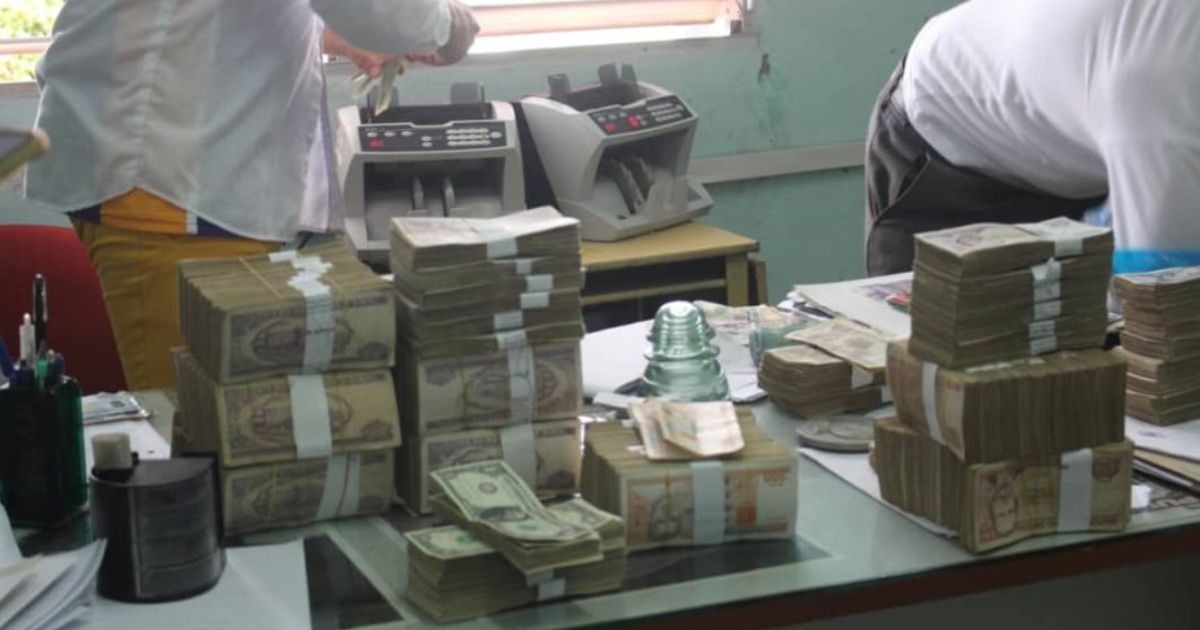
Lieutenant Colonel Rivero Crespo explained that some of the detained individuals were handling such high volumes of cash that they required machines to count the money, reflecting the magnitude of a phenomenon that, despite repeated official campaigns, continues to spread throughout the island.
The state media itself acknowledged that there are nearly a hundred ongoing investigations into informal money flows that move hundreds of millions of pesos each week.
However, the underlying causes remain unchanged: the regime maintains a monopoly over the financial system, the dual currency situation persists in practice, and most Cubans continue to rely on the informal currency market to survive or trade.
While the government insists on presenting these operations as police successes, in reality, this new "crusade against currency trafficking" is a maneuver to further control independent economic flows and reinforce its narrative of confrontation in the face of the "economic war" it repeats in every official statement.
A few days ago, the MININT announced the partial dismantling of an alleged illegal currency trafficking network between the United States and Cuba, reportedly led by the Cuban exile Humberto Julio Mora Caballero from Miami.
The operation, described by the regime as a “new form of criminality,” takes place within a context of structural crisis, liquidity shortages, and an increasing loss of state control over financial flows that circulate outside the official banking system.
Filed under: