
Related videos:
Sandro Castro has once again generated excitement on social media in recent hours following a question-and-answer session in his Instagram stories.
The controversial grandson of Fidel Castro opened a round with the phrase “Ask me a question” and received a message asking when he would implement the promised platform that would compete with the independent media elTOQUE in proposing an alternative foreign exchange rate.
In response to that question, Sandro Castro answered with a text in capital letters stating that the project already exists digitally, but that it still needs official support to operate.
In her response, she wrote: “it has already been digitally created, I just need government approval for it to have legal status and to be something solid, transparent, and trustworthy, not like the sham of the toque.”
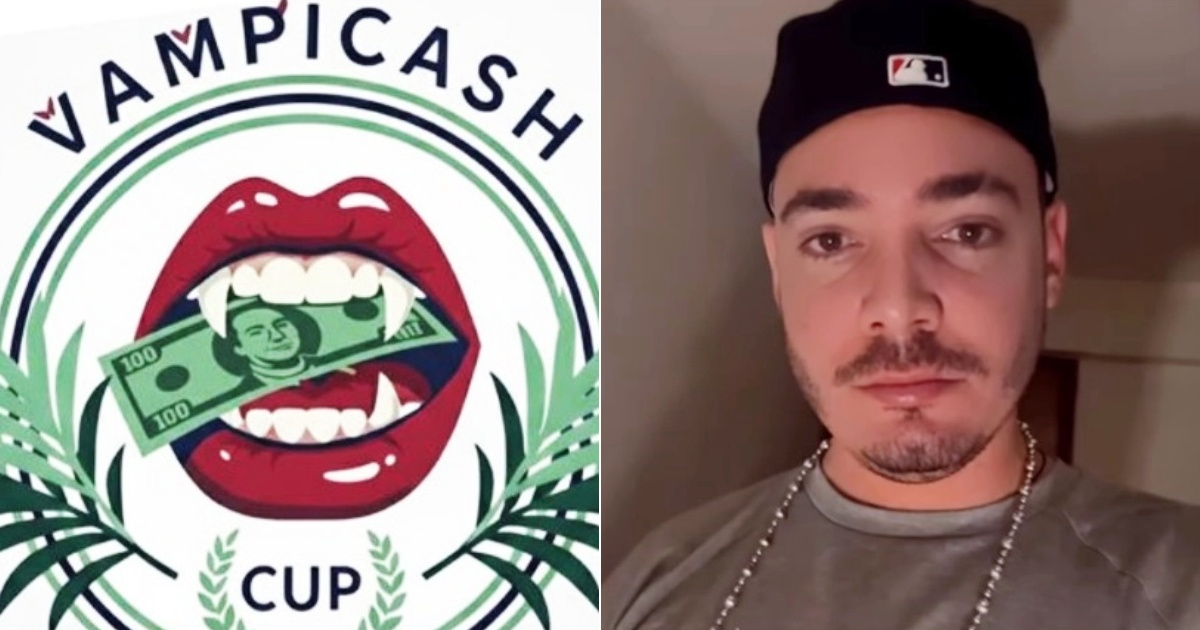
The response, besides directly referencing elTOQUE in a disparaging tone, hinted that the supposed venture -associated with the name "Vampicash Cup," which even has a logo already- would not be ready to operate publicly until receiving government approval.
A sustained attack against elTOQUE
Sandro Castro's recent clarification regarding his digital proposal comes after weeks of direct confrontation with the media outlet elTOQUE, which he has repeatedly accused of manipulating the informal currency market in Cuba.
At the beginning of November, Sandro stated on social media that elTOQUE “gained 128 million dollars in a single day” following the rise of the dollar, asserting that the outlet is coordinating with street sellers and platforms like Revolico to artificially influence the rates.
"They have a group of journalists and buyers who go out on the streets with suitcases full of Cuban pesos," he stated, also accusing the media of establishing parallel rates that incite panic among Cubans.
That same day, he announced his plan to organize micro, small, and medium-sized enterprise (mipymes) owners in Cuba to establish an alternative "reference rate."
He proposed using WhatsApp groups to coordinate decisions and set the value of the dollar around 400 CUP, in line - according to him - with the rate used by the Central Bank of Cuba in hotels.
However, in a subsequent public appearance on November 17, he avoided mentioning that project.
In his satirical segment "Notisandro," he mocked the country's crisis with references to blackouts, the lack of foreign currency, and the trial of reggaeton artist Chocolate MC, but he remained silent about the promised platform.
This “oversight” coincided with leaks suggesting that it would be the Central Bank itself that would announce a new official exchange rate.
In another interview broadcast on November 19, Sandro once again attacked elTOQUE, which he accused of "financial terrorism," although he clarified that he does not believe the outlet receives support from the United States.
He also referred to the journalists of the media outlet as "a dark elite" and suggested that their public responses to his criticisms were evasive or incomplete.
What is "Vampicash Cup" and what does Sandro plan?
So far, the technical details of the supposed platform called "Vampicash Cup" are unknown.
There is no public evidence of its functional existence beyond what has been stated by Sandro Castro. He himself admits that the system is already “digitally created,” but it needs state validation to operate in a “legal, solid, and transparent” manner.
His promise to create an alternative exchange rate aligned with the interests of the Cuban private sector, especially MSMEs and entrepreneurs, is part of a discourse that seeks to establish him as a mediator between informal economic actors and the official system.
However, their calls to censor elTOQUE and to promote the blocking of its website - even suggesting the intervention of hacker groups - have sparked criticism for inciting harassment.
A dispute with political and economic undertones
The crusade of Sandro Castro against elTOQUE does not happen in a vacuum.
The outlet, based outside of Cuba, has become the daily reference for monitoring the exchange rates of the dollar, euro, and MLC in the Cuban informal market, employing a methodology based on citizen reports.
This function, although informative, has been interpreted by government factions as a direct threat to state control over the economy and has sparked a media offensive that combines misinformation, discrediting efforts, and personal attacks.
The State Security has even hinted at possible legal actions against the team at elTOQUE, accusing them of tax evasion and currency manipulation.
In that context, Sandro Castro’s interventions seem to act as an amplifier for the official narrative, albeit wrapped in an informal and provocative tone that resonates with certain sectors of the Cuban digital audience.
Filed under: