
Related videos:
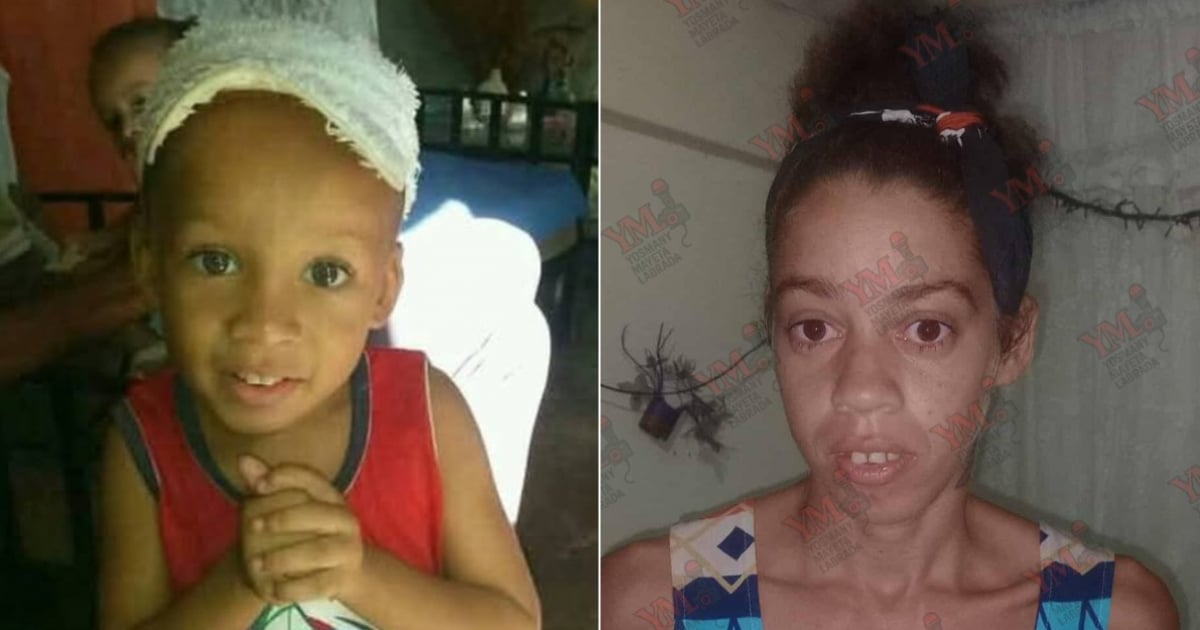
The disappearance of the child Yordan Corrales Ricardo, aged five, in Santiago de Cuba, has raised alarms in a community that is once again compelled to take action on its own due to the lack of official responses.
The case was reported on Facebook by independent journalist Yosmany Mayeta Labrada, after the mother of the minor, Reida Ricardo Ortega, reached out to him in a desperate attempt to find her son after more than a week without news.
The woman, sick with the virus and taking care of two other small children, allowed her brother's new partner to take Yordan to Reparto Altamira, under the pretense that he would not get infected there.
According to his testimony, they took him from there to Reparto Altamira, then to Reparto Van Van, where the little boy's uncle lives, and subsequently towards Songo La Maya.
Since last Thursday, Yordan's whereabouts are completely unknown.
The mother claims that she has no photo, name, or identifying information about the woman who took the boy, which increases the seriousness of the case.
A disregarded complaint
Reida recounted that when she went to the police station to report the disappearance, instead of initiating an urgent search protocol, the officers asked her to formally accuse her own brother. However, up to this point, they have neither processed the complaint nor begun any investigations.
According to the mother, not a single resource has been mobilized to locate the minor, despite being in the custody of a virtually unknown person.
The family insists that any information could be crucial and has made contact details public for receiving notifications: +53 59187737 / +53 22685059.
Families forced to supplement institutions
Yordan's case is not an isolated one.
In recent years, the disappearances of minors and adults have raised growing concern among the population, not only due to the frequency of these incidents but also because of the insufficient response from the authorities, who often delay procedures, minimize alerts, or simply do not initiate search operations.
In the absence of functional official mechanisms, social media has become the primary tool for searches, a role that should fall to institutions prepared to act swiftly.
It is the mothers, fathers, spouses, and friends who are forced to share photos, reconstruct routes, contact witnesses, and publicly advocate to ensure that cases do not remain shelved without action.
Each publication on the internet ultimately serves as a collective testimony to institutional emptiness: children, teenagers, and adults whose fate relies more on civic solidarity than on a formal investigation system.
A growing concern
The disappearance of Yordan highlights that vulnerability once again. As his photo goes viral and the community shares the child's information, the family fears that time is working against them.
The call is clear: anyone who has seen him or can provide any detail, no matter how small it may seem, should get in touch immediately.
Santiago de Cuba is once again experiencing the anguish of a mother who receives no answers, and a social environment that is organizing itself because it cannot wait for official solutions.
The case reopens a concern echoed throughout the Island: the urgency for effective protocols and a law enforcement approach that does not force citizens to become, out of desperation, the sole responsible party for searching for their loved ones.
Filed under: