
Related videos:
Cuban state media acknowledged this week a reality that millions of Cubans face daily: There is a shortage of medications in the country, and the uncontrolled sale of drugs is increasing on the streets of Havana.
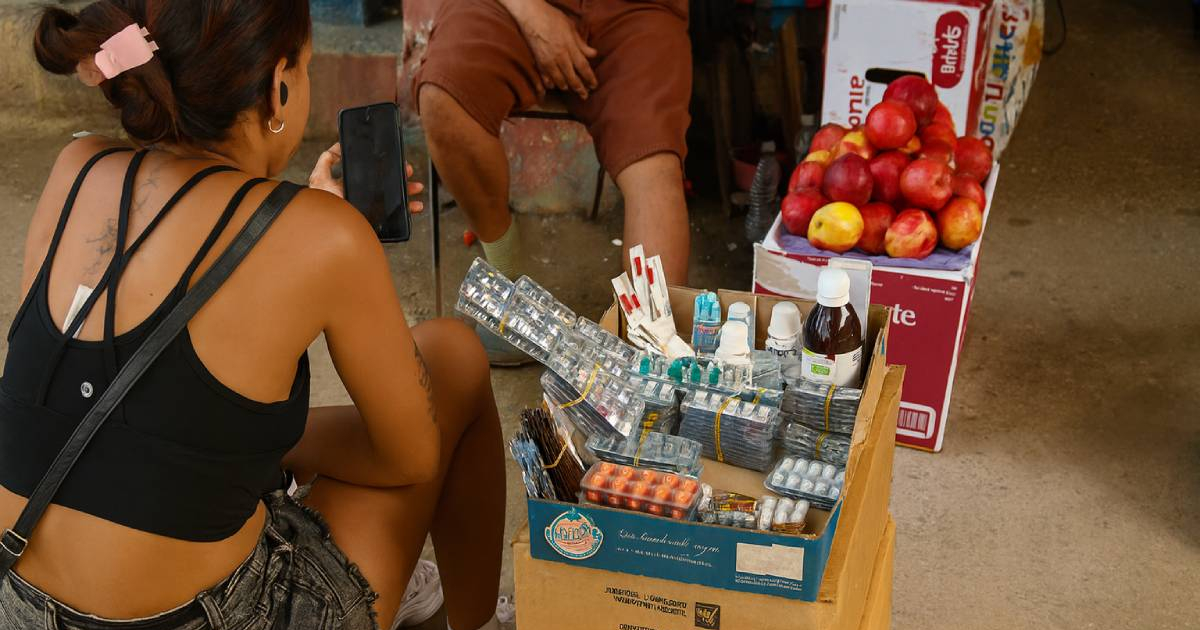
In a report published by Cubadebate, it is described how the Puente de 100 and Boyeros, in the capital, has become an informal market where all kinds of pharmaceuticals are traded, ranging from analgesics to antidepressants and controlled medications.
The official text acknowledges that the corridors and entrances in the area are filled with makeshift vendors offering scarce medications from the state network, without prescriptions or health regulations.
The publication attempts to present the phenomenon as an isolated problem, but its description confirms the collapse of the health system and the government's inability to ensure access to basic medicines.
The situation reveals several structural deficiencies in the Cuban healthcare system:
- Widespread shortages of medications in state pharmacies.
- Lack of health control in the distribution and sale of medications.
- Lack of oversight by the Ministry of Public Health and local authorities.
- Loss of traceability of products: bottles without labels, open packaging, or repackaged medications.
- Public health risk, with patients forced to buy expired medicines or those stored under inadequate conditions.
- Normalization of the black market, in response to the desperation of those unable to access formal supply.
The state media report also acknowledges that controlled medications, such as carbamazepine, are sold freely alongside vitamins and common pain relievers.
The absence of effective oversight mechanisms turns each purchase into a risky gamble for consumers, who are unaware of the origin or condition of the products.
Despite the regime's attempts to downplay the crisis, the very testimony of its official press highlights a profound degradation of the healthcare system.
Scarcity, institutional decline, and corruption have created a parallel circuit that operates in broad daylight, under the gaze and tolerance of the authorities.
While the government continues to blame the U.S. embargo, Cubans are faced with a much more immediate problem: the inability to access safe and affordable medications, amid a chikungunya epidemic that dangerously affects the most vulnerable, the elderly and small children.
Filed under: