
Related videos:
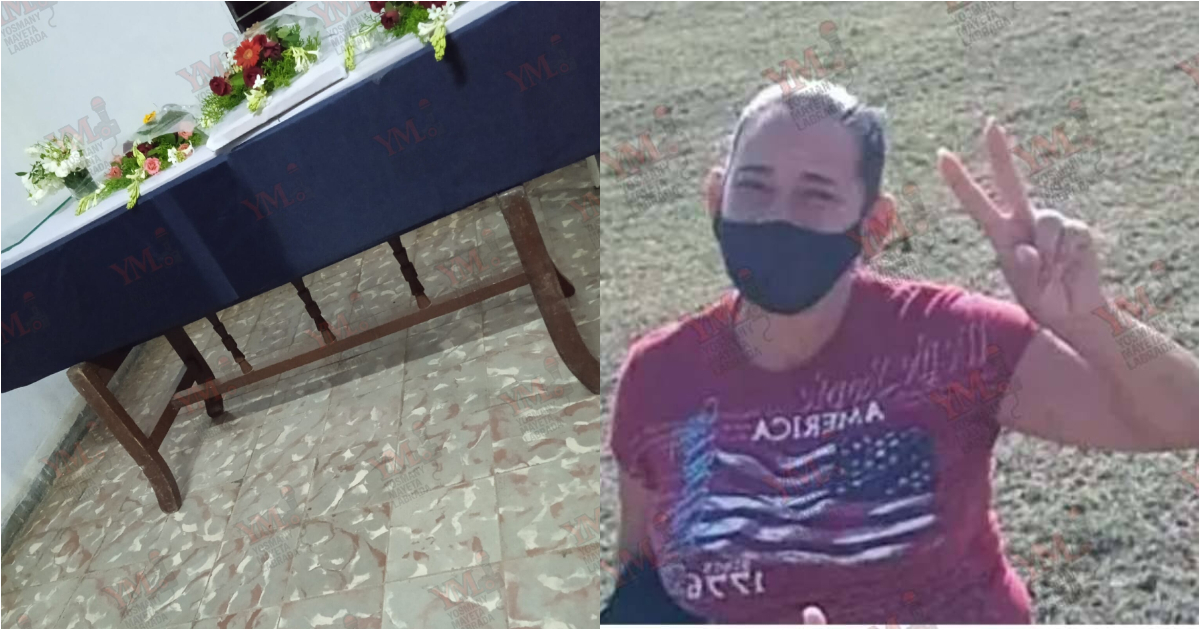
The village of Boniato, in Santiago de Cuba, was left in shock on November 23 after the death of Lixandra Mengana Carcassés, a 47-year-old mother, who was reportedly suffering from one of the arboviruses circulating in the country, which people refer to as "the virus."
According to testimonies from neighbors, cited by independent journalist Yosmany Mayeta Labrada on his Facebook account, the woman began to experience intense pain and took a pill to relieve it, after which she suffered a sudden heart attack.
She was immediately assisted and urgently transferred, but she did not make it to the Cuabita polyclinic alive.
According to the testimonies, the facility lacked the minimum resources to handle an emergency like theirs.
According to the source, Mengana leaves behind two children, an 11-year-old girl and a young man around 19 or 20 years old.
The tragedy has generated outrage among residents who are questioning why a polyclinic, designed as the primary point of care, lacks the essential resources to save a life in danger.
"It wasn't the illness that defeated her... it was the lack of resources to save her," they lamented.
On social media, residents expressed fear about the spread of the “virus,” the increasing number of cases, and the deaths of young people in the area, while demanding answers and appropriate conditions to prevent further losses.
In recent days, also in Santiago de Cuba, Claudia Mesa Rodríguez, a 15-year-old teenager, passed away after being admitted to the North Children's Hospital in critical condition.
The family reported delays in medical attention and lack of resources. Mesa experienced respiratory difficulties and was diagnosed with diabetes along with a virus that affected his family. Despite medical efforts, his kidneys did not respond, and he suffered several critical episodes until his passing.
Cuba is experiencing a serious epidemiological crisis, characterized by the high incidence of arboviral diseases such as chikungunya and dengue, along with other illnesses.
Its rapid expansion is attributed to the high density of Aedes Aegypti mosquitoes, the movement of people, and the deficiencies in national healthcare management.
In this regard, the Pan American Health Organization (PAHO) reported on Tuesday that the island identified 15,590 cases of chikungunya between October 11 and November 1, with a total of 20,062 infections reported so far in 2025.
With that total figure, Cuba reaches a cumulative incidence of 183.43 cases per 100,000 inhabitants, the highest in all of America this year.
Recently, residents of the 12 Plantas de Trocha building, located in the heart of Santiago de Cuba, reported a viral outbreak that caused the death of a doctor, leaving another person in critical condition in that building, while dozens of residents are showing similar symptoms.
The grandson of Olaida del Castillo, a member of the opposition movement Damas de Blanco, passed away in Havana on November 15 due to one of the viruses transmitted by mosquitoes.
Filed under: