
Related videos:
The Cuban regime, unable to ensure basic medications in pharmacies and hospitals, is attempting to alleviate the health crisis with supposed "miracle products."
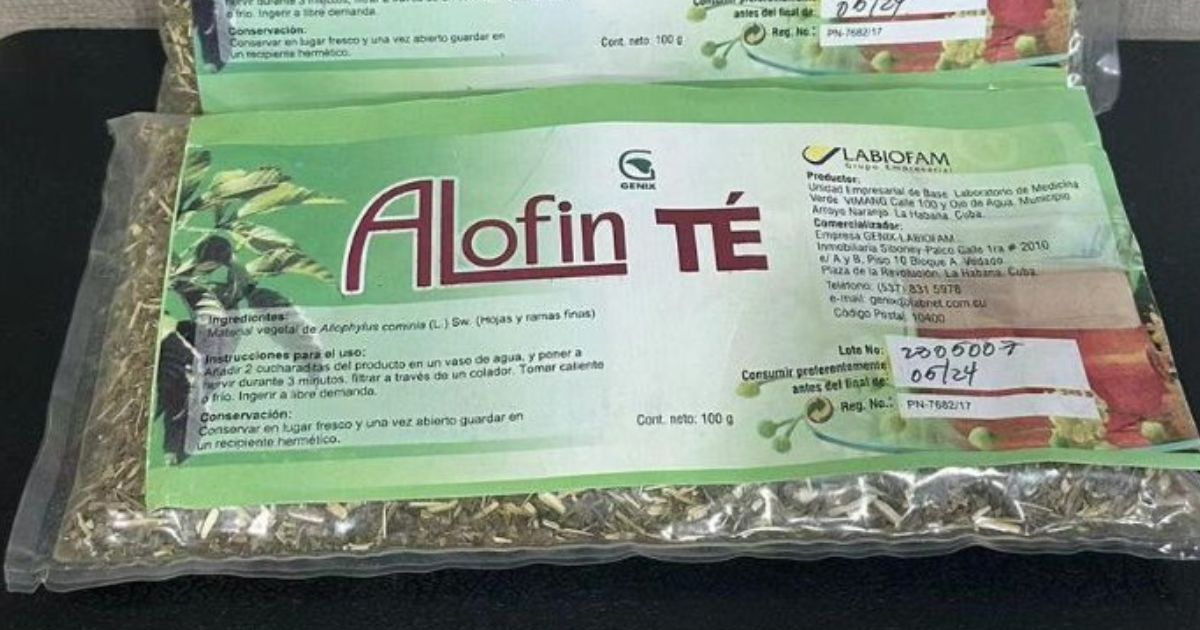
At the 41st International Fair of Havana (FIHAV 2025), held at the Expocuba fairgrounds, the state group Labiofam S.A. presented a tea that claims to help control diabetes and blood pressure.
According to the official newspaper Tribuna de La Habana, Labiofam, which is part of the OSDE Labiofam conglomerate, showcased a wide range of new products during the fair, including Alofin Tea, commonly known as “Boxwood Tea.”
According to the publication, this infusion is already being sold in China, and the company aims to introduce it to the national market as a natural solution for patients with chronic illnesses.
The general director of Labiofam, Julio Reinaldo Iglesias, also highlighted the launch of other products, such as nutritional supplements made from Vimang and spirulina, in addition to the well-known Vidatox, which is made with scorpion toxin and promoted by the regime as an alternative treatment to relieve pain and tumor-related inflammation.
Labiofam also presented its food line based on corn, aimed at producing cornstarch, derivatives, and probiotic yogurts under the brand Paraíso, with the goal of increasing the national supply.
It also showcased bioproducts such as BIORAT, BACTIVEC, and THURISA, aimed at pest control and environmental protection.
Despite the deep productive crisis in the country, the state-owned company assured that it would maintain international agreements, including those with Vietnamese entities, to finance new production lines and increase its industrial capacity.
Recently, the state media has once again spotlighted noni as a key player in “natural health” in Cuba, at a time when hospitals and pharmacies lack basic medications for the population.
The Periódico 26 of Las Tunas, the provincial organ of the Communist Party, dedicated a journalistic piece to the fruit known as Morinda citrifolia, highlighting its supposed immune-stimulating benefits and its use in family gardens and urban orchards.
The text recalls how in the 1990s noni became known as a "miracle fruit" due to its alleged properties against hypertension, diabetes, migraines, and even certain types of early-stage cancer, based on Asian research.
Filed under: