
Related videos:
The new offensive by the Cuban regime against the informal currency market is already hitting families inside and outside the island hard.
The government has intensified its crackdown on alternative remittance channels—informal mechanisms created by Cubans in exile to circumvent state control—and has forced the closure of several platforms operating from Miami, Panama, and Mexico.
The authorities present it as a "fight against illegal currency networks", but in reality, it is a maneuver to redirect the money from the exile community towards the channels controlled by the military conglomerate GAESA, which dominates the entire dollarized economy of the country.
“Every agency through which Cubans could send money without falling into the clutches of the dictatorship is shutting down,” denounced the doctor and activist Alexander Figueredo, known as ‘Doctor Patria’, in a viral post on X (formerly Twitter).
"The few that remain open are tied to GAESA, that octopus that devours everything and now also wants to suck in the remittances."
Informal platforms under attack
The platforms that are shutting down are not accredited companies in Cuba, but rather informal channels created by Cubans in exile to send aid to their families without going through the state financial system.
They typically operated discreetly, connecting intermediaries abroad with contacts on the island who delivered money in pesos or MLC, at fairer rates and without the involvement of official entities.
That parallel circuit has been for years the invisible network that kept the Cuban domestic economy alive, but now it is facing direct persecution.
The Ministry of the Interior (MININT) claims to have dismantled several "illegal structures" for sending foreign currency, including one allegedly directed from Miami by the exiled Humberto Julio Mora Caballero.
According to the regime, these networks moved over 1,000 million Cuban pesos and around 250,000 dollars between February and September 2025. However, behind the criminalizing language, there is an undeniable fact: the State lost control of remittances and is seeking to regain it by force.
GAESA: The Octopus That Controls Remittances
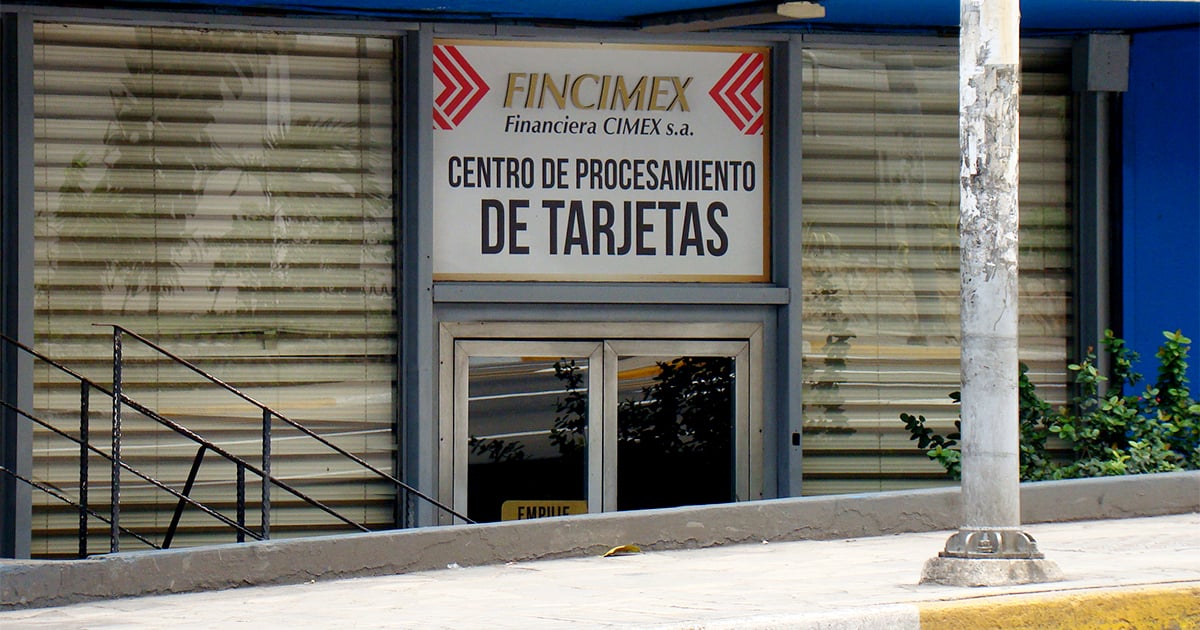
In Cuba, all official money transfer channels — such as FINCIMEX or AIS Remesas Cuba — are under the umbrella of GAESA (Grupo de Administración Empresarial S.A.), a military consortium that manages the country's strategic sectors: tourism, banking, foreign trade, telecommunications, and finance.
GAESA is, in fact, the true central bank of the regime, a parallel system that operates outside of public transparency and accumulates billions of dollars in foreign currency, while the population faces the worst liquidity crisis in decades.
The administration of Donald Trump sanctioned GAESA and its subsidiaries in 2020, blocking any transactions with its companies. As a result, Western Union shut down its operations to Cuba, leaving millions of families without an official way to receive remittances. Since then, Cubans in exile have turned to those informal networks that the regime is now trying to dismantle.
In the words of Figueredo: "That octopus that devours everything now also wants to suck up the remittances. I am not going to send a dollar over there. That is financing the executioner and allowing him to rob the people right in front of them."
An official system without liquidity
Even when Cubans use "legal" means, the outcome is not better.
In November, a woman residing in Germany reported that she had sent 2,200 euros to her sister in Havana through Banco Metropolitano, a state-owned institution. Two months later, the money had not been delivered: the institution claimed a "lack of cash" to process the transfer.
Cases like this are repeated all over the island. Cuban banks lack real liquidity, foreign currency accounts are blocked or restricted, and customers must wait weeks—or months—to access their own money.
In practice, the state financial system has become ineffective: it does not guarantee access to remittances, does not support deposits in foreign currency, and does not inspire confidence either domestically or internationally.
Remittances and Poverty: The Other Side of the Collapse
The remittance crisis occurs within a context of widespread social and economic collapse, characterized by the proliferation of diseases and shortages of medications.
According to a recent study, 89% of Cubans live in extreme poverty, and most of them rely partially or entirely on aid sent from abroad.
Salaries in Cuban pesos are insufficient to cover basic needs: food, medicine, hygiene products, and transportation. Instead, almost everything is sold in stores in MLC (freely convertible currency), where payment can only be made with state-controlled digital currencies.
The result is a forced dollarization: Cubans are paid in pesos but must buy in dollars. This structural contradiction—created and maintained by the regime itself—is what drives millions of people to seek alternatives in the informal market, both for exchanging money and for receiving assistance.
Declared war against the informal market
Since mid-November, the Central Bank of Cuba (BCC) and official media outlets such as Cubadebate and Razones de Cuba launched a campaign to discredit the informal currency market.
The official discourse blames independent sites like El Toque for "distorting the rates" and "encouraging speculation," while hiding the real causes: the lack of confidence in the Cuban peso and the shortage of official currencies.
The activist Amelia Calzadilla dismantled that narrative on social media: “It is not El Toque that drives up the price of the dollar. It is the government that imposed a system where everything is bought in foreign currency and nothing is produced in pesos. They created the problem and now seek a scapegoat.”
His message reflects a widespread sentiment: the regime blames the markets and the media for a crisis it itself created.
Control as policy
The repression of the informal market and the closure of alternative remittance channels follow a clear rationale: to control every dollar that enters the country.
The more desperate the economic situation becomes, the tighter the state's control over the flow of money becomes.
The regime's strategy has three main objectives:
1. Reabsorb remittances within official channels, so that the foreign currency ends up in the hands of GAESA rather than the citizens.
2. To weaken the emerging private economy, which relies on remittances and the informal market to import supplies.
3. Strengthen the dependence of the people on the State by restricting their alternatives and punishing economic autonomy.
The political message is clear: in Cuba, no form of prosperity—even the sending of family aid—can exist outside of state control.
"The real blockade is internal."
Alexander Figueredo, in another message posted after the closure of the agency through which he was sending money, wrote: “The real blockade is internal, signed and executed by the PCC. Cuba is not collapsing due to a lack of remittances; it is collapsing because the dictatorship destroys everything it touches, including what keeps the people alive.”
His stance reflects an emotional rift within the Cuban diaspora: many emigrants refuse to continue sending money through state channels, believing that their funds ultimately finance repression or fuel the military business network.
Others, however, have no other option: their families depend on those 50 or 100 dollars a month to survive.
The consequence of this "internal economic war" is twofold: the regime loses revenue, and families lose the little stability they had left.
An economic model in agony
The crackdown on the informal foreign exchange market, the collapse of the state banking system, and widespread poverty are part of a systemic crisis of the Cuban model.
The regime needs remittances, but does not tolerate losing control over them. It needs dollars, but cannot generate them. And it needs to blame the "blockade," but cannot hide its own structural failure.
Meanwhile, the dollar and the euro continue to set the real standard for purchasing power. The Cuban peso devalues every week, and state banks are running out of cash.
Conclusion
The regime's "war" against the informal currency market in Cuba is not an attempt to regulate the economy; it is a desperate strategy to maintain control over a system that is no longer under its control.
Pursuing informal networks does not solve the problem; it exacerbates it: it leaves families without remittances, entrepreneurs without supplies, and the population without hope.
While the military government of GAESA concentrates power and dollars, the Cuban people survive amidst inflation, hunger, and fear.
Because, as Alexander Figueredo wrote: "While we send love, sacrifice, and dollars, they send threats, persecution, and fear."
In Cuba, the economy of remittances is also the economy of resistance. The regime's attempt to stifle it is, once again, a direct attack on the daily lives of its own people.
Filed under: