
Related videos:
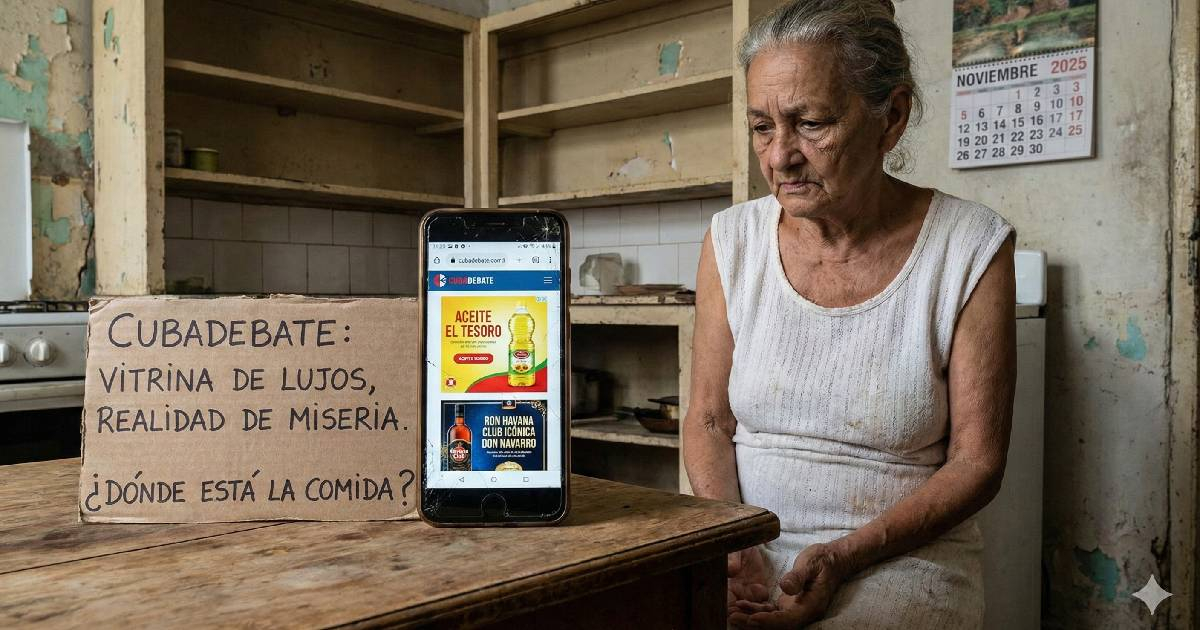
Recent advertising posts from the official portal Cubadebate about a Colombian oil and a premium rum made in Cuba sparked a wave of criticism from readers who denounced the absurdity of promoting products that are out of reach for the average citizen and disconnected from the everyday realities of life on the island.
Reactions quickly multiplied after Cubadebate dedicated space to promote two products that, for most Cubans, are unattainable: El Tesoro Oil, presented by Morano Gruppo, and Havana Club Icónica Don Navarro Rum showcased at the recently concluded Havana International Fair (Fihav) 2025, which took place from the 24th to the 29th of this month.
The response from citizens was immediate and direct. Users accused the outlet of operating as a commercial showcase detached from reality while evading urgent issues such as shortages, the deterioration of public services, and the spread of diseases in the country.
The comments gathered in both publications reflected the accumulated discontent. Some joked about "taking a bottle" when "Nicolás Maduro falls," while others recalled that Cubans receive poor-quality alcohol in the stores that has nothing to do with the award-winning rums displayed for export.
Others reported that the benefits from those sales never reach the tables of the population, and that even Cuban rum has become inaccessible for the so-called "ordinary people."
The criticisms of Colombian oil followed the same pattern. Several readers questioned the lack of transparency regarding the price, pointed out that the so-called “Cuban market” referred to is, in reality, the business circuit in foreign currency, and criticized Cubadebate for the contradiction of acting as an advertising platform while the socialism it claims to defend promises a different model of distribution.
Incredulity was widespread; many claimed they had never seen that product in stores, others reported that there has been a shortage of oils in warehouses for months, and several pointed out that the official propaganda creates an image of the country that does not match everyday hardship.
The volume and tone of the criticisms revealed the weariness of a media outlet that, rather than informing about the crisis facing the population, promotes luxury or imported goods that the vast majority cannot afford.
For many users, Cubadebate ultimately confirmed that it exists, more than ever, in a parallel universe.
In the very context of Fihav 2025, the company BioCubaCafé S.A. presented its new coffee “Guantánamo 155”, a premium product created in tribute to the city, but intended for exclusive displays and markets, far removed from the reality of Guantanameros who cannot even afford the regulated coffee.
Furthermore, the launch of luxury brands such as Don Robusto and Raíces generated outrage among Cubans, due to the contrast between the official ostentation and the reality of empty stores.
Most Cubans on the island live burdened by the ongoing problems in food distribution, which include delays in the delivery of basic products such as rice, sugar, and oil, as well as the poor quality of food.
Furthermore, corruption in the distribution system and poor storage conditions contribute to worsening the situation.
In some cases, the products arrive in such poor condition that they are unfit for human consumption.
On the other hand, the government's dollarization of trade has heightened social inequality. The majority of Cubans do not have access to dollars, which prevents them from purchasing food and basic goods at international prices in stores that can only be accessed by those with convertible currency.
Meanwhile, the markets in Cuban pesos are facing a severe shortage, affecting the quality of life of the population and generating social unrest.
Filed under: