
Related videos:
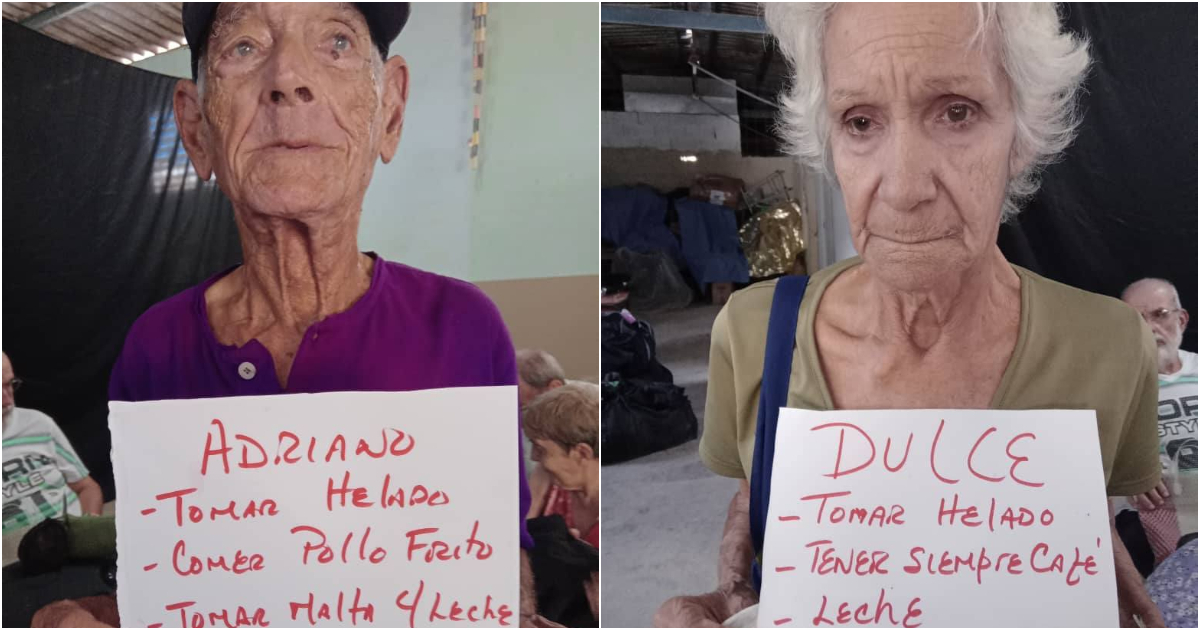
The humanitarian project Aliento de Vida, which has been operating in Havana for 10 years, shared testimonials from elderly individuals with minimal resources, who publicly expressed three wishes each—requests that, far from being extravagant, boil down to everyday food items that are impossible to afford on a retirement pension in Cuba.
According to the coordinator of Aliento de Vida, Yankiel Fernández, the initiative aims to give a voice to the elderly and to manage charitable assistance to fulfill these small wishes.
“O they indulge themselves, or for the rest of the month, they are at the mercy of God,” Fernández pointed out through his profile on Facebook.
The project leaders also published bank account numbers in CUP and MLC, as well as a way through Zelle in the United States, for those who wish to contribute.
They insist that any donation, no matter how small it may seem, can provide real relief for these individuals.
The reaction on social media has been immediate: numerous users have asked for ways to provide financial support, while photos of grandparents making wishes, such as asking for a malt with milk, expose the plight of old age in a country where pensions do not cover basic needs.
The case highlights the harshness of Cuban reality: reaching old age and finding that a simple ice cream becomes an unattainable luxury.
Every day, images of elderly people searching through the trash for food are becoming more common, while independent organizations are warning of the
At the end of April, a report from the official newspaper Girón in Matanzas revealed the misery in which thousands of retirees live who, after decades of work, are forced to survive on the streets.
The content creator Sheyla, from Matanzas, recently showcased in a video what a retired person in Cuba can afford with their monthly pension of 1,500 Cuban pesos, roughly equivalent to three dollars at the informal exchange rate, amidst the deep economic crisis affecting the island.
The Cuban YouTuber Iván Valdés Permuy, known as Listillo Cubano on social media, walked the streets of Havana distributing cash to elderly people who revealed their pensions, and through his actions highlighted the miserable amounts received by tens of thousands of retirees on the island after a lifetime of work.
Orlando Regueiro Castellano, an 83-year-old man from the municipality of Baraguá in Ciego de Ávila, explained days ago that he has no money for food and walks the streets asking for “a little piece of bread,” with most people unable to help him.
On July 16, Prime Minister Manuel Marrero Cruz announced before the National Assembly of People's Power that starting September 1, a pension increase will be implemented for retirees who currently receive up to 4,000 pesos per month.
According to the Resolution 14/2025 published in Official Gazette No. 71, the measure aims to “ensure” better protection for the most vulnerable sectors of the Cuban population.
According to the announcement, the measure will benefit 1,324,599 people, which represents 79% of the pensioners in the country.
The minimum pension is just over 3,000 pesos, while the maximum does not exceed 4,000, amounts that are not enough to cover the basic basket, with skyrocketing living costs and increasingly limited access to essential goods.
So far, according to official data, 39% of Cuban retirees receive the minimum monthly pension equivalent to 1,528 CUP per month, and they are highly likely to join the list of people at risk of extreme poverty.
Especially complicated is the situation of those who do not have family abroad to send them dollars in order to access a balanced diet in the twilight years of their lives.
Depend exclusively on what arrives at the warehouses, marked by extreme rationing, scarcity, and delays in the distribution of basic foods such as rice and sugar.
The uncontrollable inflation resulting from the failed Ordering Task has driven up the prices of essential goods while wages remain stagnant, eroding the purchasing power of Cubans, who are exhausted from long lines, blackouts, hunger, and despair.
Frequently asked questions about the precarious situation of retirees in Cuba
Why is having ice cream or fried chicken a luxury for older adults in Cuba?
In Cuba, retirees receive pensions so low that they cannot cover basic needs, making everyday items in other countries, such as ice cream or fried chicken, become unattainable. The current minimum pension is about 1,528 Cuban pesos, barely three dollars at the informal exchange rate, which is insufficient to cover even the basic basket in a context of rampant inflation.
How does inflation affect Cuban retirees?
Inflation in Cuba has skyrocketed the prices of basic goods, rendering the purchasing power of retirees virtually nonexistent. Despite recent increases in pensions, they remain insufficient, as essentials like rice, sugar, and oil are only sold in dollars or MLC, a currency that retirees do not receive.
What initiatives exist to help retirees in Cuba?
There are humanitarian projects like Aliento de Vida that aim to give a voice to the elderly and manage supportive aid. This type of initiative requests donations from individuals that can alleviate the difficult situation of retirees. Additionally, some content creators on social media have highlighted the issue, generating solidarity and international support.
What are the recent measures taken by the Cuban government regarding pensions?
The Cuban government has announced an increase in pensions starting September 1, 2025, where the minimum pension will rise from 1,528 to 3,056 CUP. However, these amounts remain inadequate to cover the high cost of living on the island and do not address the precarious situation faced by thousands of retirees.
Filed under: