
Related videos:
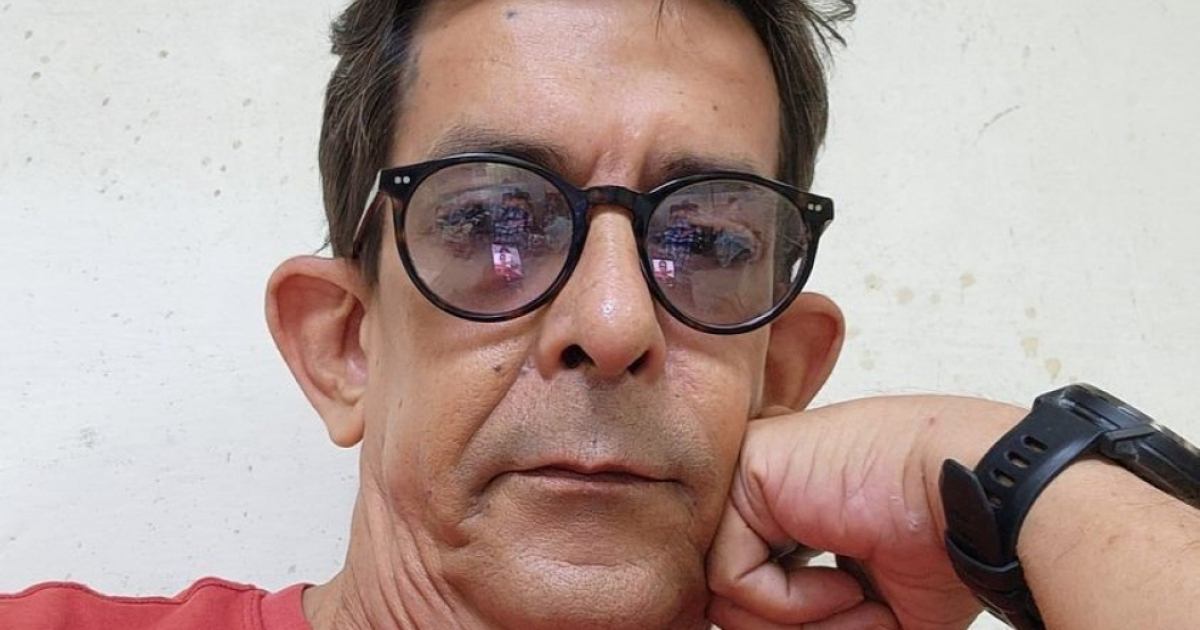
The Cuban comedian Ulises Toirac has once again released a highly critical analysis of the country's political reality, questioning the lack of spaces for dissent and the persistence of a model that has stifled plurality and clings to power with an increasingly disconnected discourse from the everyday lives of citizens.
In a reflection published on Facebook, Toirac stated that "not dissenting is the anomaly," emphasizing that human life is built on agreements, disagreements, and personal experiences, rather than on obedience to external directives.
For him, individuality is incompatible with any system that seeks to clone ideas and eliminate diversity of opinions, something he considers typical in the Cuban political model.
In analyzing the origin and evolution of revolutionary processes, the artist recalled that every revolution arises from a social force and is enforced through the use of power.
However, he warned that once in power, those movements lose their transformative nature and, in their attempt to perpetuate themselves, turn dissent into a permanent enemy.
"Revolutions are not an eternal movement. They change a status and succumb as they gain power. There is no revolution in a power that seeks to perpetuate itself. Forget about the tango," he emphasized.
Toirac stated that the power in Cuba builds defensive mechanisms that are refined over time, creating structures that simulate democracy while maintaining intact political control.
The comedian argued that the initial polarization characteristic of major social conflicts diminishes over the years, but the government's attitude toward dissent remains unchanged: any questioning is still treated as a threat, even when it takes on moderate or constructive forms.
He stated that this causes the state to stifle plurality, an essential component for any human project to develop.
In his most direct criticism of the government’s rhetoric, Toirac confessed to having read with "astonishment" official statements portraying Cuba as "a military, medical, and economic power that is advancing," something he deemed absurd, especially considering that the country has not even managed to achieve stable electrification.
He was emphatic in pointing out that those who hold such discourses do not promote real solutions because they do not even acknowledge the urgent need for change.
In his view, these are official profiles designed to be presented as models of patriots, untouchable figures that the system protects and exalts, while repressing or discrediting any divergent stance.
His reflection, laden with historical references and philosophical concepts, concluded with a central idea: without plurality, without contradictions, without debate, and without the freedom to dissent, no social project is viable.
Amidst a Cuba engulfed in constant blackouts, economic decline, and growing citizen frustration, Toirac's post once again highlights, through words and critical thought, the limitations of a system that refuses to reform.
Filed under: