
Related videos:
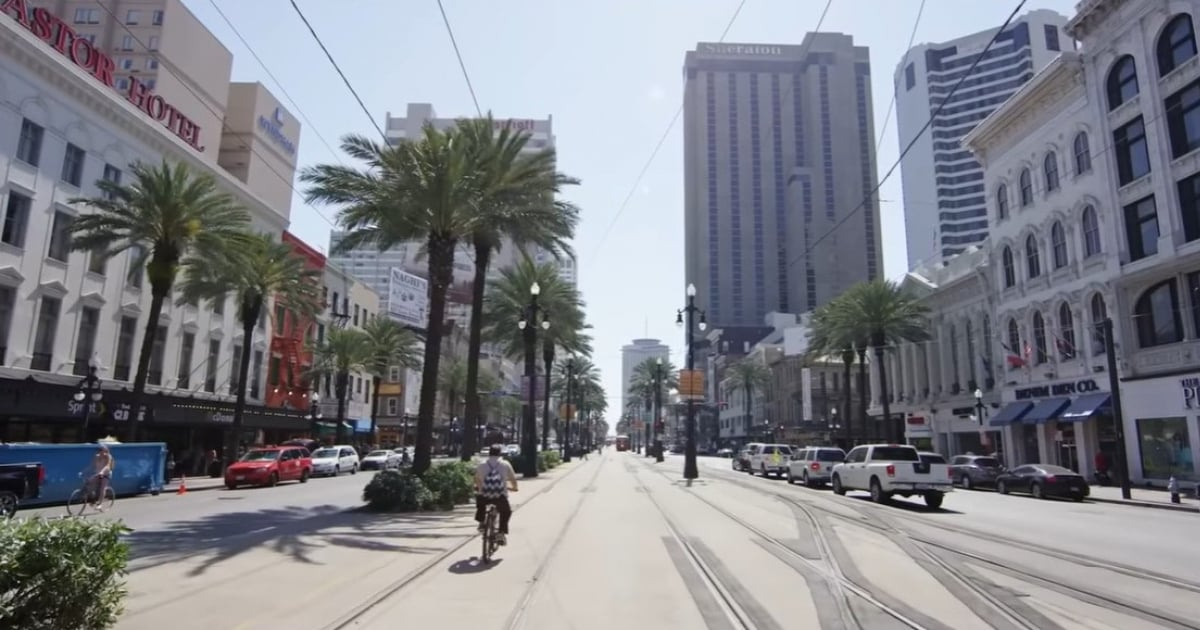
The empty streets, the nearly vacant parking lots, and the almost complete absence of Hispanic workers in commercial areas of New Orleans reflect the fear that has taken hold of the immigrant community since the launch of the immigration operation "Catahoula Crunch," implemented by the Government of Donald Trump.
The pressure from the police and the presence of federal agents—including ICE, Border Patrol, and state authorities—have caused thousands of residents to avoid leaving their homes, while the first arrests have already been reported in the city and nearby suburbs.
In Kenner, one of the areas with the highest concentration of Hispanics, the scene is unusual: deserted streets, nearly empty supermarkets, and shops without customers.
Telemundo reported that even the places where day laborers traditionally gather -such as Home Depot and Lowe’s- appear half-empty, despite federal agents also showing up there in recent days.
There are no official figures on the number of arrests so far, but testimonies and police activity have created a widespread atmosphere of alarm among immigrant families.
Many residents remain hidden in their homes for fear of being intercepted in operations that, according to reports, are carried out in multiple areas of the city and nearby municipalities.
Immigration lawyers confirm that consultations have surged, although most are conducted by phone or video call because people are afraid to appear in person.
A large-scale federal operation
The Department of Homeland Security (DHS) officially announced the launch of "Catahoula Crunch," an operation aimed -according to the agency- at "undocumented foreign criminals who have been released from prison and returned to U.S. communities."
In its statement, the Government accused New Orleans of maintaining "sanctuary city" policies that it claims allow for the release of undocumented individuals with criminal backgrounds.
The DHS Deputy Secretary, Tricia McLaughlin, stated that local policies force federal agents to "risk their lives" to apprehend individuals who "should never have been back on the streets."
According to the official, the operation targets individuals who had previously been arrested for burglary, armed robbery, vehicle theft, and rape.
The federal government maintains that the operation is a response to an increase in cases where New Orleans allegedly did not comply with detention orders issued by ICE.
FBI and State Police work together
The FBI and the Louisiana State Police announced a parallel initiative to "deter attacks" against federal agents and prevent any attempts at obstruction during raids.
Jonathan Tapp, the special agent in charge of the FBI in New Orleans, warned that assaults or actions that interfere with the work of law enforcement will not be tolerated.
State Superintendent Robert Hodges added that the State Police will support immigration operations in a visible manner, using uniforms and official vehicles.
Collaboration among local, state, and federal agencies is part of a broader deployment that, according to AP, could target the detention of up to 5,000 individuals, following the mass arrest strategy promoted by the Trump administration.
New Orleans: between strict laws and community distrust
Although New Orleans has been classified by the federal government as a "sanctuary jurisdiction," the Louisiana Legislature—dominated by Republicans—has passed laws that tighten mandatory cooperation with ICE.
Among them are the penalization of any actions that interfere with immigration operations, the expansion of the crime of misconduct for officials who do not cooperate with ICE, and the prohibition of releasing individuals who have entered or stayed illegally in the country without first notifying federal authorities.
Lawyers: "People are preparing as if a hurricane were coming."
Immigration lawyer Miguel Elías stated that many immigrants are taking measures similar to those of a climate emergency: they are stockpiling food, reducing travel, and organizing who will take the children to school to limit their exposure in public spaces.
In neighborhoods and businesses, community organizations have placed signs prohibiting the entry of federal agents. Workshops on legal rights and protocols in case of detention have also been held.
Although the city is known for its cultural diversity, only 6.7% of its population is foreign. However, the Latino population accounts for approximately 14%, a figure that increased significantly after the reconstruction following Hurricane Katrina.
The Pew Research Center estimates that 110,000 undocumented immigrants currently live in Louisiana, most of whom come from Honduras.
Economic impact and business concern
Local business owners express concern over the possible economic impact. Amanda Toups, owner of the restaurant Toups Meatery, stated that New Orleans' tourism-dependent economy could be severely affected by immigration enforcement operations.
"If even 5% of tourists are scared away, that is devastating," he pointed out, warning that the fear of being detained could deter Hispanic or brown-skinned visitors, even if they are U.S. citizens.
Highlighted case: a Cuban detained in the operation
Among the first confirmed arrests is that of Jorge Vierra Serrano, a Cuban citizen with a criminal record for rape with use of force and burglary in Louisiana.
The arrest was announced by the DHS in X, where the agency published a video of the moment agents -dressed in civilian clothes- transferred him while handcuffed and shackled at the ankles.
The DHS accompanied the video with a strong message: "Another rapist behind bars."
Authorities reported that Vierra Serrano will be processed for deportation.
In the same statement, the department reiterated: "If you are an illegal foreign criminal, it doesn't matter where you are from: we will send you back to your country."
Filed under: