
Related videos:
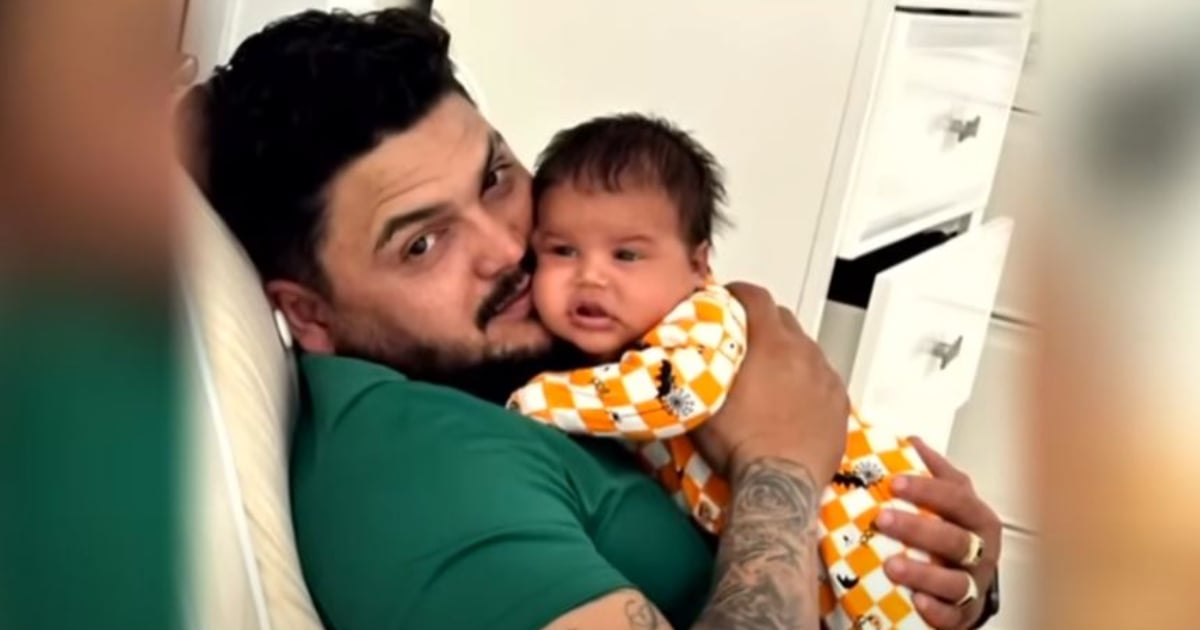
Seven months after being arrested by Immigration and Customs Enforcement (ICE) -despite having parole and being in the process of obtaining residency- Cuban Ariel Lara González was finally deported to Mexico.
In Miami were his wife, his grandmother, and his son, who turned one year old in October. Ariel could only congratulate him via video call from a detention center when he was still in the country.
"There is no mercy. There is no empathy," said to Local 10 her partner, Elena Lara, for whom her little one's birthday is the most painful experience she has ever faced.
The woman claims that Ariel trusted in the promise of protection from the U.S. government towards persecuted Cubans.
"I had a lot of faith in Marco Rubio," she declared.
Now, he claims that both feel betrayed and abandoned by the system.
Ariel, who participated in the protests on July 11, 2021, has no criminal record in the United States.
He entered the country in 2022 through the Mexico border, where authorities granted him a parole, and this year he hoped to regularize his status under the Cuban Adjustment Act.
However, he was arrested when he went to an appointment, like any other migrant hoping to legalize his status, believing he would receive residency. Instead, he left in handcuffs.
According to the administration, the argument for detaining him was that five years had not yet passed since his first deportation, a technicality that, for his defense, does not invalidate his current legal status.
"He is not a criminal, he is not undocumented," Elena insisted last June in statements to Univisión.
Ariel had already experienced a deportation in 2018, after being detained for six months, and upon returning to Cuba, he was identified as a political dissident. Fearing reprisals, he left the country again four years later and ultimately entered illegally once more.
A broken family, a grandmother pleading, and a child who can only say "dad" through a screen
The case began to gain attention after a video of an elderly woman crying went viral on social media. She was Ariel's American grandmother, pleading for the release of her grandson.
In the video, he stated that he "woke up at one in the morning to deliver merchandise throughout the keys" and that "he never missed a day."
Enfermiza recounted that the young man cared for her from a distance, calling her every morning and every night to remind her to take her medication. "He is not a criminal. Where are the human rights?" she questioned, tears in her eyes.
The elderly woman then stated that she agreed with deporting criminals, but not young workers without a criminal record.
She remembered that the first thing she did when he arrived in the country was help him apply for asylum "so he could go about as one should in this country, according to the law," and she reported being deceived when they told them that they would proceed with the residency, and instead, he was taken into custody.
Meanwhile, Elena records every video call: they are the only evidence her son will have of his father's voice. The word that the child repeats the most, she says, is exactly the one he cannot pronounce face to face: "Dad."
Mistreatment during detention and a concerning precedent
In a call from the detention center, Ariel reported having been placed in isolation for three days without any known reason or interrogation.
After months of uncertainty, he was transferred to Texas while the government processed his deportation to Cuba, despite his well-founded fear of persecution.
Attorney Willie Allen stated that he had the right to residency because he entered legally with parole.
After months without a clear resolution, Ariel's fate was sealed when he was deported to Mexico, a country that his wife describes as "very violent" and where she fears he may become a victim of crime.
Now, from there, Ariel continues to call his family, aware that his son is growing up with him only as an image on the phone.
The family insists that they will continue fighting.
In the words of his grandmother, still echoing from that video that moved thousands: "The only thing I ask is that they don't send him back to a country where he is in danger."
Although he wasn't sent to Cuba, he was taken to another place where he also fears for his life.
Filed under: