
Related videos:
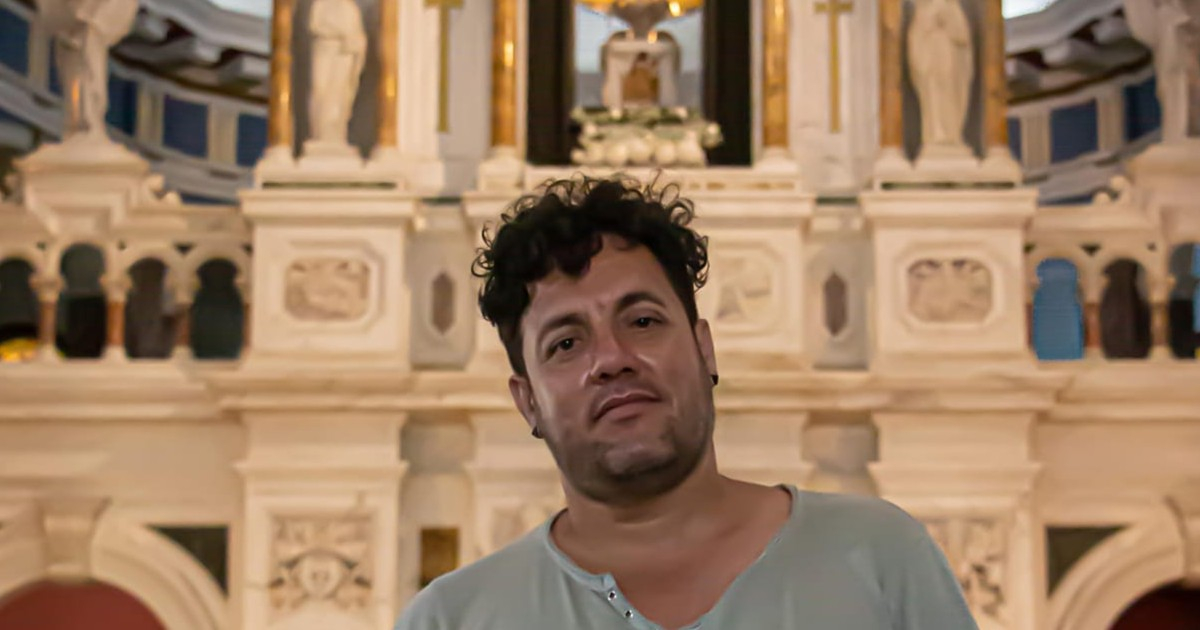
The Cuban playwright and theater director Freddys Núñez Estenoz, director of the Teatro del Viento group in Camagüey, published a text that has generated significant resonance due to its deeply critical tone regarding the collapse of the country and the moral, economic, and spiritual destruction affecting Cuban society.
Its publication is a lament, but also a frontal denunciation of decades of structural and human collapse that has shattered the nation that was once envisioned.
"I dream of you and you hurt me, ISLA," begins Freddys, who, with a poetic language filled with painful imagery, portrays an exhausted, broken, and plundered Cuba, where official promises have turned into an emptiness incapable of sustaining the lives of those who remain in the country.
"The country we dreamed of is stranded."
In his message shared on Facebook, the theater artist takes an emotional journey through the ruins of the national project imposed by those in power.
It states that "the country we dreamed of was left stranded on the brink of an attempt," failing even to become a utopia, merely a "vague mirage in the mind of some crazy person."
According to the writer, the country is caught in endless processes, "waiting for a signature or a decree," serving as a metaphor for the suffocating centralism that paralyzes any aspiration for real change.
"The country we dreamed of has dried up from so much absence, shrunk from so much anger, inflated from so much invention, and exploded from an overdose of opportunism and praise," he noted.
Núñez Estenoz denounces the lie that has marked recent history, with a people forced to fill the squares and to repeat a "hollow, sterile, old, dry, dead cry."
In one of the most poignant passages, it laments how power turned everyday life into constant surveillance and division.
"The country we dreamed of left the grandmothers, the grandfathers, and the mothers and fathers alone; it divided everything due to that unstoppable obsession to control the day, the night, and the dreams of every child born on this island," he emphasized.
For this intellectual, that ironclad control has pushed entire generations to emigrate in search of a future that Cuba no longer offers.
"It is our responsibility to bury the dead."
Despite the heartbreaking tone, the playwright acknowledges that the country could still rebuild itself if the citizens take on their role in that transformation.
"No one will come to bury this corpse," he claims, referring to an exhausted system that refuses to give up its space. For him, only the people can "dig the hole and put the dead and broken inside," in order to then start from scratch.
Núñez Estenoz advocates for Cuban identity beyond empty symbols and repeated slogans, defending the fundamental dignity of daily life: the light bulb that never goes out, the Sunday barbecue "by choice, not by only option," the united family, faith, and the freedom to build a possible tomorrow.
His text ends with a call to a country that is still there, "just around the corner," in the cultural, spiritual, and human essence that survives despite the deterioration.
A message that appears amidst a wave of criticism from artists and intellectuals
Núñez Estenoz's words do not arise in a vacuum. They are part of a growing chorus of voices from the cultural sphere that have refused to be silent in the face of the widespread collapse of life in Cuba.
Among those recent voices, the one that stands out is that of filmmaker Carlos Díaz Lechuga, who recently shared a powerful message on social media, describing an "ill" island, with a collapsed electrical system, thousands of areas without water, nonexistent hygiene, and prices that are unreachable in comparison to insignificant salaries.
Díaz Lechuga denounced the massive impoverishment, family breakdown, and total absence of justice, pointing out that prisons are full "for the simple act of thinking what is right to think."
He emphasized that it all happens because "a family does not want to relinquish power," while the people suffer and the elite enjoy privileges such as private jet travel and luxury items.
In his text, the filmmaker compared the political and economic stalemate to an endless mourning: "Fidel died, and the wake just goes on and on..."
A country in crisis and an artistic community that no longer remains silent
The words of the theater director encapsulate the exhaustion of a cultural sector that has been pressured for decades to applaud, remain silent, or conform to the official narrative.
Today, more and more creators are publicly expressing the deterioration of the country and the responsibility of those who have managed it to the point of collapse.
Núñez Estenoz, with his symbolic language, and Díaz Lechuga, with his political toughness, converge on the same idea: Cuba is fragmented, yet a portion of the country still refuses to relinquish its right to envision a different future.
Filed under: