
Related videos:
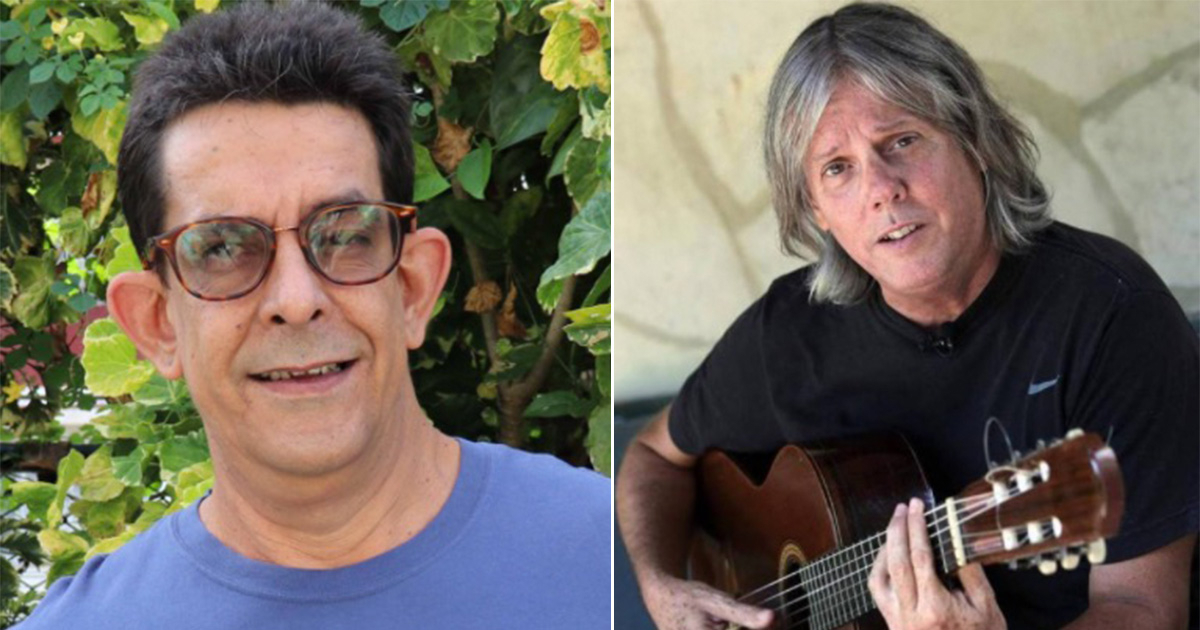
The comedian Ulises Toirac firmly stood up against the ideas of Alejandro García "Virulo" once again, this time following a post by writer Enrique del Risco on Facebook, which reproduced statements made by the comedian in 2020.
Virulo then told the newspaper Vanguardia that "Cuba is a very good place to live" and that humor should not focus on criticizing the country's problems.
"People are waiting for someone to come and point out everything that’s wrong (...) While it is fair to criticize the problems, it is also important to recognize what Cuba has accomplished. Therefore, it cannot be an overly critical approach, which is unfortunately what is happening with humor,” he noted.
In response to his statements, Toirac offered a direct and powerful reflection: humor does not exist in a vacuum, nor can it ignore the reality of people.
The words of the humorist, who has always lived in Cuba and has faced censorship and pressure for his work, stand out precisely because they stem from that everyday, firsthand experience.
"Virulo forgets the deepest truth: humor in different countries is different because their history, customs, and reality are different. Humor is historically and socially conditioned," he wrote.
For him, trying to make humor detached from the Cuban context is as absurd as attempting to imitate completely foreign models: "A Cuban trying to make English humor is like a shoe for a disabled person without legs. It doesn't fit at all, not with the tail, not with the hill, nor with the skirt of his godmother."
Ulises concludes by pointing out that the rest of Virulo's stance is merely "exported self-justification," a phrase that encapsulates the discomfort of many comedians and viewers regarding selective depoliticization.
For Toirac, humor is inseparable from real life, and the real life of Cubans today is marked by shortages, crises, and distress that no sugar-coated joke can conceal.
Virulo's statements, cited by Del Risco, claimed that the Cuban public finds it "increasingly difficult to understand me" because they want discussions about the country's problems, which he considers an excess of "hypercriticism."
He also noted that "people need to know that Cuba is a very good place to live."
For Ulises and many other comedians both on and off the Island, this approach deliberately misses the point: people seek critical humor because they are living through critical situations.
This is not the first time that both comedians have clashed over opposing viewpoints.
In 2021, following another statement by Virulo on Cuban television, Toirac had already come out in defense of the humor created during the toughest years of the Special Period, emphasizing that it was that critical humor that "saved laughter and lives" in a time of great hardship.
He also emphasized that ignoring the work of those who upheld the humorous scene after Virulo left Cuba "is not serious."
That controversy in 2021 sparked a wave of responses: Osvaldo Doimeadiós stated that Virulo had "hit rock bottom"; Nelson Gudín, Iván Camejo, Marcos García, Kike Quiñones, Claudia Valdés, and Otto Ortiz's daughter all agreed that he seemed to be self-proclaiming himself as an irreplaceable figure in national humor.
The humor community openly rejected the idea that Cuban humor declined after Virulo's departure to Mexico, and defended the continuous work of those who continued to create, even under censorship, crisis, and scarcity.
Now, three years after those initial frictions, Ulises' words once again place the debate where many believe it should be: humor cannot ask the audience to ignore what they are experiencing, nor can it replace criticism with emotional propaganda.
For a country subjected to so much daily pressure, critical humor is not a "vice": it is a necessity. And Toirac, once again, reminded Virulo of this with the clarity that the audience appreciates.
Filed under: